Honduras – ARSA announces ban on the use of additive INS 127 (Erythrosine) in food and beverages

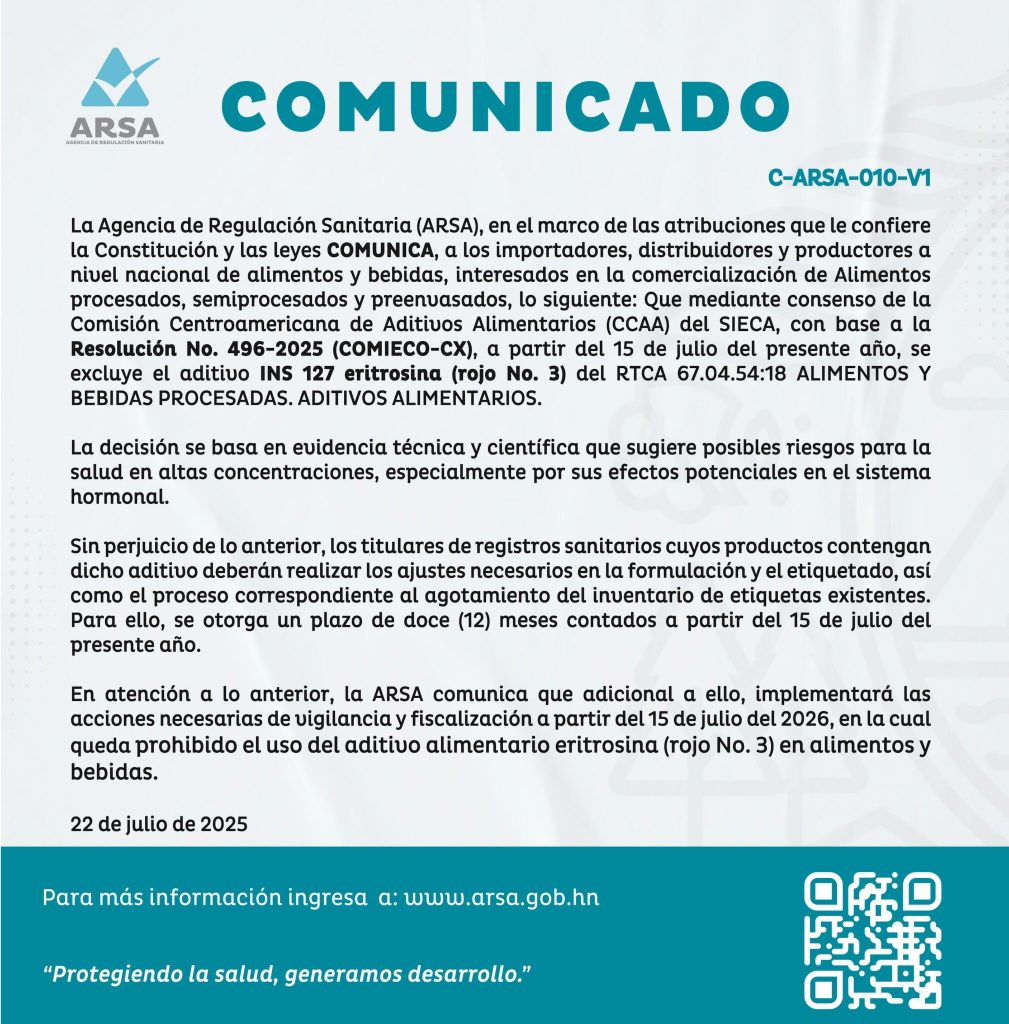
The Health Regulatory Agency (ARSA in Spanish) has issued a statement directed at national importers, distributors, and producers of food and beverages who are interested in the commercialization of processed, semi-processed, and pre-packaged foods, as follows: That through consensus from the Central American Commission of Food Additives (CCAA in Spanish) of SIECA, based on Resolution No. 496-2025 (COMIECO-CX), effective from July 15 of this year, the additive INS 127 erythrosine (red No. 3) is excluded from RTCA 67.04.54:18 PROCESSED FOODS AND BEVERAGES. FOOD ADDITIVES. This decision is based on technical and scientific evidence suggesting potential health risks at high concentrations, particularly regarding its possible effects on the hormonal system. Notwithstanding the above, holders of sanitary registrations whose products contain this additive must make the necessary adjustments in formulation and labeling, as well as the corresponding process for depleting existing label inventory. To this end, a period of twelve (12) months is granted, starting from July 15 of this year.
Peru – Bill introduced to ban the use of the dye erythrosine or E127 (red No. 3) in the country

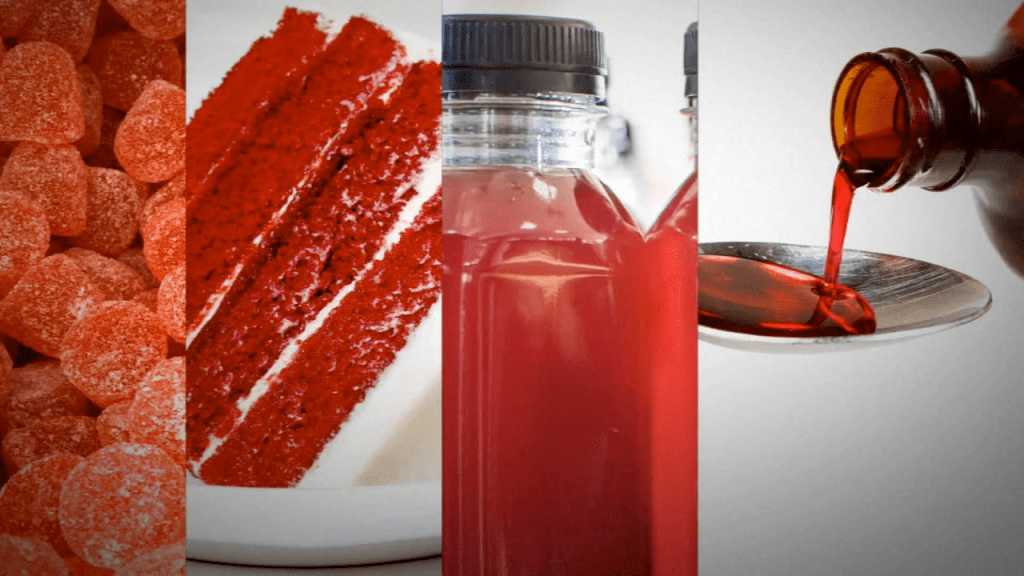
Congresswoman María Agüero Gutiérrez (Free Peru), presented the bill that prohibits the use of red dye No. 3 in the elaboration of food, packaged products, beverages, medicines and cosmetics for human consumption or use that are sold, imported and distributed in the national territory.
The legislative initiative No. 11673/2024-CR, was presented today, Tuesday, June 17, through the institutional portal of the Congress of the Republic. The text has the support of five other parliamentarians of his party.
The proposal comes in a context of growing global concern about the carcinogenic effects of some food additives. In January of this year, the U.S. Food and Drug Administration (FDA) revoked its authorization for the use of red No. 3 in oral products after detecting links with tumors in laboratory animals.
As a result of this pronouncement, the Peruvian Ministry of Health (MINSA in Spanish) recommended the local food industry to progressively replace the use of this substance. Now, Congress is seeking to make this transition mandatory.

Costa Rica – Ministry of Health takes action on artificial food coloring Red No. 3

The Ministry of Health informs the population that it is aware of the recent announcement by the United States Food and Drug Administration (FDA), which has banned the use of artificial food coloring Red No. 3, also known as erythrosine, due to its relationship with thyroid cancer in animals.
To ensure the health of Costa Ricans, the Ministry of Health is taking the following actions:

  1. Call to the Central American Commission on Food Additives: An extraordinary meeting will be held to evaluate the use of Red No. 3.
  2. Product Analysis: Samples of products containing Red No. 3 will be taken for analysis at Inciensa, with the aim of verifying that they comply with the quantities currently permitted.

Regarding medicines containing Red No. 3 dye, which are regulated by the Central American Technical Regulations RTCA 11.03.59:18 and RTCA 11.01.02:04, the Ministry of Health will promptly communicate the actions to be taken.

In addition to these actions, the Ministry of Health will be monitoring all information shared regarding the use of this dye.