Brazil – ANVISA modifies the lists of components, usage limits, and claims in dietary supplements

The National Health Surveillance Agency (ANVISA in Spanish) has published Normative Instruction IN No. 431 of ANVISA, dated April 1, 2026, which modifies Normative Instruction No. 28, dated July 26, 2018, that establishes the lists of components, usage limits, claims and supplementary labeling for dietary supplements.

Updates:

I – “List of authorized components for use in food supplements, except those indicated for infants (0 to 12 months) or young children (1 to 3 years old),” as stated in Annex I;

II – “List of minimum limits of nutrients, bioactive substances, enzymes, and probiotics that dietary supplements must contain, in the recommended daily intake and by population group indicated by the manufacturer,” as stated in Annex III;

III – “List of maximum limits for nutrients, bioactive substances, enzymes, and probiotics that dietary supplements cannot exceed, in the recommended daily intake and by population group indicated by the manufacturer,” as stated in Annex IV;

IV – “List of authorized claims for use in the labeling of food supplements and their respective composition and labeling requirements,” as stated in Annex V; and

V – “List of additional labeling requirements for food supplements,” as stated in Annex VI.
Brazil – Working group of the Chamber of Deputies proposes an urgent control of dietary supplements

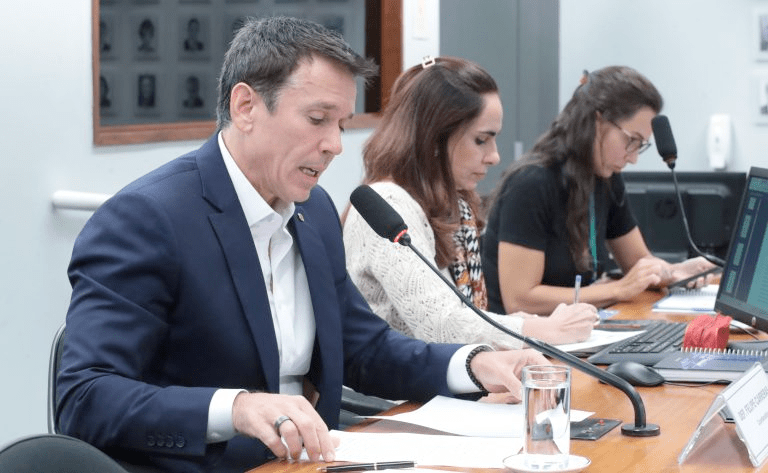
The Working Group of the Chamber of Deputies, responsible for analyzing the marketing of dietary supplements, approved a report proposing an urgent reform of the sector. The document recommends the expedited processing of three bills aimed at increasing health control and sanctions related to fraud and misleading advertising.

The bills in question are: PL 5229/25, by Pedro Paulo (PSD-RJ); PL 5319/25, by Tabata Amaral (PSB-SP); and PL 6000/25, by Mário Heringer (PDT-MG). The coordinator of the group, Deputy Felipe Carreras (PSB-PE), highlighted the seriousness of the current situation, stating that “the scenario of total insecurity regarding the consumption of dietary supplements in Brazil demands urgent measures.”

Currently, most supplements do not require health registration, according to Anvisa’s resolution (Resolution 240/18), which is based on prior notification, assuming the manufacturer’s good faith. The current sanctions, according to Law 6.437/77, are limited to fines and batch withdrawals, which are insufficient to address serious frauds, such as ingredient adulteration and the use of prohibited substances.

Brazil – Chamber of Deputies of Brazil is analyzing the risks, benefits, and regulation of dietary supplements

The Chamber of Deputies’ working group on the marketing of dietary supplements will hold a public hearing this Wednesday (3) to discuss the risks and benefits of using these products and the regulation of the sector.

The meeting will be held at 2:30 PM in a plenary room to be determined.

Please consult the list of participants.

The debate is in response to a request from Representative Ana Pimentel (PT-MG). According to her, the objective is to promote a technical dialog on the growth of the dietary supplement market in the country, analyzing the impacts of unsupervised consumption and the benefits observed in uses supervised by healthcare professionals.

The parliamentarian points out that a study by the Brazilian Society of Endocrinology and Metabolism (SBEM) reveals that more than half of Brazilian households consume some type of supplement, often without adequate medical or nutritional supervision.

Brazil – Chamber of Deputies addresses the responsibility of digital platforms in the sale of counterfeit dietary supplements

The Working Group on the Marketing of Dietary Supplements of the Chamber of Deputies will hold a public hearing to discuss the responsibility of digital platforms in the sale and advertising of counterfeit products.

This discussion is in response to a request from the group’s coordinator, Deputy Felipe Carreras (PSB-PE).

The congressman aims to address the role of digital platforms and marketplaces in monitoring and overseeing the sale of dietary supplements, particularly in light of the rise in sales of counterfeit products and those lacking health registration.

“Digital platforms have become the primary sales channels for dietary supplements in the country, but the lack of control over sellers and products has facilitated the spread of counterfeit and irregular items, endangering millions of consumers,” Carreras states.

“The hearing will provide an opportunity to discuss joint supervision mechanisms, platform accountability policies, and the need to enhance consumer protection legislation in the digital environment,” he adds.

Ecuador – ARCSA suggests amending the regulations regarding dietary supplements

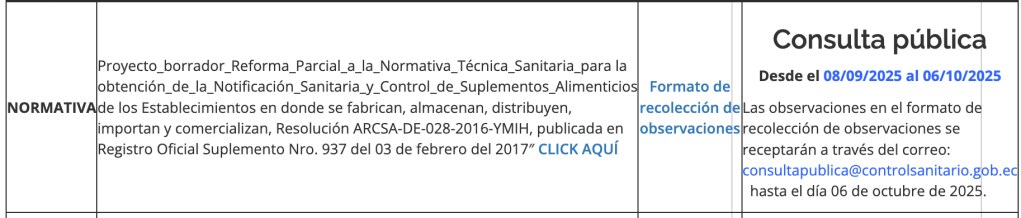
The National Agency for Regulation, Control, and Health Surveillance (ARCSA in Spanish) has released a draft for a Partial Reform to Resolution ARCSA-DE-028-2016-YMIH – Technical Health Regulations for obtaining the Health Notification and Control of Food Supplements in establishments where they are manufactured, stored, distributed, imported, and marketed.