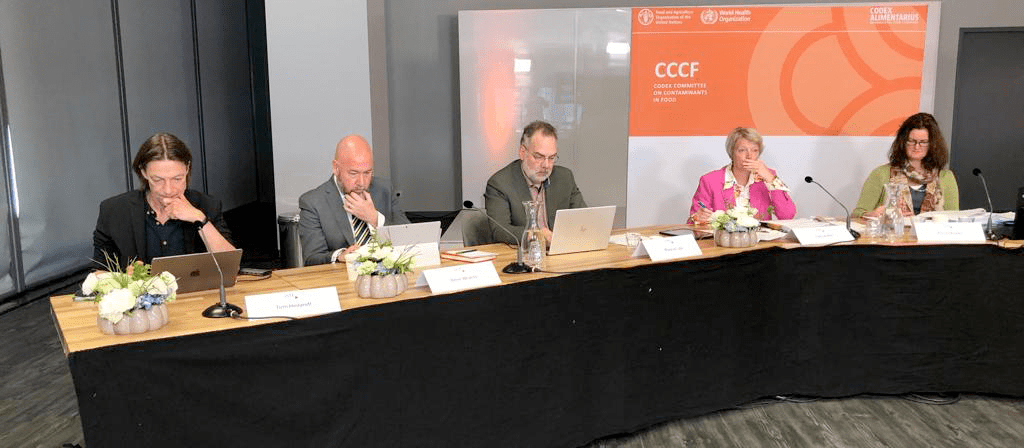
The 17th session of the Codex Committee on Contaminants in Food (CCCF) was declared officially open in Panama City, 15 April, following speeches from His Excellency the President of the Republic of Panama, Laurentino Cortizo Cohen and other distinguished guests. The opening ceremony paved the way for what promises to be an intensive week of discussions around a variety of current CCCF texts and future work for the Committee.
His Excellency the President expressed appreciation that Panama was chosen to co-host this Committee meeting. “Panama has always been a crossroads in the world,” he said, “and an ideal place for dialogue, and a place to find consensus.” He underlined the fundamental role that food safety plays in Panama: “food safety is one item that is anchored in our constitution as a fundamental right,” he continued, commenting that in his role as President of the Republic, he believes it is his duty to ensure food safety for the population. Panama, he remarked, seeks to “ensure protection of all our citizens, as does the Codex Alimentarius.” In reference to the Committee meeting, he concluded that “altogether we shall be able to achieve for our respective populations a system where our food is safe, if we give this matter the attention it deserves at all levels.”
Over the next three days, CCCF17 will address the topics of industrial, environmental, and naturally occurring toxicants in some foods, including maximum levels for lead and sampling plans for methylmercury in fish. Under the topic of toxins, delegates will discuss the definition of and maximum level for total aflatoxins in ready-to-eat peanuts, sampling plans for total aflatoxins and ochratoxin A in certain spices and the new code of practice or guidelines for the prevention and reduction of ciguatera poisoning. Five discussion papers have also been put forward for debate. There will also be a review of the Code of Practice for the Reduction of Aflatoxin B1 in Raw Materials and Supplemental Feedingstuffs for Milk-Producing Animals (CXC 45-1997) and discussion on the development of a code of practice for the prevention and reduction of cadmium contamination in foods.
 infoAlimentario