Argentina – Updates to the Argentine Food Code have been published

The National Administration of Medicines, Food and Medical Technology (ANMAT in Spanish) and the Secretariat of Agriculture, Livestock and Fisheries have published a series of resolutions to update the Argentine Food Code (AFC):

Joint Resolution No 17/25 – Incorporation of Olive Leaves

Olive leaves are incorporated into the Argentine Food Code (CAA) for use in infusions.

The olive tree has been historically valued, and its antioxidant-rich leaves are now formally recognized for infusions. This inclusion ensures a framework of food safety and quality for this product.

Joint Resolution No 16/25 – Incorporation of pecan by-products

The Argentine Food Code (CAA) incorporates and updates the regulations on pecan nuts (Carya illinoinensis) and their derivatives: pecan nut paste, pecan nut flour, and pecan nut oil.

The pecan is a nut with high nutritional value. Its oil stands out as an important source of monounsaturated and polyunsaturated fatty acids, such as oleic and linoleic acids, known for their positive effects on cardiovascular health.

Joint Resolution No 14/25 – Incorporation of Preserved Capers

Canned caper leaves (Capparis spinosa) were incorporated into the Argentine Food Code.

By including this in the regulations, parameters are specified that guaranty the product’s quality, such as its characteristic flavor, aroma, and texture. Food safety and consumer transparency are strengthened, expanding the range of regulated foods for the benefit of the population.

Joint Resolution No 15/25 – Incorporation of Aguaribay leaves and fruits

The leaves and fruits of the aguaribay were incorporated into the CAA for use as a flavoring in alcoholic beverages.

This species, native to northeastern Argentina, has been used ancestrally by indigenous communities, and its inclusion in the CAA allows for the revaluation of traditional knowledge, promoting its application in foods under regulations that ensure quality, safety, and food security.

Joint Resolution No 13/25 – Inclusion of Virgin Palm Oil

Virgin Palm Oil is incorporated into the Argentine Food Code.

This oil is exclusively derived from the pulp of the palm fruit through mechanical processes, maintaining its quality and nutritional properties.
Argentina – The National Food Commission is dissolved, and ANMAT and SENASA will take over the mechanisms for updating the Argentine Food Code

The government ordered the dissolution of the National Food Commission (CONAL in Spanish) and modified the control and updating regime of the Argentine Food Code (CAA in Spanish), according to Decree 538/2025. In this way, food management and control were centralized in the National Administration of Medicines, Food, and Medical Technology (ANMAT in Spanish) and the National Service for Agrifood Health and Quality (SENASA Spanish).

The Ministry of Health, through the National Administration of Medicines, Food, and Medical Technology (ANMAT ), and the Ministry of Economy, through the Secretariat of Agriculture, Livestock, and Fisheries, by Joint Resolution, will keep the standards of the Argentine Food Code (CAA) up to date, resolving any modifications that may be necessary for its ongoing adaptation to advances in the field, taking as references international standards and agreements entered into within the Southern Common Market (MERCOSUR in Spanish).

The government argues that CONAL’s collegial structure slowed down procedures and that technical agencies have sufficient capacity to take on the tasks of drafting, reviewing, and proposing regulatory changes.

Among its arguments, the Executive maintains that “the dissolution of CONAL does not imply a reduction in the protection of public health or in the quality and safety of food, but rather seeks to optimize decision-making processes by concentrating responsibilities in the entities that have the power of oversight and control.”

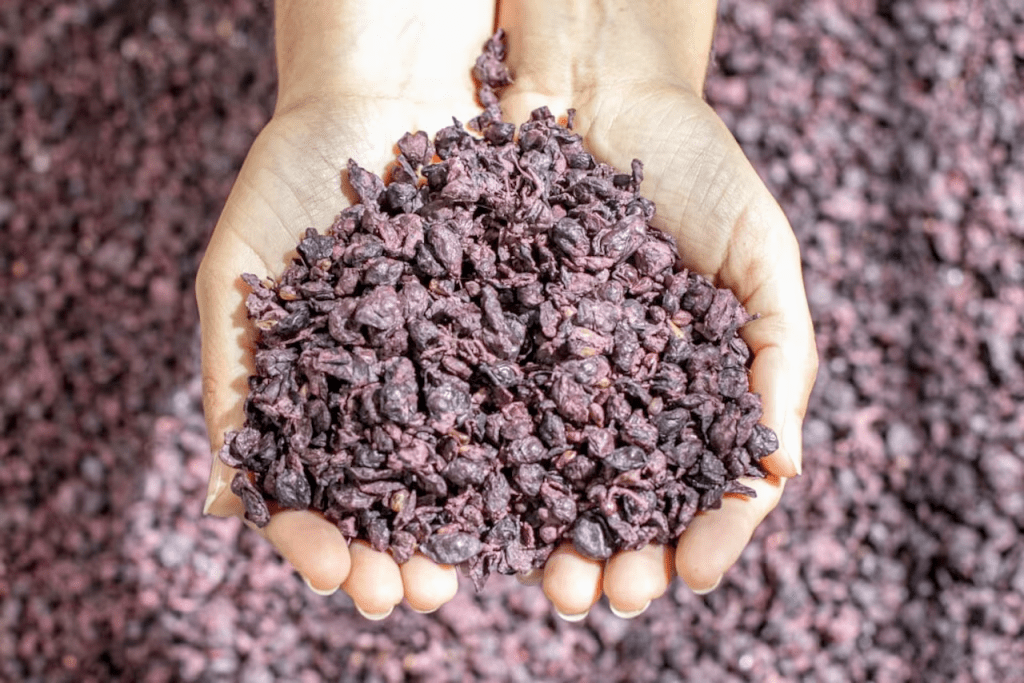
Argentina – Dried grape pomace is included in the Argentine Food Code

By means of Joint Resolution 37/2025, the Secretariat of Health Management and the Secretariat of Agriculture, Livestock and Fisheries modify Article 107 of the Argentine Food Code to incorporate dried grape pomace which contains important retained nutrients, mainly polyphenols (such as Resveratrol) and fibers.

ARTICLE 1.- Article 1107 tris is hereby incorporated into the Argentine Food Code, which shall be worded as follows: “Article 1107 tris: The term dry grape pomace means the solid product resulting from the operations of pressing and/or filtration of grape must and/or wine, composed of seeds and grape skins subjected to dehydration processes, which may be subsequently milled.

Grape pomace shall be subjected to a dehydration process that ensures a moisture content of less than 8% on a wet basis.

Its composition will depend on the raw materials used in winemaking. In any case, it must meet the following characteristics:

Dietary fiber (%): Min. 25 (1)

Proteins (%): Min. 10 (1)

Moisture (%): Max. 8

Argentina – New fruits and vegetables are incorporated into the Argentine Food Code

Through Joint Resolution 36/2025, the Secretariat of Health Management and the Secretariat of Agriculture, Livestock and Fisheries amend articles 822 and 888 of the Argentine Food Code related to Fresh Vegetables and Fresh Edible Fruits.
Among the incorporations, fruits with names that evoke the richness of our land stand out: the jabuticaba (Plinia cauliflora and Plinia peruviana), the yvapority (Plinia rivularis), the uvaia (Eugenia pyriformis), the caraguatá (Bromelia balanceae), the chañar (Geoffroea decorticans). or coconut (Allophylus edulis). Also included are the achojcha or caigua (Cyclanthera pedata), the pindó (Syagrus romanzoffiana), the wild fig (Vasconcellea quercifolia), the ubajay (Eugenia myrcianthes), the guabiyú (Myrcianthes pungens) and the wild cereal or cherry (Eugenia involucrata). The list of new fruits is completed by tasi or doca (Araujia odorata), chili pepper (Capsicum baccatum var. baccatum), jacaratia (Jacaratia spinosa), mbocayá (Acrocomia aculeata), arachichú (Annona emarginata) and large grapefruit (Berberis commutata). In the heading of vegetables, the inclusion of the petiole of the quirusilla (Gunnera apiculata) is official.

Argentina – Modification of the denomination of edible mushrooms in the Argentine Food Code is published

By means of Joint Resolution 4/2025, the Secretariat of Health Management and the Secretariat of Agriculture, Livestock and Fisheries have published the modification of the denomination of edible mushrooms.

ARTICLE 1.- Article 1249 of the Argentine Food Code is hereby replaced and shall be worded as follows: “Article 1249: The term edible fungi means the fruiting body of higher fungi belonging to the Kingdom Fungii (Ascomycetes and Basidiomycetes) wild or cultivated and that fresh, dried or canned, are used in human food. For the purposes of this Code for edible mushrooms it is understood by:

  • Broken or crushed: those parts of mushrooms that pass through a 15 x 15 mm mesh sieve in the case of fresh mushrooms and 5 x 5 mm mesh sieve in the case of dried mushrooms.
  • Charred: whole or cut mushrooms with traces of damage due to high surface temperature or burnt.