Argentina – Incorporated amendments on identity and purity specifications for food additives

The Ministry of Health Secretariat of Health Quality and Secretariat of Bioeconomy has published Joint Resolution 12/2024, which updates the specifications of identity and purity of several food additives described in Article 1398 of the Argentine Food Code.

On the purity specifications, the specifications for heavy metals provided by the EU are also incorporated, since several additives include restrictions for more metals than those specified by JECFA.

It was agreed not to include in the detailed specifications the functions assigned to each additive, since these are described in Resolution GMC No. 11/06, MERCOSUR Technical Regulation on “Harmonized General List of Food Additives and their functional classes”, which is currently under revision within MERCOSUR.

Haiti – Authorities to recall food products that do not comply with labeling rules starting in October

Haiti’s Ministry of Trade and Industry is threatening to withdraw from the market, starting next October, pre-packaged food products that do not respect labeling rules.

“As of October 1, 2024, all local or imported products that do not comply with this regulatory provision will be withdrawn from the market,” states a statement from the Ministry of Commerce, in which the details of the regulation are reported.

Anvisa convenes industry to update regulation on veterinary drug residues in food of animal origin

The National Health Surveillance Agency (ANVISA in Portuguese) has convened a sectoral meeting to present proposals to improve the regulation of veterinary drug residues in foodstuffs of animal origin. The topics discussed at the meeting are related to:

  • Proposal for periodic update of Normative Instruction (IN) 162/2022, to exclude grace periods for the active pharmaceutical ingredients (AMI) robenidine hydrochloride and maduramicin alpha ammonium.
  • Proposed revision of Resolution of the Collegiate Council (RDC) 730/2022, to establish criteria for the extrapolation of maximum residue limits (MRLs) of AMIs between animal species, based on the recommendations established by the Codex Alimentarius.

Panama – Meeting of Latin American and Caribbean countries seeks to transform agri-food systems to improve nutrition in Latin America and the Caribbean

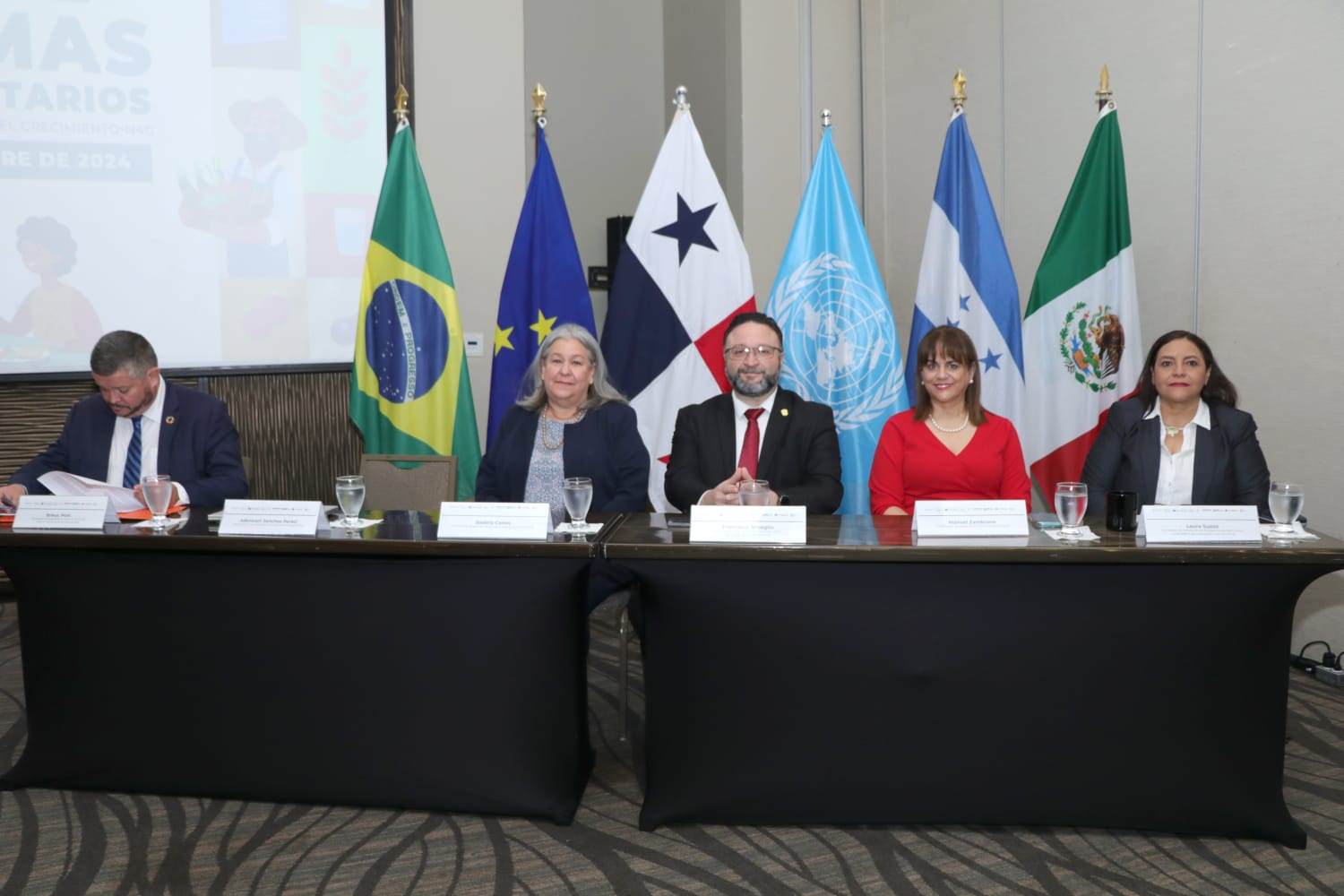
The countries of Latin America and the Caribbean met in Panama to strengthen coordination among decision-makers and transform agrifood systems, with the aim of ensuring commitments to better nutrition and facilitating access to healthy diets. The meeting highlighted the importance of the “Food Systems-Based Dietary Guidelines (FSDBG)”, a methodology developed by the Food and Agriculture Organization of the United Nations (FAO), to promote dialogue and collaboration among key stakeholders in Latin America and the Caribbean, in order to enrich the exchange of views and experiences related to the transformation of regional and national agrifood systems. In this way, it seeks to strengthen coordination and cooperation among decision-makers related to agrifood systems and complementary systems.

Brazil – Clarification of conditions for the importation of inputs/ingredients for the manufacture of foodstuffs

The National Health Surveillance Agency (ANVISA in Portuguese) has issued the Import communication nº 048/2024 to clarify the changes implemented on the importation of manufacturing inputs including the food category.

In view of the change in the Administrative procedures applied to imports of products subject to sanitary inspection communicated by Integrated Foreign Trade System (SISCOMEX in Portuguese) Notices No. 036/2024 and No. 037/2024, the General Directorate of Ports, Airports, Borders and Customs Enclosures (GGPAF in Portuguese) must verify that the ingredients mentioned in the labeling of foodstuffs including technological adjuvants must have the approval of ANVISA.

Substances subject to special control, even if they are intermediate and are not part of the final composition of the finished product, are subject to import approval at ANVISA.