Through Ministerial Resolution No. 809-2024/MINSA, the Ministry of Health declares the General Directorate of Environmental Health and Food Safety (DIGESA in Spanish) in administrative reorganization, as announced by the Minister of Health, Cesar Vasquez last Friday, ratifying his commitment to fight corruption and ensure food safety for the population.
The purpose of the Resolution is to declare DIGESA under administrative reorganization, in order to carry out a comprehensive evaluation of its processes and resources to ensure an effective and efficient operation and thus improve the quality of the services it provides to the public.
Nicaragua – III Meeting of Directors of Central American Economic Integration is held and proposes to update the Food Additives Regulation.
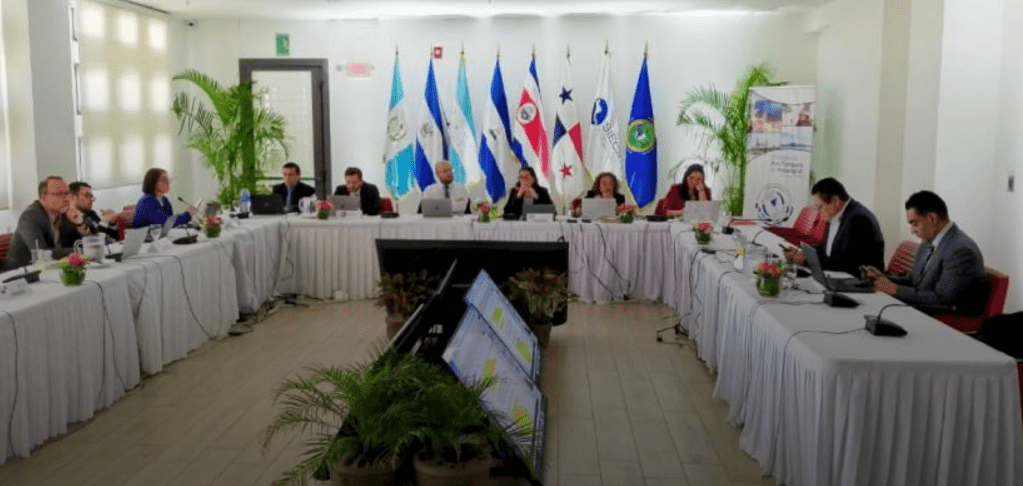
Within the framework of the III Meeting of Directors of Central American Economic Integration, which took place from November 20 to 22 in Managua, and coordinated by the Ministry of Development, Industry and Commerce (MIFIC in Spanish) in the exercise of the Pro-Tempore Presidency of Central American Integration, it was agreed, among other things, to update the Central American Technical Regulations (RCTA en español) on Food Additives, which will be submitted to the Council of Ministers of Economic Integration (COMIECO en español ) for its approval.
Article – Nutritional labeling of prepackaged food products for human consumption in Central America: The importance of its mandatory enforcement
In Central America, the prevalence of overweight and obesity continue to rise, contributing to the double burden of malnutrition, which encompasses both micronutrient deficiency and excess weight. This phenomenon is attributed to changes in dietary patterns, driven by the growth of consumption of ultra processed foods, regardless of economic income. Nutritional labeling emerges as a useful element for consumers, allowing them to make informed decisions about their diet and prevent diseases related to it. However, understanding nutritional labeling remains a challenge, especially in Central America, where education levels are low. The information on labels can be complex and difficult to interpret for many. This article advocates for mandatory nutritional labeling on packaged products and beverages in Central American countries, supported by available scientific evidence on the nutritional situation and consumption of ultra-processed foods. Recommendations are proposed for its implementation, monitoring and evaluation, mainly highlighting the transition to front labeling to facilitate consumer decision-making, promoting the right to health and the choice of healthy foods, in a society that is more aware and informed about its health, food and nutrition.
Brazil – ANVISA issues guidance on health claims for nutrients with fully recognized functions in packaged food labeling
The National Health Surveillance Agency (ANVISA in Portuguese) published a Technical Note (in Portuguese) describing the guidelines on the use of functional property claims for nutrients with fully recognized functions in foods, in light of the gaps identified in the current regulations, the recurrent questions received by the General Food Management (GGALI) and the need to provide guidelines to carry out food sanitary control actions, especially in light of the recent changes in the regulatory framework for the regularization of food under the jurisdiction of the National Health Surveillance System (SNVS in Portuguese).
Paraguay – INAN transfers regulatory powers over food to DINAVISA
The Minister of Health, Dr. María Teresa Barán, led a meeting today at the headquarters of the National Institute of Food and Nutrition (INAN in Spanish), together with the acting director of the National Directorate of Health Surveillance (DINAVISA in Spanish), Ms. Jorge Illou, to plan actions aimed at complying with Law No. 7.361/24, which consolidates health surveillance and food control in a single entity.
During the meeting, Minister Barán emphasized that this transition seeks to strengthen the public health response without affecting the stability of the personnel. “We want this change not to be a problem, but an opportunity. INAN will continue to fulfill its function within the Ministry of Health, while Dinavisa will take over the regulatory responsibility,” said the Minister, noting that food programs will remain under ministerial control.
For his part, the director of DINAVISA, Jorge Illou, stressed the importance of a unified system that responds to the growing demands of food quality and safety. “With this change, we seek to align ourselves with international models and offer better training and stability for regulatory personnel,” he said.
 infoAlimentario