Argentina – Clarification regarding food import “destinations” that will no longer require RNE and RNPA data

The National Administration of Medicines, Food and Medical Technology (ANMAT in Spanish) informs importers that, in relation to the note of the portal of the Customs Brokers Center (CDA in Spanish) of the Argentine Republic published on 2/12/24, in which its title indicates that “Customs notified the CDA that food import destinations will no longer require the RNE and RNPA data”, that this only applies to samples without commercial value.

On July 4, 2024, Customs requested to INAL, by note NO-2024-01925562-AFIP-DETEIM#SDGTLA, the collaboration to “inform if it is appropriate for this agency to continue requesting the presentation of the Registration of the product in the National Food Registry (R.N.P.A.) and the Importer’s Establishment or warehouse (R.N.E.), and in case of having to require it, if it is appropriate to request it when documenting import operations of samples without commercial value”.
By note NO-2024-71435551-APN-INAL#ANMAT on July 7, 2024 the INAL informed that: “according to art. 2° of Resolution No. 1946/93 ANA, the customs service must request the intervention of the INAL for the tariff positions of the MERCOSUR Common Nomenclature included in the same. Such intervention is fulfilled by presenting the ‘Certificate of Free Circulation’ issued by INAL”.

Likewise, this Institute informs that when importing samples with no commercial value, as indicated in the ANNEX of ANMAT Provision No. 10174/17, it is not required to have NATIONAL REGISTRY OF ESTABLISHMENTS (RNE), nor NATIONAL FOOD REGISTRY (RNPA)”.

Therefore, samples with no commercial value will be required:

- Denomination
- Brand
- Fancy name
- Lot
- Expiration Date
- Quantity of units
- Presentation per unit
- Country of origin
- Name or Company Name of Manufacturer

Mexico – The Secretary of Public Education presented the National Strategy for a Healthy Lifestyle

The Secretary of Public Education, Mario Delgado Carrillo, presented the National Healthy Life Strategy, whose objective is to eradicate the consumption of processed foods and high-calorie beverages in elementary, middle and high schools.

He also highlighted the importance of educational centers as natural spaces to promote healthy habits and prevent addictions, in order to guarantee the right to health of students at all levels.

Peru – CONFIEP demands the Ministry of Health to eliminate requirement of individual sanitary registrations for food and beverages

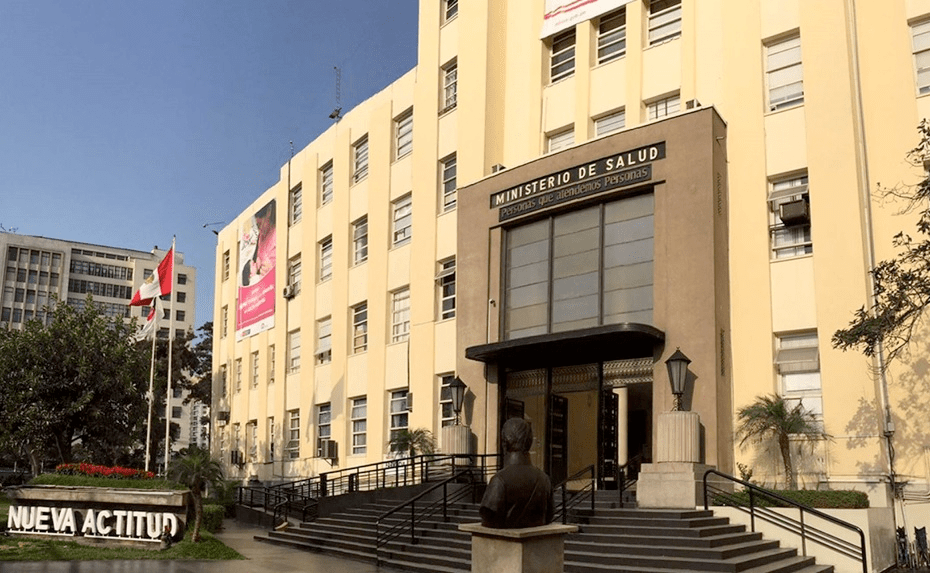
The National Confederation of Private Business Institutions (CONFIEP in Spanish) has filed a lawsuit against the Ministry of Health (MINSA in Spanish) before the 6th Constitutional Court of Lima, seeking that the entity cease the requirement of individual sanitary registrations for food and beverages marketed in the country. This legal action, filed on December 2, 2024, also requires MINSA to comply with the exclusive application of sanitary authorizations or HACCP (Hazard Analysis and Critical Control Points) certifications in the establishments where such products are manufactured.

Brazil – ANVISA publishes amended regulations on dietary supplements

The Brazilian National Health Surveillance Agency (ANVISA) has published Regulatory Instruction IN No 336, which modifies Normative Instruction No. 28, dated July 26, 2018, which establishes the lists of constituents, limits of use, declarations and complementary labeling of dietary supplements.

Brazil – ANVISA develops a new consultation panel on maximum tolerated limits of contaminants in food

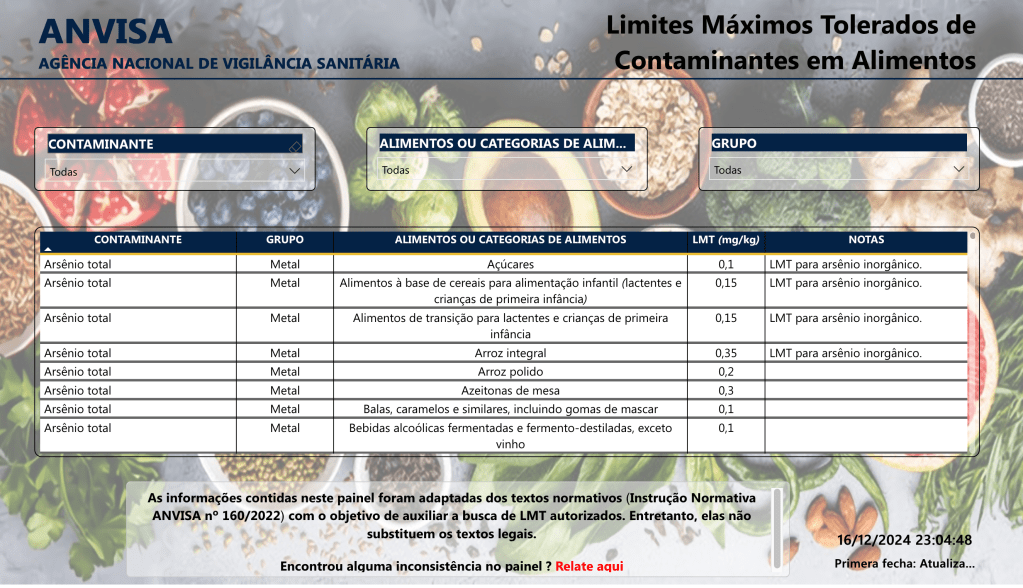
The National Health Surveillance Agency (ANVISA in Portuguese) announced the new consultation panel on maximum tolerated limits of contaminants in food. The Panel contains information adapted from the text of ANVISA’s Normative Instruction (IN) 160/2022, with the aim of assisting companies and food professionals in the consultation of the maximum tolerated limits of contaminants in food and thus comply with the standards set by the Agency.