Article – Brazil: Consumers’ Response to Sugar Label Formats in Packaged Foods: A Multi-Methods Study in Brazil

Providing information about the sugar content of packaged foods on product labels is an important strategy to lower consumers’ sugar intake. This study assessed the effect of exposure to different sugar labels on consumers’ understanding of the sugar content of foods and their food choices. In the first phase, five focus groups were conducted with a convenience sample of Brazilian adults to explore their perceptions about food labelling in general and sugar labelling in particular. Based on the qualitative results, four sugar label formats were developed and subsequently tested in a five-arm study on 1,277 adults via a randomised controlled online survey. The formats were: (i) no sugar information—control, (ii) total and added sugar content displayed in the Nutrition Information Panel (NIP), (iii) a front-of-package (FoP) octagonal warning for “high-in-sugar” products, (iv) a FoP magnifying glass warning for “high-in-sugar” products, and (v) a “high-in-sugar” warning text embedded on the NIP.
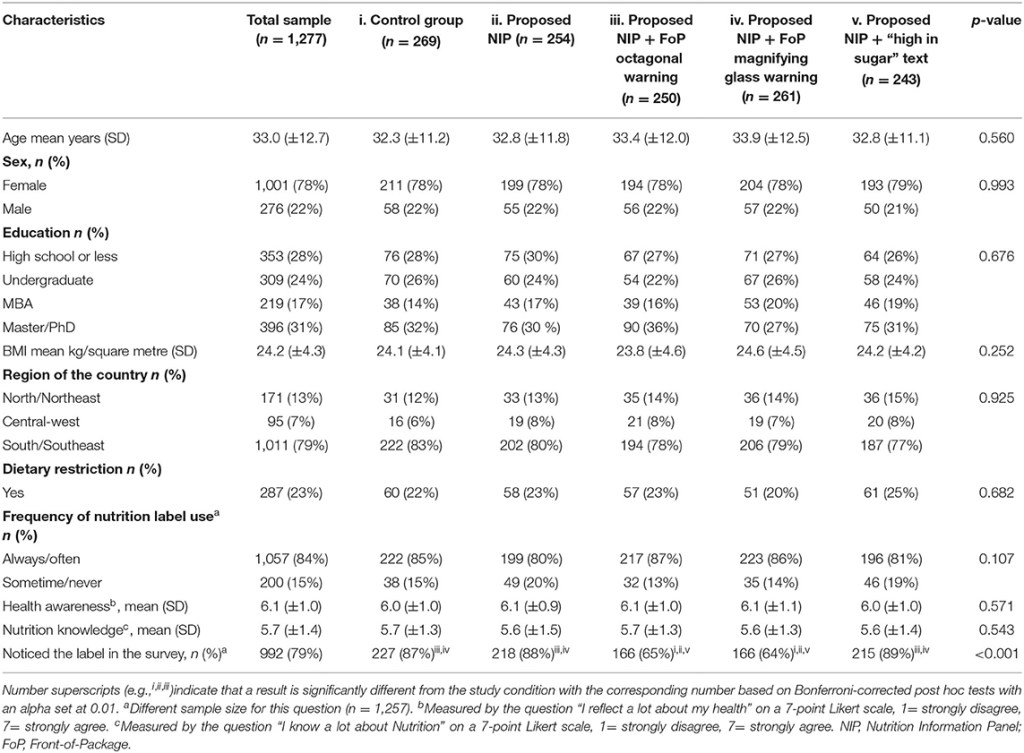
Providing information about the sugar content of packaged foods on product labels is an important strategy to lower consumers’ sugar intake.

Argentina: Companies request extension to comply with the new front-of-pack nutrition labelling

The first deadline for compliance with the law on Front Food Labeling is August 20, but there are already requests for an extension.
Among the largest food factories in Argentina there were requests to extend the “ultimatum”. The factories of ultra-processed and industrialized foods in general, which are the only ones “touched” by the Law, will present their requests in the next few days. They need time not only to “modify the packaging” but also to change the formulation of some products in order to avoid some seals.
COPAL, the business entity that brings together more than 30 chambers of the food and beverage industry, “is generating presentations, given that there are still inconsistencies and uncertainties that make it impossible to comply with the Law”.

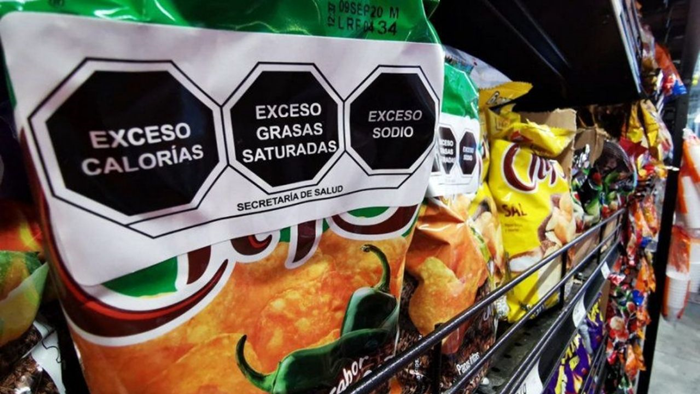
Costa Rica: Warning octagons are the most effective front-of-food labeling system in Costa Rica, according to study

A study conducted by Asociación Costa Rica Saludable, the Pan American Health Organization/World Health Organization (PAHO/WHO) and the Costa Rican Institute for Research and Education in Nutrition and Health (INCIENSA), showed that warning octagons are the most effective nutrition labeling system to correctly identify food products that are less harmful to health and to influence purchasing decisions.

Article – Brazil: Labeling food allergens in the packaged food pyramid groups in Brazil: analysis of descriptions, ambiguities, and risks

Objective: The aim of this study was to evaluate allergenic labeling components of packaged foods for “What is the quality of food labels?” and “What is the group of Brazilian Food Pyramid that ‘May contain’ is predominant?.” Results:

Results: The quality of the label was appropriate, and 69% of packaged foods had at least one allergen. The information “May contain” were higher in cow’s milk (Cereals and Meat & eggs), soy (Soybean & products), and egg protein (Cereals). Soybean & products were the highest insecurity group.

Conclusions:

Conclusions: Brazilian health professionals can count on good-quality labeling of packaged products. Consequently, they could promote patients’ and parents/caregivers’ education to consult the labels and manage the risks in processed foods about precautionary allergen labeling. Soybean & products were the most significant insecurity for food choices between Brazilian Pyramid Groups.

Brazil: Nutrition labeling: new rules take effect in 120 days

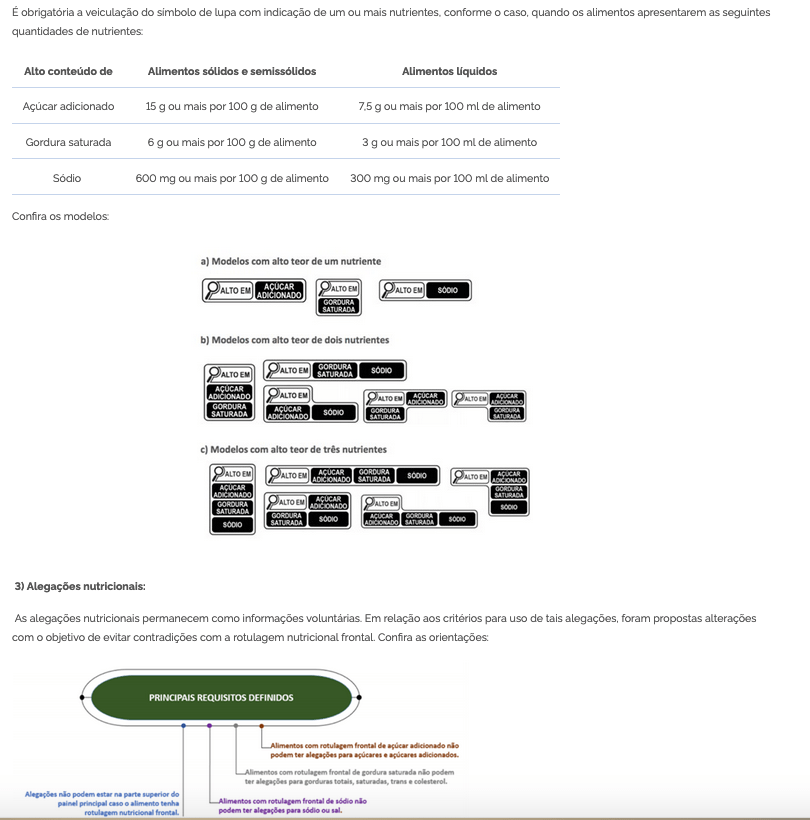
The new rules (RDC No. 429 and Normative Instruction No. 75) for food labeling come into force on October 9, 2022. In addition to changes in the table of nutritional information and claims, the novelty will be the adoption of front-of-line nutrition labeling.

Therefore, it is important for companies to be aware of the deadline for compliance. New products launched on or after October 9, 2022 must already have labels suitable for the new rules. For products already on the market to date, the deadlines for adaptation are:

  • Until October 9, 2023 (12 months from the effective date of the rule) for food in general;
  • Until October 9, 2024 (24 months from the effective date of the standard) for foods produced by a family farmer or rural family entrepreneur, solidarity economic enterprise, individual micro-entrepreneur, small agro-industry, artisanal agro-industry and artisanal foods; and
  • Until October 9, 2025 (36 months from the effective date of the standard) for non-alcoholic beverages in returnable containers, observing the gradual process of label replacement. The labeling changes were established by Resolution of the Collegiate Board of Directors – DRC No. 429 and Normative Instruction No. 75, published in October 2020. The objective of the standards is to improve the clarity and legibility of food labels and, thus, help the consumer to make more conscious food choices.