Members of the Committee on Economy, Trade and Competitiveness approved an opinion in favor of an initiative to make it mandatory for food products containing genetically modified organisms to be labeled to inform consumers about them.
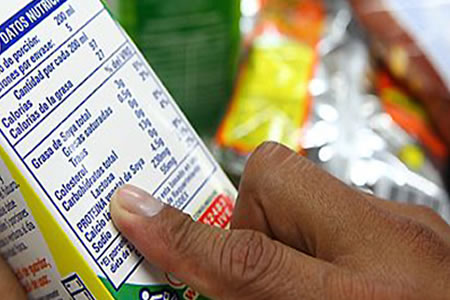
Members of the Committee on Economy, Trade and Competitiveness approved an opinion in favor of an initiative to make it mandatory for food products containing genetically modified organisms to be labeled to inform consumers about them.
In 2014 in Ecuador, it was promulgated a legal instrument that creates the obligation for processed foods to carry a label in the form of a traffic light that allows to know nutritional quality of a product to be reported at a single look. In Chile in 2016, it was promulgated similar legal instrument: “Ley Sobre Composición Nutricional de los Alimentos y su Publicidad” which requires that processed foods bear a label with a warning, for both legal instruments were analyzed their effectiveness through the change in consumer behavior in the consumption of sugary drinks. For Ecuador, the following data were taken: the income from taxes on soft drinks, and the tax on plastic bottles for single use; finding that, in Ecuador, that after the enactment of the Labeling Regulation there is no change in consumer behavior. In Chile, the income from taxes on non-alcoholic beverages was taken as an indicator, finding that, after the enactment of the Food Law (2016), It was no change observed in consumer behavior.
The General Directorate of Medicines, Supplies and Drugs (Digemid in Spanish), approved the List of Documents Considered Equivalent to the Certificate of Good Manufacturing Practices for the purpose of accepting the Certifications of Pharmaceutical Products issued by the Regulatory Authority of the People’s Republic of China.
According to the Directorial Resolution N° 059-2022-Digemid-DG-Minsa, the documents that do not appear in the following list, may be consulted before the Digemid, in order to be considered equivalent to the certificates of Good Manufacturing Practices, and incorporated in such list if applicable.

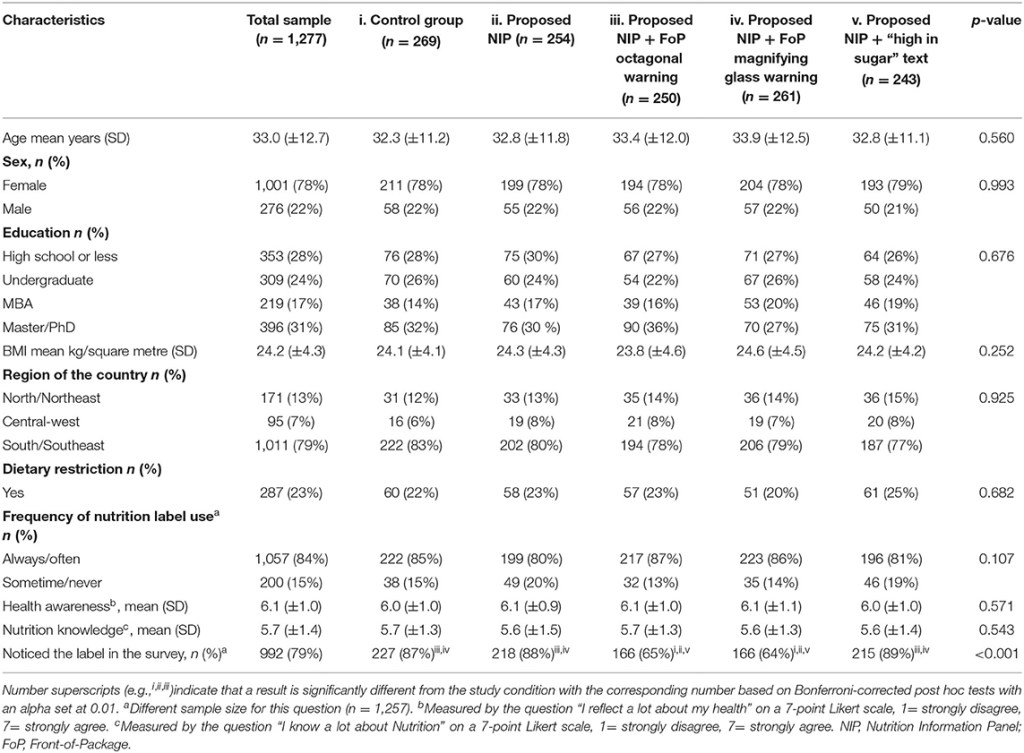
Providing information about the sugar content of packaged foods on product labels is an important strategy to lower consumers’ sugar intake. This study assessed the effect of exposure to different sugar labels on consumers’ understanding of the sugar content of foods and their food choices. In the first phase, five focus groups were conducted with a convenience sample of Brazilian adults to explore their perceptions about food labelling in general and sugar labelling in particular. Based on the qualitative results, four sugar label formats were developed and subsequently tested in a five-arm study on 1,277 adults via a randomised controlled online survey. The formats were: (i) no sugar information—control, (ii) total and added sugar content displayed in the Nutrition Information Panel (NIP), (iii) a front-of-package (FoP) octagonal warning for “high-in-sugar” products, (iv) a FoP magnifying glass warning for “high-in-sugar” products, and (v) a “high-in-sugar” warning text embedded on the NIP.
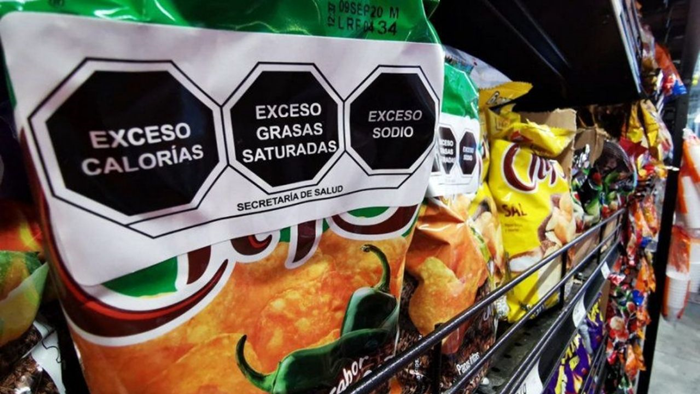
The first deadline for compliance with the law on Front Food Labeling is August 20, but there are already requests for an extension.
Among the largest food factories in Argentina there were requests to extend the “ultimatum”. The factories of ultra-processed and industrialized foods in general, which are the only ones “touched” by the Law, will present their requests in the next few days. They need time not only to “modify the packaging” but also to change the formulation of some products in order to avoid some seals.
COPAL, the business entity that brings together more than 30 chambers of the food and beverage industry, “is generating presentations, given that there are still inconsistencies and uncertainties that make it impossible to comply with the Law”.
 infoAlimentario