The National Association of Industrialists of Colombia (ANDI in Spanish) warned that the Front End Labeling Law will impact consumers’ pockets, due to the costs that some companies will have to assume to comply with the new regulation. See more personal finance news
The president of ANDI’s Food Industry Chamber, Camilo Montes, explained that companies have about six months to change their current packaging and comply with the regulations established by the Ministry of Health in Resolution 810.
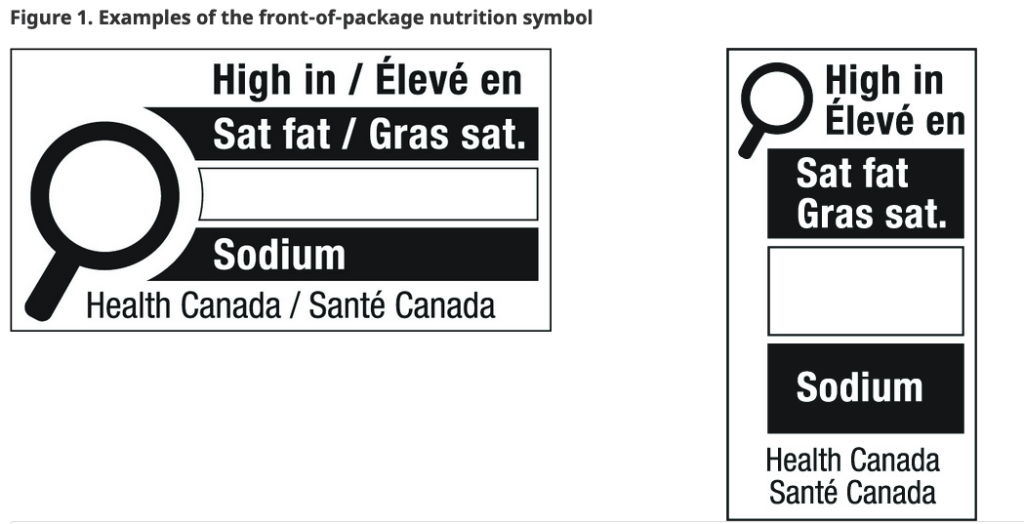
Health Canada is introducing new nutrition labelling regulations for packaged foods requiring a symbol on the front of packages indicating that a food is high in saturated fat, sugars and/or sodium. The regulations will come into effect on July 20, 2022.
The new front-of-package (FOP) nutrition symbol includes a magnifying glass, intended to capture people’s attention and act as a quick and easy visual cue to identify foods high in these three nutrients. The FOP nutrition symbol will complement the Nutrition Facts table, displayed on the back of food packages, to help Canadians make more informed food choices.
Saturated fat, sugars and sodium are nutrients of concern; evidence is clear that high intakes of saturated fat, sugars and/or sodium can contribute to various diseases, such as heart disease, type 2 diabetes and obesity.
FOP nutrition labelling is widely recognized by health organizations and the scientific community as an effective tool to help counteract rising rates of diet-related chronic disease. For example, FOP nutrition labelling has been successful in Chile, where it is estimated that household food purchases contained 37% less sodium and 27% less sugar after the country implemented a similar front-of-package labelling system to the one Canada is implementing.
Ordinance No. 449, dated June 15, 2022, of the Ministry of Agriculture, Livestock and Food Supply (MAPA in Portuguese), which amends the Annex to MAPA Normative Instruction No. 22, dated November 24, 2005, approving the Technical Regulations for the labeling of packaged animal products, was published in the Official Gazette of the Federation on June 20, 2022.
Establishments that manufacture animal products, registered before the Department of Inspection of Animal Products, have 180 days, as from Ordinance No. 449/2022, to adapt the labeling of their products and update the respective records in the MAPA computerized system. In other words, the deadline for the adequacy of labeling and records is until December 27, 2022.
One strategy for the prevention and treatment of non-communicable diseases (NCDs) is the implementation of the front-of-pack labeling (FoPL) in foods and beverages. In 2020, Mexico adopted the warning label system (WL) as a new public health policy, whose aim is to help consumers make healthier food choices. Previously, the Guideline Daily Amount (GDA) was the labelling used it. This paper aims to compare the understanding of two FoPL, the GDA and the WL, through the identification of unhealthy products in Mexicans with NCDs. We analyzed data from 14,880 Mexican adults older than 20 years old with NCDs (overweight-obesity (OW/O), self-reported diabetes mellitus 2 (DM2), or/and hypertension (HT), or/and dyslipidemia (Dys)). Participants were randomly assigned to one of two groups: the GDA labeling or WL. Each group had to respond to a survey and had to classify food products images as healthy or unhealthy according to the labelling system to which they were assigned. The correct classification was determined according to the criteria of Chile’s labeling nutrient profile stage 3. To evaluate the correct classification in each one of the groups we evaluated the differences in proportions. Logistic regression models were used to assess the likelihood to correctly classify the product according to participants’ number of diseases and WL information, taking GDA label as a reference. Participants who used the information contained in the GDA label misclassified food product labels in greater proportion (70%), mostly participants with three or more NCDs (participants with OW/O+ HT+ Dys, represent 42.3% of this group); compared with those who used WL (50%). The odds of correct classification of food products using WL image were two times greater compared to GDA image in participants with NCDs; being greater in participants with three or more NCDs. The study results highlight the usefulness of WL as it helps Mexicans with NCDs to classify unhealthy food products more adequately compared with GDA.
The draft resolution submitted for public consultation approves a Mercosur Technical Regulation (MTR) prepared within the scope of Sub-Working Group No. 3 Technical Regulations and Conformity Assessment of Mercosur. It is related to provisions for containers, coatings, utensils, lids and metal equipment in contact with food.
The document is attached. It is draft resolution no. 02/22: Modification of Resolution GMC no. 46/06 Mercosur Technical Regulation on provisions for metal containers, coatings, utensils, lids and equipment in contact with food.



 infoAlimentario