In June 2016, a comprehensive food policy was implemented in Chile that included front-of-package warning labels on key nutrients of concern (total sugars, added saturated fats, sodium, and calories), child-directed food advertisement bans, and school regulations. The policy was implemented in 3 phases from 2016 to 2019 and the primary objective was to improve children’s food environments. This study’s objective was to assess changes in child and adolescent intake of key nutrients of concern (total sugars, saturated fats, and sodium) at school after the initial implementation of Chile’s Law of Food Labeling and Advertisement.
Article – Structural responses to the obesity epidemic in Latin America: what are the next steps for food and physical activity policies?
Obesity is among the most complex public health challenges, particularly in Latin America, where obesity rates have increased faster than in any other region. Many countries have proposed or enacted comprehensive policies to promote adequate diet and physical activity under a structural framework. We summarize articles discussing the scope and impact of recently implemented obesity-related interventions in the light of a structural response framework. Overall, we find that: (1) market-based food interventions, including taxes on junk food, nutrition labelling, and marketing restrictions, decrease the consumption of targeted foods, (2) programs directly providing healthy foods are effective in reducing obesity, and (3) the construction of public areas for recreation increases the average frequency of physical activity. Although obesity-related interventions in the region have somewhat improved health behaviours, obesity prevalence remains on an upward trend. We discuss some opportunities to continue tackling the obesity epidemic in LATAM under a structural framework.
Brazil – Anvisa implements new system for consultation of regulatory procedures
The Agency has made available a new system for consulting formalities. The tool allows the user to consult in detail the information of each subject, in addition to using filters with different criteria, such as: Activity, Service, Request Type and Request System.
The result of the query will now bring, in the same area, other important information, such as the fees to be paid for procedures and values of the Sanitary Surveillance Inspection Fee by company size. The search also shows the document checklist, the legal basis and the link to the corresponding request forms, when applicable.
FAO – Frontal nutrition warning labeling should be an immediate measure in Panama
In Panama, around 40% of school-age children and adolescents are overweight; and in young children under five years of age, 13% are overweight. If we take into account data from 2003, when excess weight in schoolchildren was 20% and in young children was 9.4%, we can see that this phenomenon of malnutrition has increased alarmingly in the last 20 years.
In response to this scenario, FAO has accompanied the Ministry of Health (MINSA), and other actors in the food system, in the development of food-based dietary guidelines, which has been useful for the formulation of national policies on food and nutrition, health and agriculture, as well as food and nutrition education programs aimed at promoting healthy eating habits and lifestyles.
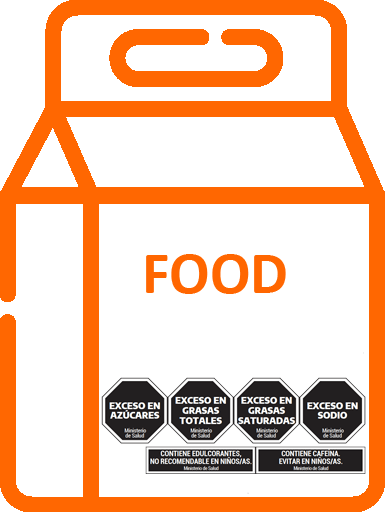
The country has made progress in this direction by implementing measures such as the regulation of the sale and consumption of junk food and sugar-sweetened beverages in schools. However, more effective measures are still needed, such as a system of nutritional warning labeling that informs consumers, especially parents, of the risks of consuming products high in sugars, fats and salt.
México – Advertisers struggle to comply with labeling and advertising permits
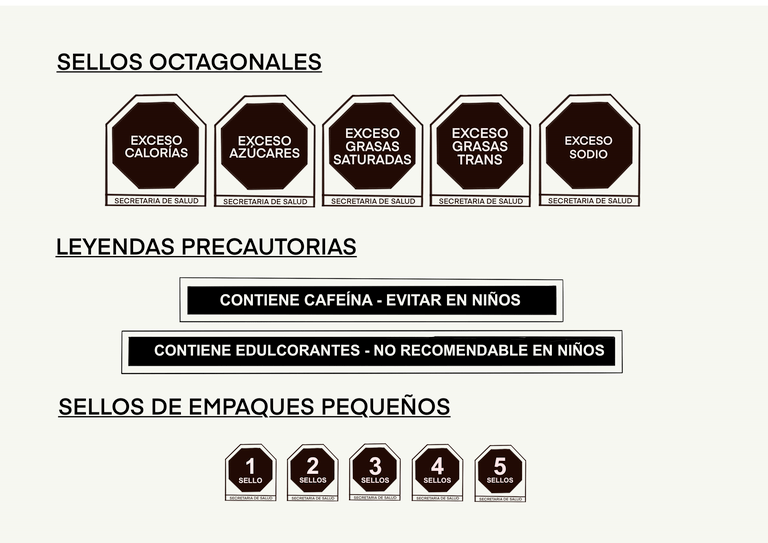
Mexico’s advertising industry faces new challenges as a result of the new front-end labeling regulation, which came into effect on March 8, and which requires advertisers to request advertising permits from the Federal Commission for Protection against Health Risks (Cofepris) to promote pre-packaged food and non-alcoholic beverages that include certain elements in the front-end labeling.
Luis López Linaldi, founding partner of the firm Solórzano Linaldi, explains that since that time, the labeling of prepackaged food and non-alcoholic beverages with excess calories, sugars, trans fats and sodium has been modified. Now, this front labeling system is introduced as a reference parameter to define whether or not certain restrictions apply to the advertising of food and non-alcoholic beverages.
The 3 main changes in the Regulation of the General Law of Health on Advertising
Advertising of pre-packaged food and non-alcoholic beverages must be congruent with the front labeling and, if applicable, include warning seals, precautionary legends, recommendation or acknowledgement statements.
The use of children’s characters, cartoons, celebrities, mascots or interactive elements in the advertising of pre-packaged food and non-alcoholic beverages that have warning seals and are directed to infants is prohibited.
The advertiser must obtain authorization before broadcasting the advertisement with warning seals on free-to-air television, pay TV, movie theaters, internet and other digital platforms.
 infoAlimentario