Brazil – New decrees provide guidelines for healthy nutrition in schools and cities

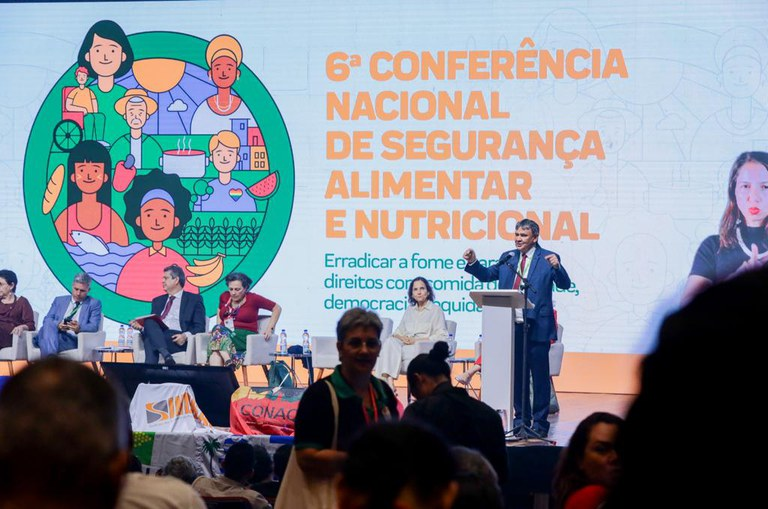
The renewal of the National Conference on Food and Nutritional Security has a special meaning for more than one thousand participants: the strength of civil society. Representatives from all over the country will hold, in Brasilia, until next July (14.12), the 6th edition of the meeting. This March (12), during the official inauguration, three new decrees signed by President Lula were presented that conform the strategy to promote food and nutritional security in Brazil.

The texts were published in an extra edition of the Official Gazette of the Union and addressed adequate and healthy nutrition at school and in cities. One of them also establishes the National Food Supply Policy (PNAAB) and foresees the elaboration of the National Food Supply Plan. For the holder of the Ministry of Development and Social Assistance, Family and Fight against the Hambre, Wellington Dias, the decrees guarantee “healthy food conditions in all regions of Brazil and, also, the supply and regulation, which allows this solidity”.
Article – Analysis of the arguments received in the public consultation for the Mexican front warning labeling

Objective. To analyze the different elements of the arguments received during the public consultation of the Modification Project to the Official Mexican Standard-051 (NOM-051), emphasizing the protection of children and adolescents. Materials and methods. The information provided in 1 095 arguments was analyzed. Key actors were identified, and a content analysis was carried out to identify if the position was in favor or against the numerals related to the protection of children and adolescents. The analysis
was done using NVivo software. Results. 781 key players were identified. During the public consultation, four private sector tactics were identified to interfere in the NOM-051 process: a) front groups that sent comments against NOM- 051; b) questions about the scientific evidence on the relationship between consumption of sweeteners and obesity in schoolchildren; c) questions about the effectiveness of the
use of warning labeling for sweeteners; d) comments aboutcindividual responsibility individuals responsible for their disease. Conclusion. The interference of the private sector in the NOM-051 implementation process was evident in the comments submitted during the public consultation.

Argentina – ANMAT publishes “GUIDE OF RECOMMENDATIONS FOR A SAFE GLUTEN-FREE MENU”

The National Administration of Medicines, Food and Medical Technology (ANMAT en Español) has published Disposition 10867/2023 which includes the text of ANNEX I (IF-2019-06341144-APN-DERA#ANMAT) of ANMAT Disposition No. 4729/2019 by “GUIDE OF RECOMMENDATIONS FOR A SAFE GLUTEN-FREE MENU”.

Article – Labels, taxes, and food reformulation: A tale of sugar in carbonated soft drinks in Ecuador

The prevalence of obesity has increased significantly worldwide, including in low- and middle-income countries. In Ecuador, a middle-income country, the government has implemented two policies to improve the quality of its population’s diet: (1) a traffic-light (TL) nutritional labeling requirement for processed foods and (2) a special tax scheme for drinks with a high sugar content (HSC). This study examines changes in carbonated soft drink (CSD) sugar formulation and its associated impacts on sugar consumption after the implementation of these two policies. Sugar content in soft drinks was obtained from the National Agency for Health Regulation, Control, and Surveillance (ARCSA) and directly from the labels of carbonated soft drinks sold in the country. CSD monthly purchase data from January 2013 to December 2019 were obtained from the Kantar World Panel (Ecuador). Mixed reactions followed the introduction of the TL in the sugar content reformulation of CSD. In contrast, the implementation of the HSC tax scheme was followed by extensive efforts to reformulate CSD as all brands studied decreased their sugar content. We also found evidence that CSD consumption reduced significantly after the HSC tax scheme was imposed. Overall, sugar consumption linked to CSD decreased after the implementation of these two policies. Still, most of this decrease is related to reformulation activities observed after the HSC tax scheme was implemented.

Article/Brazil – Labeling with nutritional claims statements: dietary fiber

Food labeling is essential, new legislations on food labeling have been established to ensure legibility. Products with nutritional claims are present on the label and contribute to healthier choices, so it is necessary to have a clear and reliable label. This study aimed to analyze food labels with functionality claims for the presence of fiber, checking whether they comply with current legislation, in light of labeling updates. This research took place in 3 supermarkets in the city of Caucaia in the state of Ceara, North east Brazil and 30 labels with nutritional claims were selected. A check list was prepared based on RDC nº 727/2022, which included two articles, RDC nº 429/2020 and IN nº 75 with 38 items, and data analysis was carried out using the Excel program. An Adequacy of 89% was obtained in Article 4, and 73% in Article 7 of RDC 727/2022 and 51% in RDC nº 429/2020.
In relation to the percentage of conformity per label evaluated, 24 brands achieved 80%. It is observed that few labels are in accordance with the legislation, this implies nutritional labeling showed non-compliance, the nutritional claims displayed results below expectations, and so the market must initiate changes in order to meet the requirements of the current legislation.