Colombia – Invima denies clashes with the Ministry of Health and supports new food labeling

The National Institute for Food and Drug Surveillance (INVIMA), in a statement, rejected versions recently spread in the media and social networks that, according to the entity, distort its role in protecting public health and suggest a supposed confrontation with the Ministry of Health and consumer organizations.

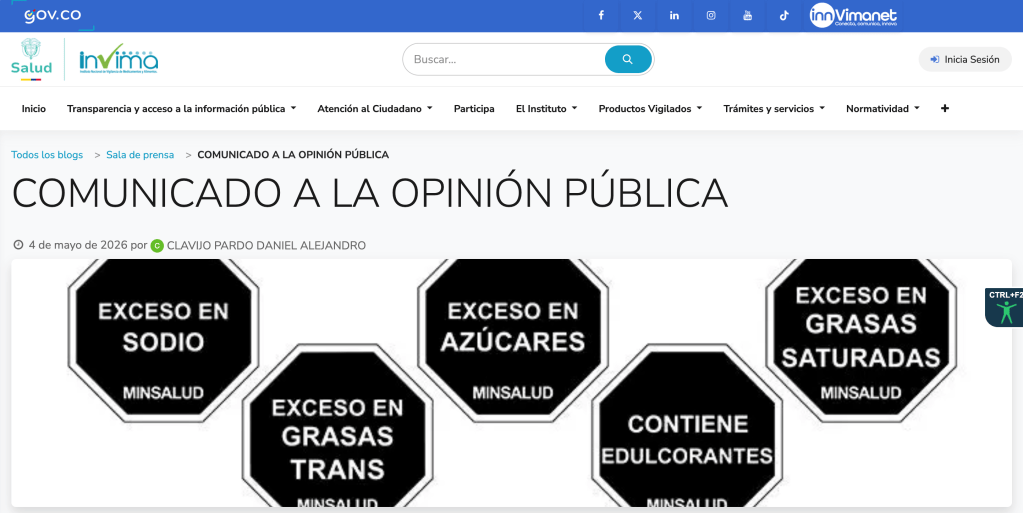
The entity assured that it is not true that it is questioning the process of evaluating alternatives for front warning labels on ultra-processed foods.

In the statement, the entity also highlighted that it works in coordination with health sector institutions and conducts a strict risk assessment, where the preventive criterion always prevails in order to protect public health.

INVIMA emphasized that it is carrying out coordinated work with the Ministry of Health and other institutions, based on a strict risk assessment where the preventive approach prevails. This task includes monitoring product labeling and advertising, considered key to ensuring that consumers receive truthful, clear, and safe information.
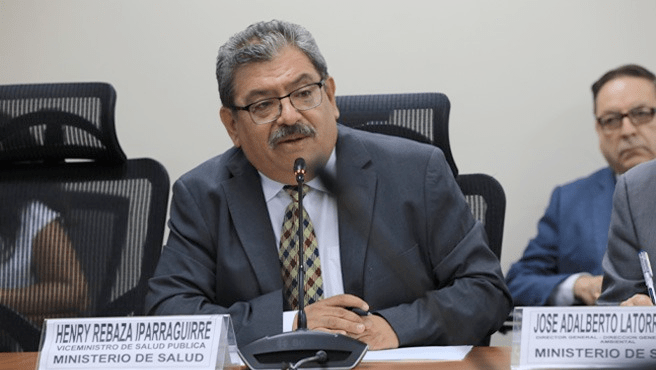
Peru – Ministry of Health promotes the creation of the National Agency for Environmental Health and Food Safety (ONSA) to strengthen public health

During the working group for the review of Bill No. 11279/2024-PE, organized by the Health and Population Commission of the Congress of the Republic, the Deputy Minister of Public Health, Henry Rebaza, highlighted that the country is facing a historic opportunity to strengthen public health from its foundation, thru a solid, modern, and decentralized health authority that guaranties risk control in water, air, soil, and food.

The Deputy Minister emphasized that the proposal to create the National Organization for Environmental Health and Food Safety (ONSA in Spanish) is the result of nearly two years of technical work and coordination with various sectors, with the aim of strengthening oversight and sanctions for a uniform and efficient management of public health.

Among the main benefits for the population are the reduction of foodborne diseases and their associated costs, the decrease in economic losses in production processes, greater efficiency in health surveillance and inspection processes, improvement in the competitiveness of the food industry, the protection of public health thru the control of environmental determinants, as well as the promotion of sustainable human development.

Peru – Ministry of Health warns that indiscriminate consumption of vitamins can be harmful to people’s health

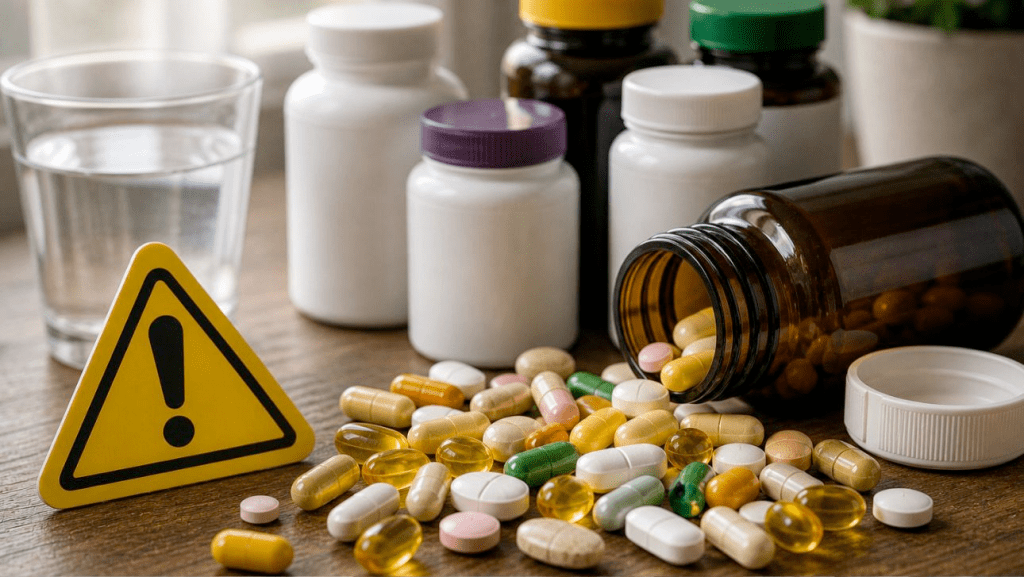
Excessive and unsupervised consumption of vitamin supplements can cause serious adverse health effects, which could worsen if combined with other medications without medical supervision, warned the Ministry of Health, thru the General Directorate of Medicines, Supplies, and Drugs (DIGEMID in Spanish).

Among these harmful effects can be overdoses, known as hypervitaminosis, whose consequences range from nausea, fatigue, and neurological disturbances to severe liver damage. This occurs due to the accumulation of vitamins in the body, especially the fat-soluble ones like A, D, E, and K.

These complications can be intensified by drug interactions, as vitamins have the potential to alter other treatments, either by nullifying their efficacy or increasing their toxicity.

Chile – SAG confirms indefinite validity of organic agreement that favors Chilean exports

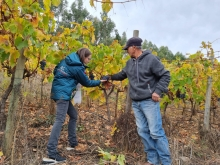
The Agricultural and Livestock Service (SAG in Spanish), informs that, as part of the periodic monitoring of the Organic Products Equivalence Agreement between Chile and the European Union, this bloc confirmed the indefinite validity of the agreement, ensuring the continuity of recognition of the Chilean organic certification system.

The equivalence agreement, signed between Chile and the European Union in 2017, allows organic products certified in Chile to be recognized as equivalent in the European market, without the need for additional certifications. This means that a Chilean organic product can enter Europe as organic under the same conditions as a European product, facilitating trade and reducing costs for exporters. The categories of products included are as follows: fresh and processed vegetables including wine, seeds and propagation material, as well as honey.

El Salvador – Commission for Children and Social Integration proposes reforming the breastfeeding law to regulate health controls for breast milk substitutes

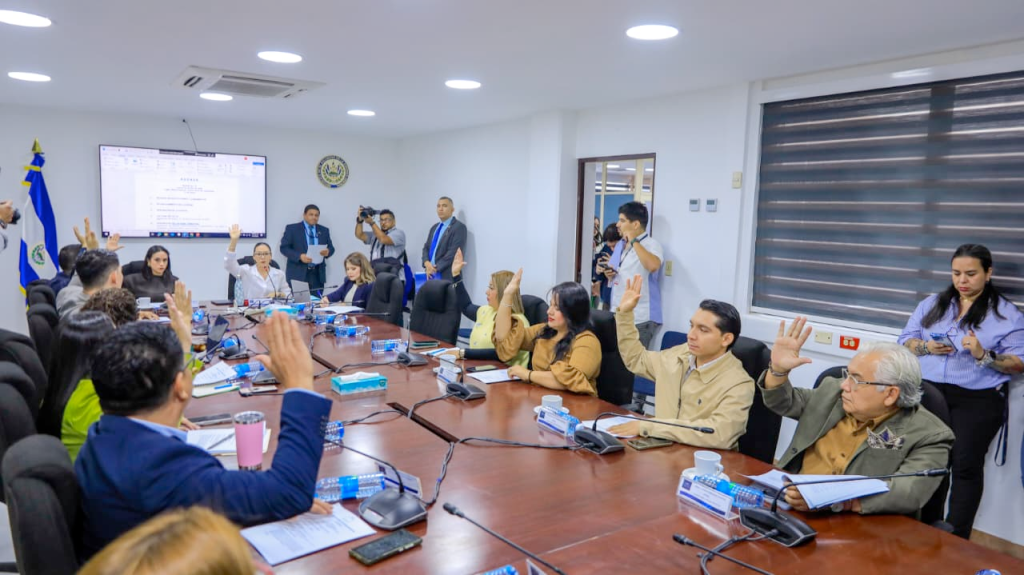
In order to protect the right to health and nutrition of children in their early years of life, the deputies of the Commission on Childhood and Social Integration issued a favorable opinion to make changes to the Law on Love Turned into Food for the Promotion, Protection, and Support of Breastfeeding.

The modifications to the legal framework —in effect since 2022— aim to define the products that replace breast milk (infant formula) and, at the same time, strengthen health controls, labeling, and the promotion of these.

Proposed changes

The regulations and prohibitions provided for in the law regarding breast milk substitutes must be applied to bottles, pacifiers, and teats.

One of the changes is to Article 8 of the law, where greater clarity and precision are established for some concepts related to breast milk substitutes, such as infant formulas, special formulas, growth and follow-up formulas, or other products of dairy or plant origin.

Also of foods and beverages (including water) aimed at children from zero to 36 months of age and even for older ages, if recommended.

After the definition of the substitute products contemplated by the law, the MINSAL has requested the proper sanitary registration of these.

Therefore, an amendment would be made to Article 6 for the authorization of labeling and the sanitary registration of breast milk substitutes, in accordance with the established standards.