As part of the measures being taken by the national government to speed up bureaucratic procedures, Decree No 35/2025, which amends Decree No 2126/1971, which regulates Law 18.284 on the Argentine Food Code, was published today, simplifying and streamlining the sanitary management of imports and exports of food and related products.
The National Administration of Medicines, Food and Medical Technology (ANMAT in Spanish) informs that, as from the publication of this new decree, food products, packaging and materials in contact with food under its competence, which have certification issued by countries considered as high sanitary surveillance or with which economic integration treaties or reciprocity agreements detailed in the decree are in force, may enter the country by presenting an Import Affidavit, as long as they have a marketing authorization or certificate of free sale of the product -or a similar document- approved by the competent health authority of the country of origin, regardless of whether or not the products are covered by national regulations.
ANMAT will soon publish the complementary provisions and procedures to carry out the implementation of this new regulation.
The Americas
Regulatory news in the Americas
Argentina – ANMAT publishes changes in the front labeling of packaged foods
The National Administration of Drugs, Food and Medical Technology (ANMAT in Spanish) has published 2 new Resolutions 11378/2024 and 11362/2024, which amend the Application Manual of Law No. 27642 and Decree 151/22 on the front labeling system.
Resolution 11362/24: Nutritional declaration and advertising restrictions
Introduced the “Application Manual”, which establishes new guidelines for front nutritional labeling. According to this regulation, foods and alcoholic beverages formulated, manufactured and packaged without the presence of the customer must include these seals, provided that they contain added sugars, sodium or fats, either as main or secondary ingredients. In addition, the labeling must detail the amounts of added sugars, saturated fats, total fats, sodium and energy in the ready-to-eat product.
Regarding advertising, it is prohibited to include on the packaging any type of endorsement granted by civil or scientific associations, as well as the use of children’s characters, promises of prizes, contests or events. In short, the product cannot be promoted through elements that condition the purchase decision outside the genuine interest of the consumer.
Resolution 11378/24: Restrictions for products aimed at minors
It establishes the prohibition of advertising, promoting or sponsoring packaged food and alcoholic beverages that are especially aimed at children and adolescents.
The annex of this provision emphasizes advertising methods, requiring that the labels be visible and proportional to the size of the container. In the case of audiovisual advertising, they must remain on screen for a sufficient time, avoiding inducing errors or confusion in consumers.
Current regulations and transition
Products that are already labeled according to the previous regulations will continue to be marketed until stock runs out. From then on, companies will have to adapt to the new provisions established in provision 11362/2024.
ANVISA updates guidelines for toxicological evaluation of pesticides
The National Health Surveillance Agency (ANVISA in Portuguese) Anvisa has published updated versions of guidelines for evaluating the mutagenic potential, carcinogenic potential, neurotoxicity and reproductive toxicity of pesticides.
The guidelines provide guidance on the toxicological evaluation of pesticides, which encompasses the assessment of various outcomes and is carefully conducted by the Agency, both during product registration and during a possible reanalysis.
In addition, the guides express ANVISA’s understanding of best practice in relation to procedures, routines and methods considered appropriate to meet the technical or administrative requirements mandated by the Agency’s legislative and regulatory frameworks.
Guide 66/2023 – version 2 – Guide to the Assessment of the Mutagenic Potential of Pesticides
Guide 67/2023 – version 2 – Guide for the Evaluation of the Reproductive Toxicity Potential of Pesticides
Guide 68/2023 – version 2 – Guide for the Evaluation of the Carcinogenic Potential of Pesticides
Guide 69/2023 – version 2 – Guide for the Evaluation of Neurotoxicity Associated with Pesticides
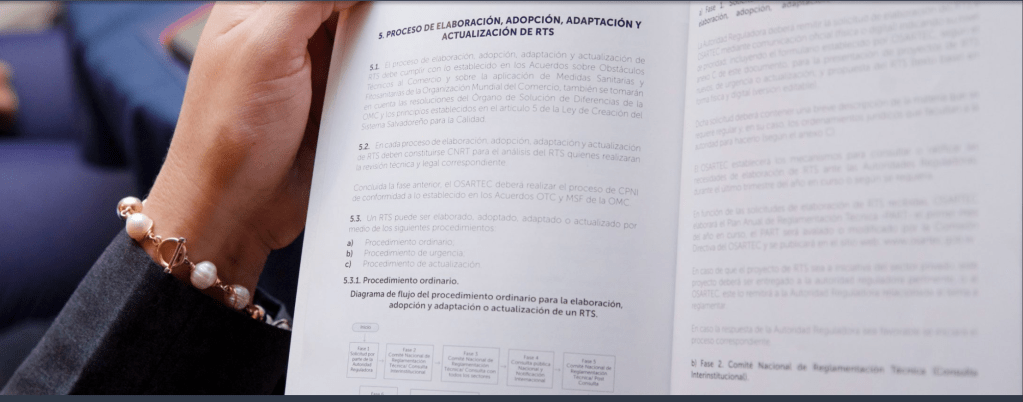
El Salvador – Official launch of the Regulations for the Preparation of Salvadoran Technical Regulations
The official launch of the Regulation for the Preparation of Salvadoran Technical Regulations was held. This document establishes the guidelines for Good Practices in the preparation, adoption, adaptation and updating of Salvadoran technical regulations.
This legal instrument allows us to harmonize criteria to be fulfilled by the State’s regulatory authorities, in compliance with the commitments signed by El Salvador before the World Trade Organization.
For the Government of El Salvador, this launch is important, since the technical regulations are directly related to exports and contribute to the country’s objectives, to provide tools that open paths for Salvadoran products to enter international markets. Said Licda. Andrea Pérez, Director of Innovation and Productivity of the Ministry of Economy.
PAHO congratulates Colombia for approving regulations that will promote the elimination of industrially produced trans fats in foods
The Pan American Health Organization (PAHO/WHO) congratulates Colombia for the approval of resolution 2066 of October 23, 2024, which establishes “the technical regulation that defines the uses and maximum contents of industrial trans fats and partially hydrogenated oils and dictates other provisions.”
This measure will promote the elimination of industrially produced trans fats in food, helping to protect the cardiovascular health of the population. Excessive consumption of trans fats is associated with an increased risk of developing and dying from coronary heart disease.
The regulation, after going through a transparent process of public consultation and regulatory impact analysis, was approved by the executive branch. In this regulatory instrument, the Ministry of Health and Social Protection adopts the best practices of PAHO/WHO for the elimination of industrially produced trans fats from food in Colombia. The first is the prohibition of the use of partially hydrogenated oils in food. The second is the establishment of a 2% limit for other industrially produced trans fatty acids within the total fats.

 infoAlimentario