Brazil – Supreme Court of Justice considers a legal limit of 1% for labels to report the presence of GMOs

The Second Chamber of the Superior Court of Justice (STJ in Portuguese) ruled unanimously on the legality of Decree 4,680/2003, which establishes a 1% limit for manufacturers of food products sold in Brazil to be obliged to inform, on labels, the presence of genetically modified organisms (GMOs).

The Federal Public Ministry and the Brazilian Institute of Consumer Protection (IDEC in Portuguese) filed a public civil action against the Union to question the legality of Decree 3.871/2001, which regulated the labeling of foods containing transgenic products up to 4% of their composition. . During the process, the original decree was replaced by Decree 4.680/2003, which reduced from 4% to 1% the limit that makes consumer information on the presence of GMOs mandatory.


Brazil – New food labelling guide for family agribusiness

Researchers from the Federal Institute of Pará (IFPA in Portuguese), Marabá Rural Campus, created the booklet: “Food Labeling: Guidelines for the preparation of food labels in family agribusiness”, available for free at the link. The objective is to provide examples and instructions for the preparation of labels for products such as honey, fruit pulp, dulce de leche, dehydrated fruits and herbs, liqueur, cupuaçu cream, tucupi and free-range chicken eggs.

Peru – Confiep requires health authorities to comply with regulations on food and beverage sanitary registrations

The National Confederation of Private Business Institutions (Confiep in Spanish) has sent a notarized letter to the Minister of Health, César Vásquez, to demand compliance with the current legal regulations that establish, among other things, that the manufacture of industrially processed food intended for human consumption is only carried out in establishments that have the current sanitary authorization granted by the respective national sanitary authority.

In this sense, according to the business association, the Health Sector should refrain from requiring sanitary registrations to extend industrially manufactured food and beverages of national or foreign production, since such measure is not covered by the General Health Law.

Colombia – New draft decree to use coca and poppy plants in medicinal, scientific and industrial fields

With the main purpose of taking advantage of coca and poppy plants in the medicinal, scientific and industrial fields, the national government drafted a decree that would allow the development of alternative use projects with this plant material.

The text, open to comments from citizens and interest groups until November 15, is focused not only on generating knowledge about the uses, benefits and potential of the plants, but also on promoting the productive and sustainable development of medicines, fertilizers, fertilizers, pigments, food, among other products.

The regulatory initiative would also allow the academy to develop new scientific advances and generate knowledge on biological components that can be used in legal productive initiatives, which would continue to position the country as a source of scientific knowledge on drugs.

The regulatory project, aligned with the National Development Plan and the National Drug Policy, establishes that the projects on the matter will be presented by public entities before the National Narcotics Council and will have the participation and association of ethnic or peasant communities.

This last provision will also allow communities to participate in productive projects where they were previously lagging behind and thus promote the economic development of their territories.

The draft decree was prepared in coherence with and respect for the commitments that Colombia has signed as a country through the international conventions on drugs.

Peru – Approval of a ruling to regulate the use of fruit images in advertisements

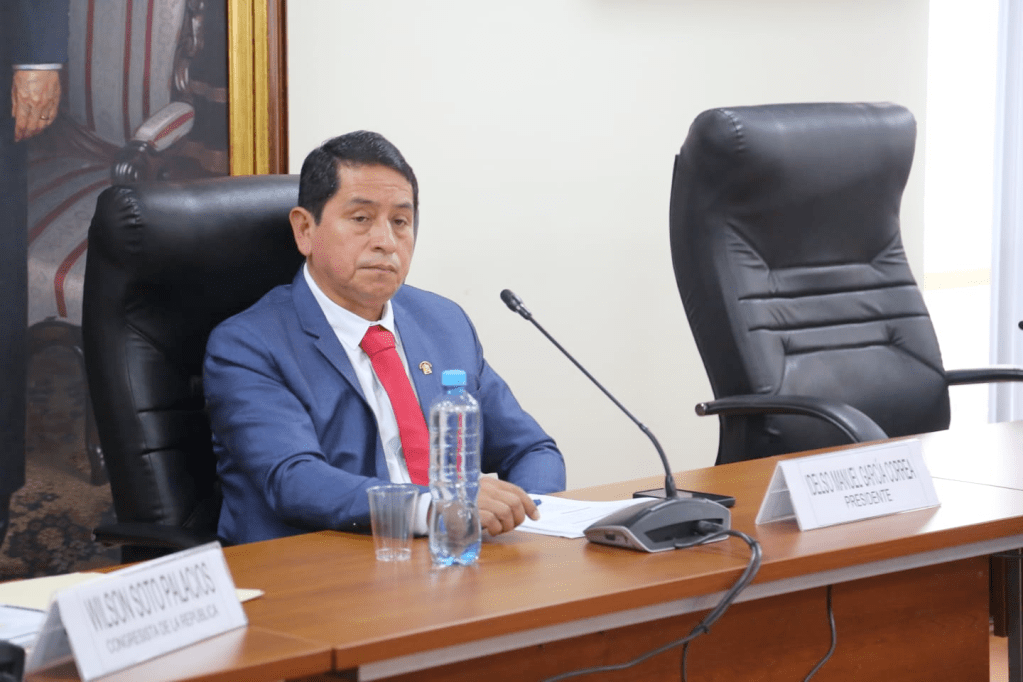
In order to regulate the use of images of fruits in advertising and labeling, the Commission for Consumer Defense and Regulatory Bodies of Public Services unanimously (12 votes) approved the opinion that modifies Law 30021, Law for the Promotion of Healthy Eating for Children and Adolescents.

The legal proposal is based on Bills 8455/2023-CR, 8543/2024-CR and 8633/2024-CR.

During the presentation, the president of the commission, Idelso García Correa, pointed out that “after having evaluated the opinions of the competent entities, he considers it viable to modify article 8, paragraph m) of Law 30021, Law for the Promotion of Healthy Eating for children and adolescents”.

“The purpose, he emphasized, is to clearly establish that images of natural products should not be shown if they are not.”

“The clarifications that the substitute text contained in this opinion makes to Law 30021, have a positive impact not only for the most vulnerable consumers, such as this minor age group, but also benefits the State,” he said.

In its sole article, the opinion modifies literal m) of article 8 of Law 30021, Law for the Promotion of Healthy Eating for Children and Adolescents, in order to make such precision.