Panama – Front-of-Food Labeling receives more institutional support

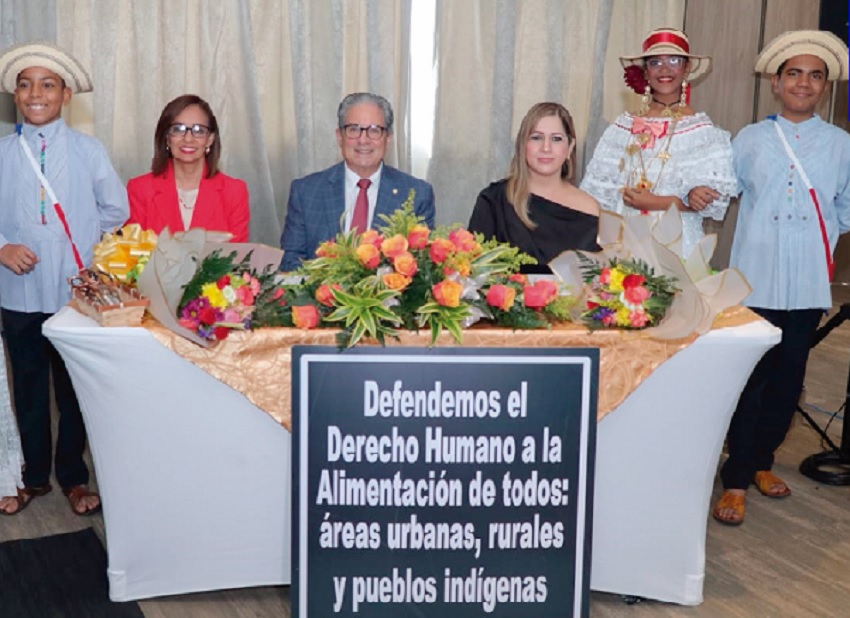
The Healthy Eating Movement has the support of the Minister of Health, Fernando Boyd Galindo, in its crusade to approve the front labeling of food products.

The Minister said that front labeling is a measure backed by scientific evidence, endorsed by international organizations, as part of a broader health and wellness strategy.

The Minister’s support is a good sign for the promoters of this project, which has not been able to advance in the three occasions it has been presented.

The independent deputy, Yarelis Rodríguez, considers that it is possible for it to be approved in the next session.

“Now that we are united and working as a team, together with the Ministry of Health, the civil society, PAHO and also with international support, I believe that we will be able to achieve it and we will have this law that we want so much, mainly, so that the right to health and to be informed is fulfilled”, said the deputy.

She added that it is important to raise awareness in the food industry, which also has to offer both information and healthy products that can help the population.
Mexico – Proposed regulation of nutritional information in fast food and beverage establishments

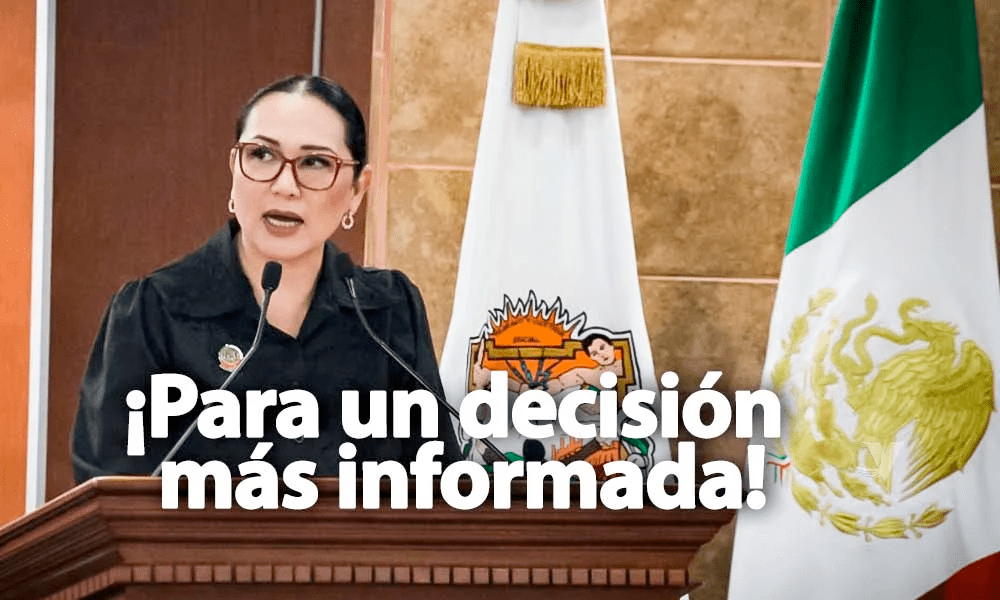
With the purpose of establishing the obligation for establishments dedicated to the preparation and service of food and beverages for fast consumption to clearly advertise the amount of calories contained in their products, Congresswoman Araceli Geraldo Núñez presented an initiative to reform the Public Health Law of the State of Baja California.

In this regard, the legislator recalled that on November 8, 2019, a decree was published in the Official Gazette of the Federation that reformed various provisions of the General Health Law, regarding overweight, obesity and labeling of food and non-alcoholic beverages.

He pointed out that, in the current context, where the pace of life is accelerated, the population consumes approximately one third of its calories outside the home, through foods that, in general, contain higher amounts of calories, sodium and saturated fats compared to those prepared at home. In addition, per capita consumption of ultra-processed foods remains high.

Dominican Republic – Ministry of Health proposes to adopt new food and beverage sanitary regulations by July 2025

The Ministry of Public Health and Social Assistance intends to adopt the new version of the Food and Beverage Health Regulations by July 2025. The new regulations aim to establish the health conditions and regulations that the following processes must comply with: production, handling, import, export, processing, packaging, storage, distribution, transportation, and sale of food for human consumption. It is mandatory throughout the country for individuals or legal entities involved in or involved in the processes provided for therein, as well as for establishments, means of transportation, and distribution used for such purposes, to guarantee the protection of human health and safety.

Peru – INACAL announces the approval of a series of Peruvian Technical Standards for foodstuffs

The National Institute of Quality (INACAL in Spanish) through Directorial Resolution No. 000008-2025-INACAL/DN and Directorial Resolution No. 000010-2025-INACAL/DN announces the approval of a series of technical standards related to food.


Directorial Resolution No. 000008-2025-INACAL/DN

  • NTP-ISO 21415-3:2025 Wheat and wheat flour. Gluten content. Part 3: Determination of dry gluten from wet gluten by an oven-drying method. 1st Edition.
  • NTP-ISO 21415-4:2025 Wheat and wheat flour. Gluten content. Part 4: Determination of dry gluten from wet gluten by a rapid drying method. 1st Edition.
  • NTP-ISO 6887-4:2025 Microbiology of the food chain. Preparation of test samples, initial suspension and decimal dilutions for microbiological examination. Part 4: Specific standards for the processing of miscellaneous products. 1st Edition.

Directorial Resolution N.° 000010-2025-INACAL/DN

  • NTP 011.462:2025 QUINOA AND ITS DERIVATIVES. Quinoa white grain (raw material). Requirements. 2nd Edition. Replaces NTP 011.462:2019.
  • NTP 205.061:2025 QUINOA AND ITS DERIVATIVES. Quinoa flakes. Requirements. 4th Edition. Replaces NTP 205.061:2018.
  • NTP 208.033:2025 COCOA AND CHOCOLATE. Cocoa butter. Test method for the determination of fatty acid composition by gas chromatography. 3rd Edition. Replaces NTP 208.033:2015.
  • NTP 202.136:2025 MILK AND MILK PRODUCTS. Sweetened condensed milk. Sample preparation and test methods (lactic acid, ash, fat, protein, lactose, sucrose and total solids). 2nd Edition. Replaces NTP 202.136:1998 (revised on 2014).
  • NTP 201.003:2024/CT 1:2025 MEAT AND MEAT PRODUCTS. Definitions, classification and requirements for porcine carcasses and meat. TECHNICAL CORRIGENDUM 1. 1st Edition.

Ecuador – New draft standards on complementary infant formulae and fermented milks

The National Standardization Service (INEN in Spanish) has published for public consultation 2 draft standards related to complementary infant formula and fermented milks.

  • NTE INEN-CODEX CXS 156. Standard for supplementary formulae for older infants and products for young children (CXS 156-1987, IDT)

This section of the standard applies to supplementary formulae for older infants defined in Section 2.1, in liquid or powder form.

1.2 This section of the standard contains compositional, quality, safety,labeling, analytical and sampling requirements for complementary formulae for older infants.

1.3 Onlyproducts that meet the criteria established in the provisions of this section of this standard shall be presented as complementary formulae for older infants.

  • NTE INEN 2395. Fermented milks. Requirements

This standard establishes the requirements for fermented milks. This standard is applicable to fermented milks such as: yogurt, yogurt from alternative cultures, acidophilus milk, kefir, kumys, concentrated fermented milk, flavored fermented milks and fermented milk drinks.