By means of Joint Resolution 34/2025, the Secretariat of Health Management and the Secretariat of Agriculture, Livestock and Fisheries modified the Argentine Food Code to replace Article 916 bis, which allows the use of ingredients and additives with glazing and anti-humectant/anti-caking surface function in dried fruits. It authorizes the use of substances that are scientifically endorsed for use in the concentrations indicated. It allows the local industry to have access to greater opportunities to produce its products under safety standards, offering more attractive options without neglecting public health.
The Americas
Regulatory news in the Americas
Argentina – Modification of labeling and health claims requirements for dietary supplements
Through Joint Resolution 33/2025, the Secretariat of Health Management and the Secretariat of Agriculture, Livestock, and Fisheries amend the Argentine Food Code regarding health property claims on food and dietary supplements:
ARTICLE 1.- Article 235 of the Argentine Food Code (CAA) is replaced, and it will be worded as follows: “Article 235: On the labels or advertisements of food products disseminated through any graphic, audiovisual, or digital medium (including radio, television, social media, oral or written communication, among others), it is prohibited to make claims that these products possess medicinal and/or therapeutic properties. Only health property claims (DPS) authorized by the national health authority may be used, if applicable.”
ARTICLE 2.- The title LABELING in Article 1,381 is replaced, and it will be worded as follows: “LABELING: Dietary supplements shall be labeled with the sales designation ‘Dietary supplement based on…, (filling in the blank with the characteristic nutrients), in…, (filling in the blank with the form of presentation), for… (filling in with the target population group for which the product is intended, if applicable). The label of dietary supplements must comply with the general requirements established in Chapter V ‘Standards for the labeling and advertising of food’ and those determined in each specific case in this Code. Furthermore, the nutritional information must include the names of the nutrients and/or ingredients of interest, their contents per unit or per daily consumption recommendation proposed by the manufacturer, and, if applicable, the percentage of the RDI covered for each of them, according to the values established in the tables of Article 1,387.
Brazil – Bill introduced to make mandatory the inclusion of warnings on labels of ultra-processed foods
Senator Dr. Eudócia (PL/AL) presented a bill that seeks to make mandatory the inclusion of warnings on the labels of ultra-processed foods, alerting consumers about the high carcinogenic potential of these products. The proposal amends Decree-Law No. 986 of 1969, which establishes the basic standards for food, and introduces the requirement that packaging must clearly and visibly display the warning: “High carcinogenic potential”.
The measure seeks to guarantee the consumer’s right to information, as provided for in the Consumer Protection Code (CDC), and seeks to increase transparency about the health risks associated with excessive consumption of these products, especially among children and young people. National and international scientific studies cited in the justification of the bill point to a direct relationship between the consumption of ultra-processed foods and the increase in the incidence of various types of cancer, with special emphasis on early stage colorectal cancer, whose increase has been worrisome among those under 50 years of age.
Dominican Republic – Congresswoman supports implementation of front warning labeling on processed foods
The deputy of Santo Domingo East, Juliana O’Neal, expressed her support for the implementation of the front warning labeling on processed foods, considering it a fundamental tool to protect the health of Dominican families and guarantee that consumers have clear information about what they consume.
“The discussion about this labeling is not merely technical, it is a matter of rights. We must assume the commitment to defend our communities and ensure that children and young people grow up in an environment that favors healthy eating habits,” he said.

Dominican Republic – Frontal warning labeling: health in the face of industry and consumers
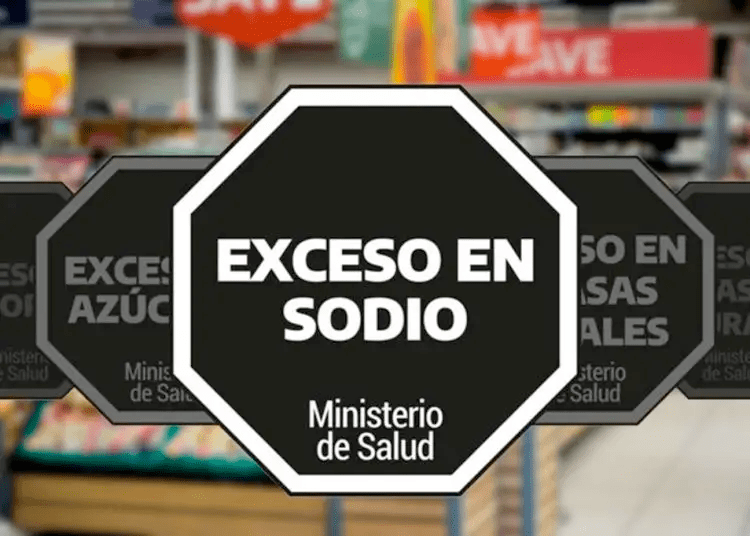
The health of the population has a direct impact on the economy, as the health condition of citizens is a significant asset for a country. Therefore, the Ministry of Public Health and Social Assistance (MiSPAS) aims to address and counteract non-communicable diseases through the public consultation proposal of a resolution regarding the “Front Warning Nutritional Labeling (EFAN)”. This initiative seeks to inform consumers about non-alcoholic foods and beverages that contain high levels of sodium, sugars, total fats, saturated fats, trans fats, and sweeteners.
Industry Opinion
The Executive Vice President of the Association of Industries of the Dominican Republic (AIRD), Mario Pujols Ortiz, described the MiSPAS regulation as the most inflexible and radical. He questioned why nutritional guidelines or values established by the World Health Organization (WHO), which have been implemented in other countries such as Brazil, are not considered. He stated that Public Health overlooks the culture of non-compliance with basic labeling in the Dominican Republic and that it is not only the document under discussion but also other legislative projects related to front labeling that are currently in the Senate and the Chamber of Deputies.
 infoAlimentario