The Americas – Argentina: Public consultation to regulate the use of trans fats in foods

The initiative presented to the National Food Commission (CONAL in Spanish) and available for public consultation proposes to update the current regulations on the presence of trans fats in commercialized foods, with the aim of improving their regulation and guaranteeing the right to health for all.

ARTICLE 1. – Article 155 tris of the Argentine Food Code is hereby replaced and shall be worded as follows: “Article 155 tris: The content of industrially produced trans fatty acids in foods, including those used as ingredients and raw materials, shall not exceed 2% of the total content of trans fatty acids in foods, including those used as ingredients and raw materials. ingredients and raw materials, shall not exceed 2% of the total fats. These limits do not apply to fats from ruminants, including milk fat.

The use of partially hydrogenated oils and fats in the production of foods, ingredients and raw materials is prohibited”.

The Americas – Brazil: Amendment to the regulatory instruction on the copper limit in chestnuts

The National Health Surveillance Agency (ANVISA in Spanish) published the modification of Normative Instruction (IN) 88, dated March 26, 2021, which establishes the Maximum Tolerable Limit (MRL) of contaminants for food. The change is limited to the increase of the MRL for metallic copper established for the category “Chestnuts, including walnuts, pistachios, hazelnuts, macadamia nuts and almonds”, from 10 mg/kg to 30 mg/kg.

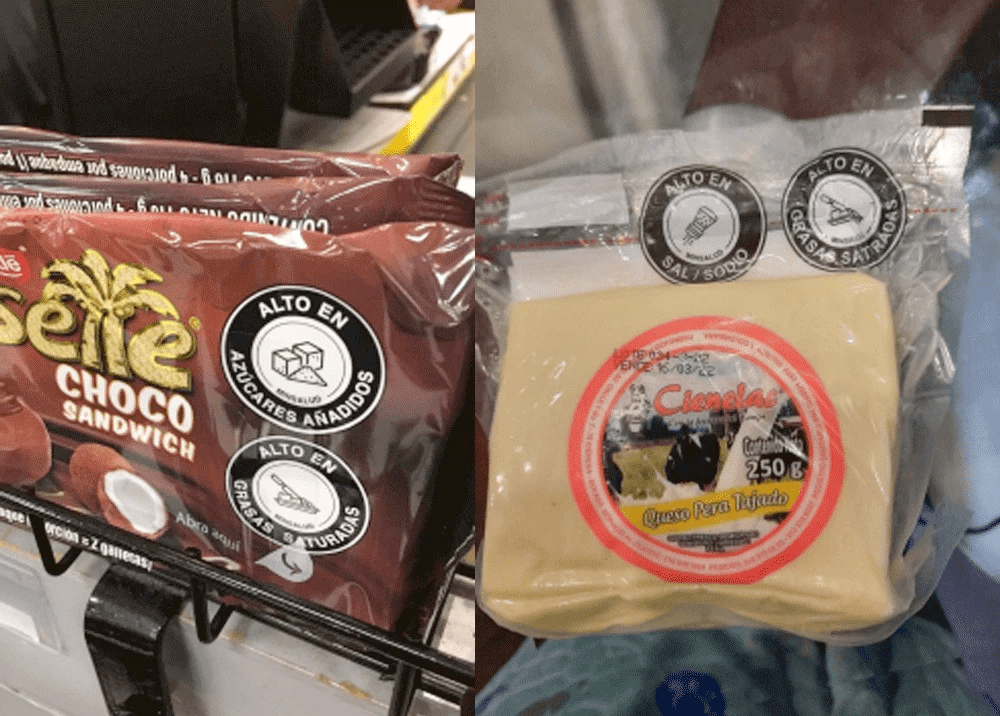
The Americas – Colombia: Invitation to tender opened for identification of front-of-pack warning label

The Ministry of Health opened a public call to begin a study, with the “best available evidence”, to identify what type of front warning seal a package with high levels of sodium, sugars or saturated fats should have.
The tender is titled “Front labeling process” and requests the evaluation of the best available evidence to establish shapes, color, size, legends and location of the front warning labeling for processed products in Colombia. In the study, two reports must be submitted: the first one, 15 days after the bid is submitted, on how the study will be carried out; the second one, the complete results by July 17, 2022.

The Americas – Argentina: Medical cannabis and industrial Hemp Bill approved

The initiative, which has been approved by the Senate, creates the regulatory framework for the production and national commercialization for export of the cannabis plant, its seeds and derived products for medicinal use, including scientific research and industrial use, promoting the development of the sector’s production chain.

In addition, a regulatory agency, the Agencia Regulatoria del Cáñamo y del Cannabis Medicinal (ARICCAME in Spanish), will be created. It will regulate the import, export, cultivation, industrial production, manufacture, commercialization and acquisition of seeds, the cannabis plant and its derivative products for medicinal or industrial purposes.

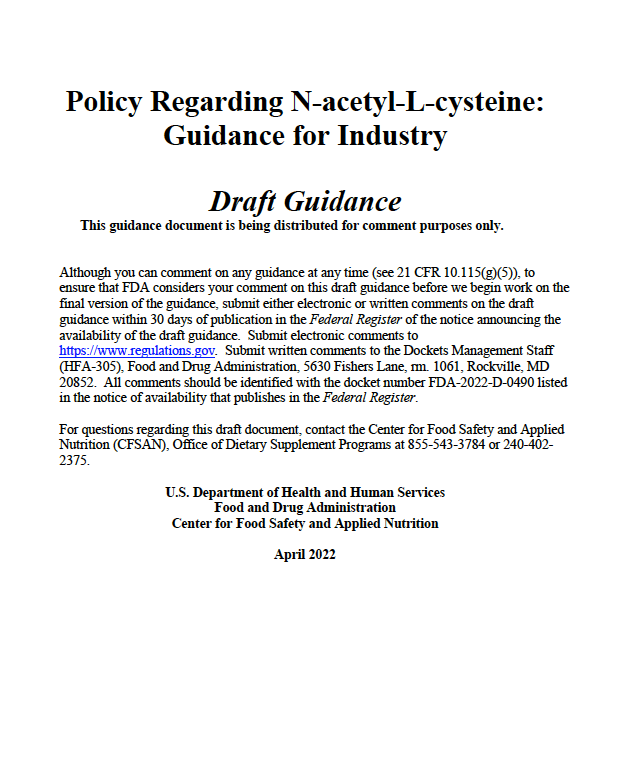
The Americas – USA: Draft Guidance for Industry: Policy Regarding N-acetyl-L-cysteine

The purpose of this guidance is to advise dietary supplement manufacturers, distributors, and other stakeholders of our intent to exercise enforcement discretion with respect to the sale and distribution of certain products that contain N-acetyl-L-cysteine (NAC) and are labeled as dietary supplements. As described below, the enforcement discretion policy would apply to products that would be lawfully marketed dietary supplements if NAC were not excluded from the definition of “dietary supplement” and that are not otherwise in violation of the Federal Food, Drug, and Cosmetic Act (FD&C Act).