On June 16, 2021, Colombia’s Ministry of Health and Social Protection (MINHEALTH) issued Resolution No. 810 establishing the technical regulation for nutrition and front-of pack labeling requirements for packaged food for human consumption, which will go into effect on December 16, 2022. This report includes the original regulation and an English translation.
The Americas
Regulatory news in the Americas
Costa Rica: Draft Costa Rican Technical Regulation (RTCR) No. 506: 2022. Sauces and like products. Mayonnaise. Specifications
The purpose of the notified Technical Regulation is to establish the technical specifications to be met by mayonnaise, whether produced domestically or imported for human consumption, which is offered to the end consumer or for catering purposes, and which is marketed throughout the national territory.
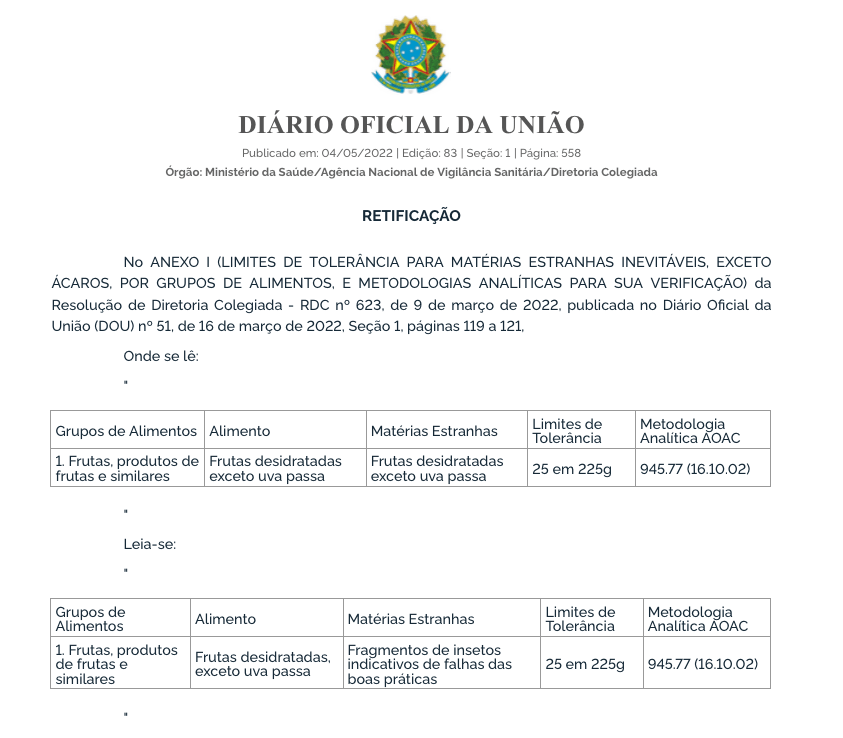
Brazil: Tolerance limits for inevitable foreign matter, except mites in food
In ANNEX I (TOLERANCE LIMITS FOR UNEVITABLE FOREIGN MATTER, EXCEPT FOR CARBON, BY FOOD GROUPS, AND ANALYTICAL METHODOLOGIES FOR THEIR VERIFICATION) of the Resolution of the Collegiate Council – DRC No. 623, of March 9, 2022, published in the Official Journal of the Federation (DOU ) No. 51, of March 16, 2022, paragraph 1, folios 119 to 12.
USA: FDA Denies Request to Exempt D-Tagatose from Added Sugar Labeling
In a letter dated May 18, 2022, FDA denied a citizen petition from Bonumose LLC which requested that the Agency (1) exempt D-tagatose from classification as an “Added Sugar” and (2) allow for the voluntary labeling of D-tagatose as a separate declaration under “Total Carbohydrates,” similar to the approach taken for sugar alcohols.
Mexico: Will the characters return to food packaging?
The Eighth District Judge in Administrative Matters in Mexico City, Martin Adolfo Santos Perez, has declared Article 4.1.5 of the Official Mexican Standard NOM-051-SCFI/SSA1-2010 (NOM-051) unconstitutional in two different cases. This is the precept that forced food and beverage companies to remove their characters from packaging more than a year ago.
The measure to prohibit the use of “children’s characters, animations, cartoons, celebrities, athletes or mascots” on the packaging of products with warning labels was controversial from the beginning. There was no evidence to show that it would help to solve the obesity epidemic in the country, and instead several jurists pointed out that it would violate international intellectual property commitments.

 infoAlimentario