Members of the Committee on Economy, Trade and Competitiveness approved an opinion in favor of an initiative to make it mandatory for food products containing genetically modified organisms to be labeled to inform consumers about them.

Regulatory news in the Americas
Members of the Committee on Economy, Trade and Competitiveness approved an opinion in favor of an initiative to make it mandatory for food products containing genetically modified organisms to be labeled to inform consumers about them.
The General Directorate of Medicines, Supplies and Drugs (Digemid in Spanish), approved the List of Documents Considered Equivalent to the Certificate of Good Manufacturing Practices for the purpose of accepting the Certifications of Pharmaceutical Products issued by the Regulatory Authority of the People’s Republic of China.
According to the Directorial Resolution N° 059-2022-Digemid-DG-Minsa, the documents that do not appear in the following list, may be consulted before the Digemid, in order to be considered equivalent to the certificates of Good Manufacturing Practices, and incorporated in such list if applicable.

The first deadline for compliance with the law on Front Food Labeling is August 20, but there are already requests for an extension.
Among the largest food factories in Argentina there were requests to extend the “ultimatum”. The factories of ultra-processed and industrialized foods in general, which are the only ones “touched” by the Law, will present their requests in the next few days. They need time not only to “modify the packaging” but also to change the formulation of some products in order to avoid some seals.
COPAL, the business entity that brings together more than 30 chambers of the food and beverage industry, “is generating presentations, given that there are still inconsistencies and uncertainties that make it impossible to comply with the Law”.
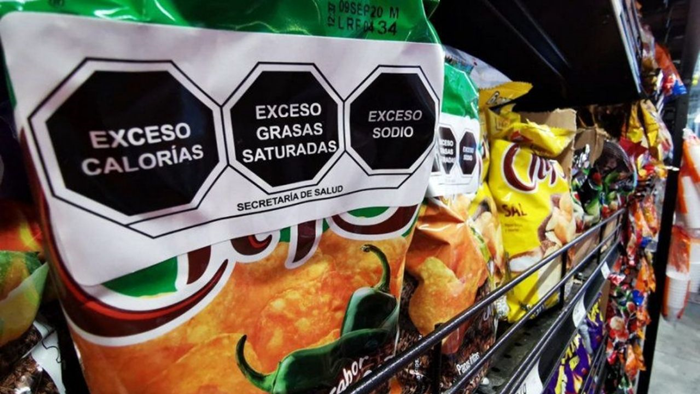
A study conducted by Asociación Costa Rica Saludable, the Pan American Health Organization/World Health Organization (PAHO/WHO) and the Costa Rican Institute for Research and Education in Nutrition and Health (INCIENSA), showed that warning octagons are the most effective nutrition labeling system to correctly identify food products that are less harmful to health and to influence purchasing decisions.

Objective: The aim of this study was to evaluate allergenic labeling components of packaged foods for “What is the quality of food labels?” and “What is the group of Brazilian Food Pyramid that ‘May contain’ is predominant?.” Results:
Results: The quality of the label was appropriate, and 69% of packaged foods had at least one allergen. The information “May contain” were higher in cow’s milk (Cereals and Meat & eggs), soy (Soybean & products), and egg protein (Cereals). Soybean & products were the highest insecurity group.
Conclusions:
Conclusions: Brazilian health professionals can count on good-quality labeling of packaged products. Consequently, they could promote patients’ and parents/caregivers’ education to consult the labels and manage the risks in processed foods about precautionary allergen labeling. Soybean & products were the most significant insecurity for food choices between Brazilian Pyramid Groups.

 infoAlimentario