The Secretariat of Agriculture, Livestock and Fisheries and Secretariat of Health Quality by Joint Resolution 4/2023 published in the Argentine Food Code an amendment related to sea salt.
“Sea salt without other denomination, is designated to the product coming from the evaporation of sea water, which is sold ready to be consumed, which must comply with the requirements established in articles 1265 and 1272. This product shall be called “Sea Salt”.
The Americas
Regulatory news in the Americas
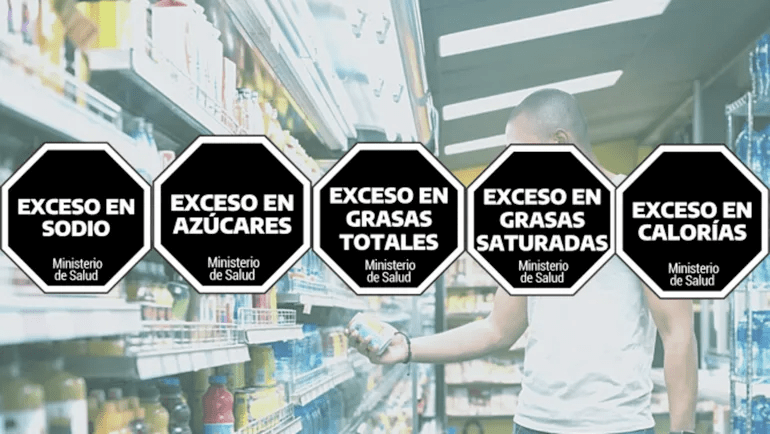
Paraguay – Controversy over front-of-package food labeling law: bill to be defined weeks after elections
The bill that establishes mandatory “front labeling” of packaged foods, as has been observed in countries of the region, could be defined in the two weeks following the April 30 elections. In social networks, heated debates have already been generated by positions for and against. Here are some details of what could be the application if it becomes law.
Argentina – Amendment to the Argentine Food Code on the sale and use of essences and extracts in foodstuffs
The Secretariat of Agriculture, Livestock and Fisheries and the Secretariat of Health Quality by Joint Resolution 9/2023 published an amendment to article 1.320 in the Argentine Food Code.
ARTICLE 1°.- Article 1.320 of the Argentine Food Code is hereby replaced and shall be worded as follows: “Article 1.320: The sale and use in the food industry of essences and extracts of: Wintergreen (Gaultheria procumbens), Tonka Bean, Sassafras (Sassafras albidum), Tansy (Tanacetum vulgare), and of the components of natural essences mentioned below: Coumarins and Hydroxycoumarins, Pinocanfone, Safrol, and those prohibited in the future by the national health authority, is prohibited.
Likewise, the sale and use in the food industry of pine essential oil or turpentine essence is prohibited”.
Argentina – Amendment to the Argentine Food Code on Steviol Glycosides from Stevia Rebaudiana Bertoni published
The Secretariat of Agriculture, Livestock and Fisheries and the Secretariat of Health Quality by Joint Resolution 7/2023 published an amendment to item 64.3 of article 1.398 on Steviol Glycosides in the Argentine Food Code.
64.3 STEVIOL GLYCOSIDES:
Steviol Glycosides from Stevia Rebaudiana Bertoni (INS 960a): Steviol glycosides consist of a mixture of compounds containing a steviol skeleton conjugated with any number or combination of the major sugar residues (glucose, rhamnose, xylose, fructose, arabinose, galactose, and deoxyglucose) in any of the orientations found in the leaves of Stevia rebaudiana Bertoni. The product is obtained from Stevia rebaudiana Bertoni leaves with hot water and the aqueous extract is passed through an adsorption resin to trap and concentrate the steviol glycoside component. The resin is washed with a solvent alcohol to release the glycosides and the product is recrystallized in methanol or aqueous ethanol. Ion exchange resins can be used in the purification process. The final product can be spray dried.
Description: White to light yellow powder, odorless or with a slight characteristic odor. Approximately 200 300 times sweeter than sucrose.
Argentina – Amendment to the Argentine Food Code on additives allowed in alcoholic beverages
The Secretariat of Agriculture, Livestock and Fisheries and the Secretariat of Health Quality, by means of Joint Resolution 10/2023, published in the Argentine Food Code an amendment to article 1136 on the list of additives allowed in the production of alcoholic beverages, with the exception of fermented beverages.
When two or more additives with assigned maximum numerical concentrations are authorized for a given function, the sum of the amounts to be used in a food may not exceed the maximum amount corresponding to the additive permitted in greater quantity and the amount of each additive may not exceed its individual limit.
 infoAlimentario