The Secretariat of Agriculture, Livestock and Fisheries and the Secretariat of Quality in Health published Joint Resolution 25/2023 that incorporates Article 184 bis to the Argentine Food Code, which will be worded as follows: “Article 184 bis: Food containers and utensils in contact with food shall comply with the Identification and Labeling Requirements, which appear in the Annex that, registered under No. IF-2020-82726828-APN-DLEIAER#ANMAT, is part of this Article.”
The Americas
Regulatory news in the Americas
Nicaragua – MIFIC publishes public consultation on NTON 03003 – Meat and Meat Products. Bird meat
The Ministry of Development, Industry and Commerce (MIFIC in Spanish) published the draft standard NTON 03003 Meat and Meat Products. Meat of Poultry (Gallus gallus domesticus), slaughtered whole, its cuts and giblets for Human Consumption. Sanitary and Safety Requirements.
The purpose of the standard is “to establish the safety requirements to be met by poultry (Gallus gallus domesticus) prepared whole or cut, and their offal, intended for human consumption, as well as the sanitary requirements to be met by processing establishments”.
Canada – Guidance document: Supplemented Foods Regulations
This guidance document is intended for stakeholders, including manufacturers and distributors of foods for sale in Canada, to facilitate the understanding of the Supplemented Foods Regulations, which came into force on July 21, 2022.
The Supplemented Foods Regulations should be read in conjunction with other provisions of the FDR applicable to pre-packaged products as well as the FDA and the documents incorporated by reference into the FDR (List of Permitted Supplemental Ingredients, List of Permitted Supplemented Food Categories, Directory of Supplemented Food Facts Table Formats, and Directory of Supplemented Food Caution Identifier Specifications), listed in Appendix 1. To account for new requirements specific to SFs in the FDR, certain consequential amendments had to be made to existing provisions in the FDR (for example, expanding labelling provisions in Part B, Division 1 applicable to the Nutrition Facts table to include the Supplemented Food Facts table). This document does not elaborate on these consequential amendments. Health Canada’s webpage on Supplemented Foods provides information and resources related to the requirements for SFs.
It is the responsibility of manufacturers and distributors to comply with all applicable legislative and regulatory requirements. In case of a discrepancy between this guidance and the provisions of the FDR or documents incorporated by reference, the regulations and the documents incorporated by reference take precedence.
In this guidance document, “must” is used to express a requirement, that is, a provision of the FDR that the manufacturer or distributor is obliged to satisfy; “should” is used to express a recommendation or that which is advised but not required; and “may” is used to express an option or that which is permissible within the limits of this document.

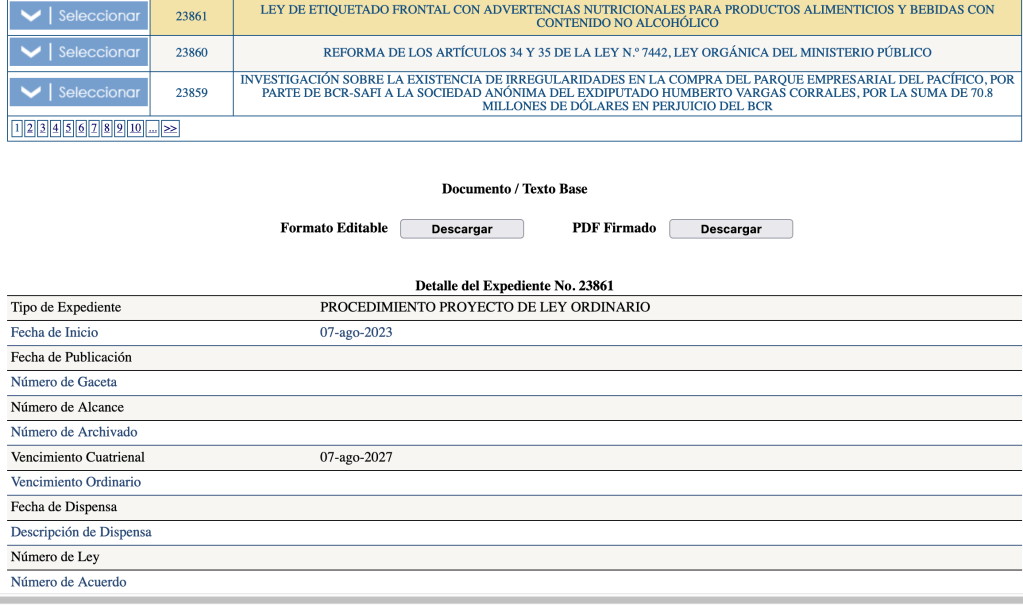
Costa Rica – Food labeling bill introduced in the legislature
Representative Andrea Álvarez of the National Liberation Party, presented bill No. 23861, for front labeling with nutritional warnings on food products and non-alcoholic beverages. According to the legislator, the project will label with octagons the products high in fats, sugars, calories, sodium or others. Products that do not exceed the levels already established worldwide based on scientific studies, would not have these seals that alert the consumer about the contents of critical nutrients.
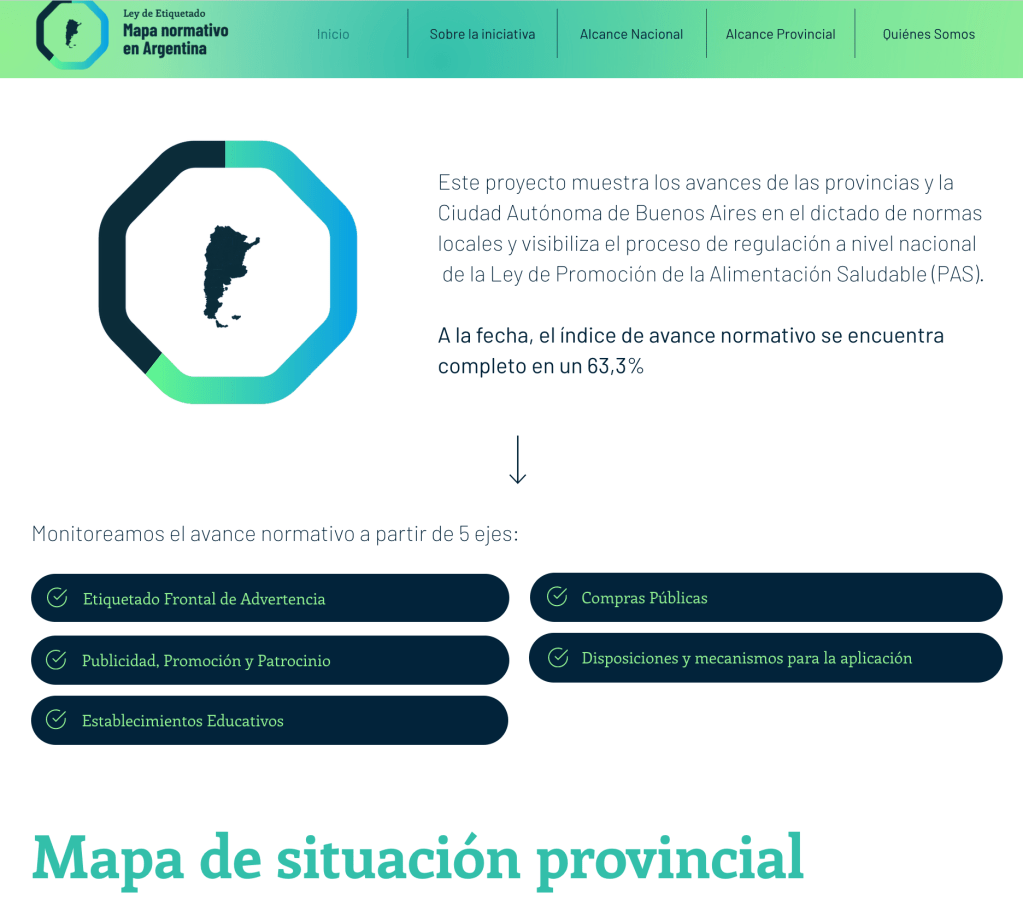
Argentina – Progress made by the provinces and the Autonomous City of Buenos Aires on the national regulation process of the Law for the Promotion of Healthy Eating (PAS)
This project shows graphically the progress of the 23 provinces and the Autonomous City of Buenos Aires (CABA in Spanish) in the enactment of local regulations governing the implementation of the Law on Promotion of Healthy Eating (PAS in Spanish) in the jurisdictions, and makes visible the process of regulation at the national level. It seeks to be a tool to promote and strengthen the full implementation of the law in all territories of Argentina.
 infoAlimentario