Article: Policy styles and epistemic policies in the regulation of health claims. A comparison of Europe, the United States, and Japan

I analyse epistemic and non-epistemic factors involved in expert advisory practices and decision-making relating to the regulation of health claims in the US, EU, and Japan. I consider the changes that have taken place, historically, in regulatory policies in all three cases in order to confirm the hypothesis that not only epistemic, but also non-epistemic factors and values determine the methodological decisions on which expert assessments are based for the authorization of health claims. I found that the current European, US, and Japanese assessment systems are based on different kinds of what have been termed ‘epistemic policies’ and that these policies and other characteristics shape what might be identified as differing ‘policy styles’ in the regulation of health claims.

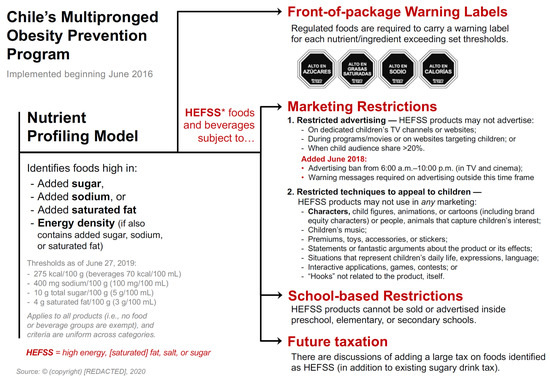
Article: Front-of-Pack Labeling in Chile: Effects on Employment, Real Wages, and Firms’ Profits after Three Years of Its Implementation

This study evaluates the impact of Chile’s innovative law on Food Labeling and Advertising, enacted in June 2016, on employment and real wages and profit margins for the food and beverage manufacturing sectors in the 2016–2019 period, using unique company-specific monthly data from Chile’s tax collection agency (measuring aggregate employment, real wages, average size of firms, and gross profit margins of the food and beverage manufacturing sector). Interrupted-time series analyses (ITSA) on administrative data from tax-paying firms was used and compared to synthetic control groups of sectors not affected by the regulations.

Check the full text of the documents (in English), click on the  Link

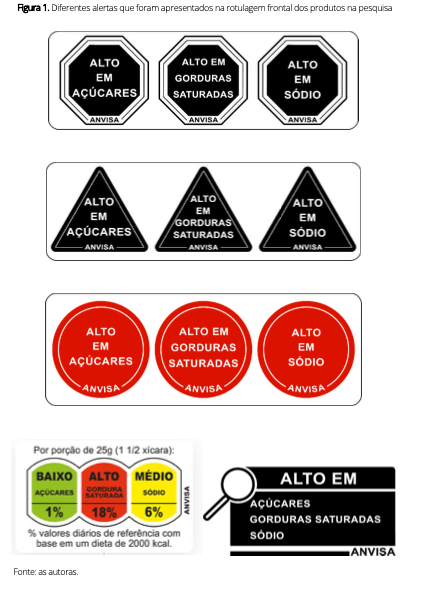
Article: Effect of five front of package nutritional labeling models on time to select food by Brazilians

Objective: to compare the time Brazilian adults required to make food choices with different models of front-of-pack nutrition labeling. Methods: Interviews were conducted with 150 participants, who were instructed to select the healthiest product between two foods, with eight pairs of images presented. One of the products in each pair had warnings (high in sugars, sodium, or saturated fat), evaluated in different formats according to the group in which the individual was allocated: magnifying glass, octagon, circle, triangle, and traffic light. The number of correct answers for the healthiest product in each pair and the time to correctly select of the healthiest product were measured.

For further information, click on the: DOI: 10.12957/demetra.2021.59501

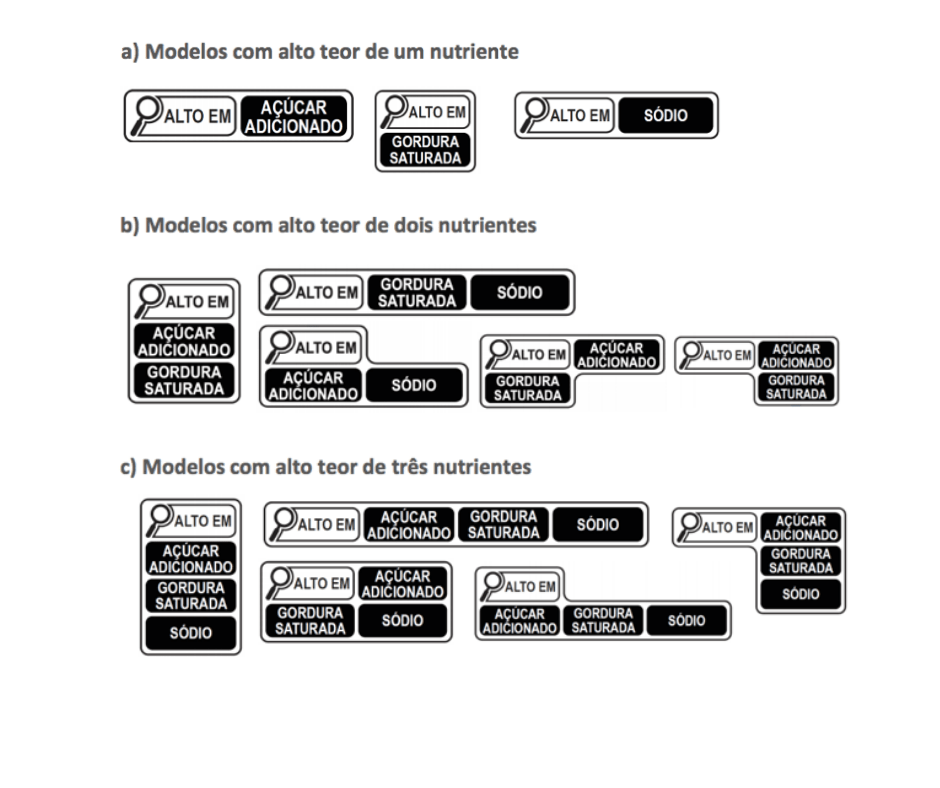
Article: Front-of-pack nutrition labels: perceptions and preferences of Brazilian adult consumers

This study aimed to examine the perceptions and preferences of Brazilian adult consumers about four different front-of-pack (FOP) food labeling systems proposed by the Brazilian National Health Regulatory Agency.

For further information, click on the: https://www.emerald.com/insight/content/doi/10.1108/BFJ-05-2021-0588/full/html

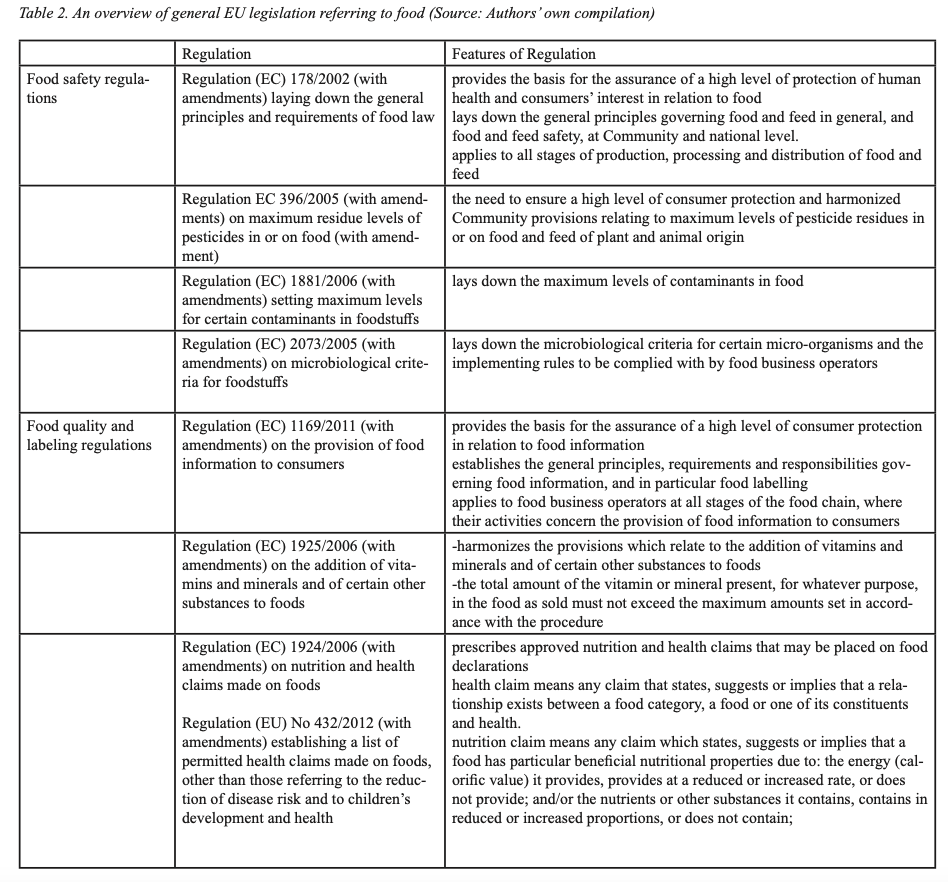
Article: Vegetable by-products in the European food legislative framework

Vegetable by-products are a source of many useful bioactive compounds, dietary fiber, fatty acids and proteins that have a great potential in the development of new food products and the promotion of the circular economy and sustainability. Considering processed pepper by-products as an example, the aim of this paper is to provide an overview of EU food legislation that should be taken into account before placing such products on the market, as well as of the voluntary labeling of functional, nutritional and sustainability benefits important for consumers.

For further information, click on the: https://hrcak.srce.hr/en/clanak/391387