Argentina – National Food Commission held its 155th ordinary meeting

The National Ministry of Health held the 155th Meeting of the National Food Commission (CONAL in Spanish) with the participation of national authorities and other interested parties.
During the meeting, the Commission agreed and forwarded 7 dossiers to the final stage of administrative processing, such as the incorporation of hydroelectrolytic supplements, edible flowers, vegetable arropes and flour, incorporation of canary seed, fruits of the butia yatay palm tree and additives. The projects for the modification of articles 235 and 1381 were referred to the Public Consultation instance to incorporate Health Property Declarations (DPS) for use in labeling, as well as the incorporation of additives in fruits and microbiological criteria in herbs for infusion, among others.
Among the dossiers that were submitted simultaneously to the CONAL Advisory Council (CONASE) and to the Public Consultation are the incorporation into the Argentine Food Code (CAA) of dehydrated grape pomace and apple pomace, the incorporation of new enzymes that were presented within the framework of the “Instructions for the application of articles 1263 and 1263 bis”, among others.
The work of the working groups coordinated by the National Food Institute (INAL), such as “Microbiological Criteria, Food Additives, Food Enzymes and Updating of Chapter II”, was highlighted. The latter presented a proposal for the modification of the articles referring to meat food outlets.
Finally, the Commission introduced new topics to be addressed, such as the incorporation of olive leaf for infusion, sake and a request to update the articles on lemon juice.
It should be noted that INAL presented the update of the document “Guidelines for the declaration of allergens and substances capable of producing adverse reactions in susceptible individuals”, which was recommended and published on CONAL’s web page.

Uruguay – New draft decree on microbiological criteria for ready-to-eat foods

The Ministry of Health has published a “draft decree to incorporate in Article 1.2.11 of Chapter 1, Section 2 of the National Bromatological Regulation, microbiological criteria for ready-to-eat foods in which Listeria monocytogenes cannot grow, as well as microbiological criteria for ready-to-eat (RTE) foods in which Listeria monocytogene can grow”.

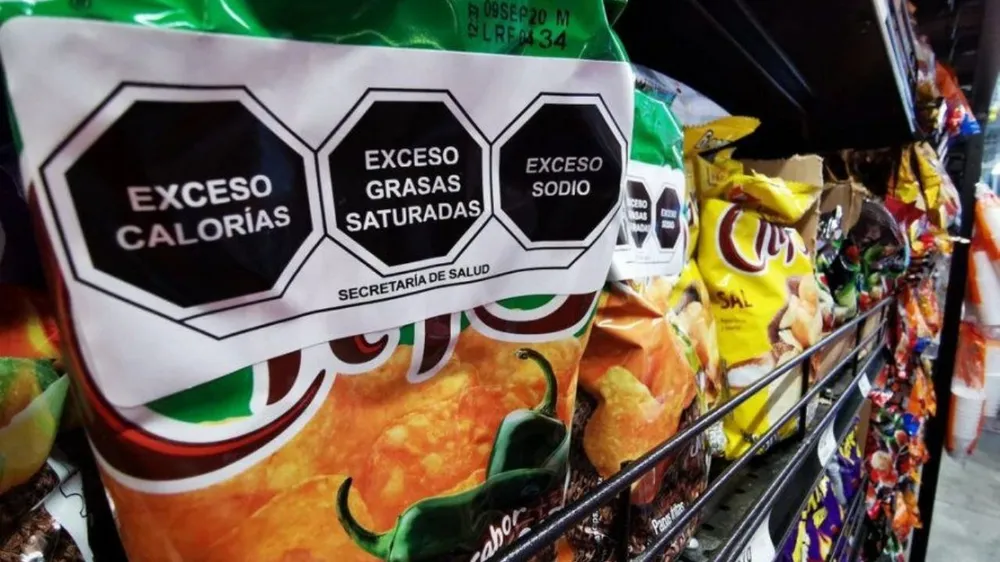
Argertina – Authorities are evaluating changes to front warning labels

he Argentine government is considering a series of modifications to the Food Front Labeling Law, which currently obliges manufacturers to include black octagons on the packaging of products with excess of critical nutrients such as sugars, saturated fats and sodium. The regulation, which was approved in 2021, is under revision due to the demands of different productive sectors and health organizations.

According to Ministry of Health sources, one of the options being considered is the redesign of the octagons, which could be smaller or less visually invasive. Another alternative under study is the modification of the formula used to calculate the “critical nutrients” that force the inclusion of the warning seals. Currently, these are determined based on a ratio between the nutrient and the total caloric value of the product, which in some cases has generated controversy in the food industry. “We want to make labeling more accessible without losing focus on public health,” said Health Minister Carla Vizzotti.

Honduras – Draft Regulations of the Law for the Control and Regulation of Energy Drinks published

The Secretariat of Economic Development (SDE in Spanish) has published the draft Regulations of the Law for the Control and Regulation of Energy Drinks. This regulation aims to establish regulations for the sale and marketing of energy drinks and/or products, considering characteristics and specifications, in order to protect persons under eighteen (18) years of age. The Regulation is of general interest and of mandatory observance in the national territory and extends to all natural or legal persons engaged in any activity included in the supply chain, which includes: elaboration, handling, manufacturing, processing, packaging, storage, transportation, commercialization, sale, distribution, sale, importation; in addition to the promotion and advertising of beverages and/or energizing products with their characteristics and specifications.
and specifications of these.

To send comments: consultapublica@arsa.gob.hn
The deadline for comments is November 13, 2024.

Brazil – MAPA reviews analytical parameters of fruit juice and pulp.

The Ministry of Agriculture and Livestock (MAPA in Portuguese) has published Ordinance SDA/MAPA No. 1,173, by which it submits to Public Consultation the draft Ordinance that modifies Annex I of Normative Instruction No. 37, of October 1, 2018, which establishes the analytical parameters of fruit juice and pulp.