Brazil – ANVISA invites stakeholders to participate in sectoral dialogues on food regulation

The National Health Surveillance Agency (ANVISA in Portuguese) will hold, on Thursday, March 13, two sectoral dialogues on food regulation. Participation in the dialogues is open to all, without prior registration.

Infant formula regulations

The virtual sectorial dialogue will discuss the review and consolidation of regulations on infant formulas for infants and young children, follow-on foods and cereal-based foods for infants and young children, enteral nutrition formulas and dietary therapy formulas for inborn errors of metabolism.

Regulation of plant-based foods

In the afternoon, the Sectoral Dialogue on Plant-Based Food Regulation will be held. This dialogue aims to discuss issues relevant to the regulation of foods of plant origin, with emphasis on:

(a) presentation of the activities carried out by Anvisa in 2024 on the subject and proposal of regulatory flow that will be submitted to the deliberation of the Collegiate Council for the opening of the regulatory process;

(b) proposal for periodic updating of the lists of food additives and technological adjuvants authorized for use in products imitating dairy products and other standardized animal products.
Peru – Zero Hunger Commission addressed use of pesticides, trans fats and octogons for healthy eating

The Special Multi-Party Commission for Monitoring, Control and Oversight of the Zero Hunger Program organized a working group to address the challenges in nutrition and public health related to the use of pesticides, trans fats in processed foods and the optional deficient labeling of products offered in the market.

According to its president, Roberto Kamiche Morante (APP), the objective is to promote healthier family diets, reduce the risks of toxic substances, ultra-processed foods and improve the nutritional information available, all with the aim of reducing chronic diseases and improving public health in the long term.

This is a crucial task, said the representative for La Libertad, “to move towards a public health model that promotes healthier nutrition and results in the prevention of chronic diseases, such as cancer”.

For Kamiche Morante, the “implementation of stricter policies and consumer education are essential to generate a healthier food environment, where people have access to clear information and make conscious decisions that favor their wellbeing”.

Brazil – Federal Government reduces limit on ultra-processed foods in school meals

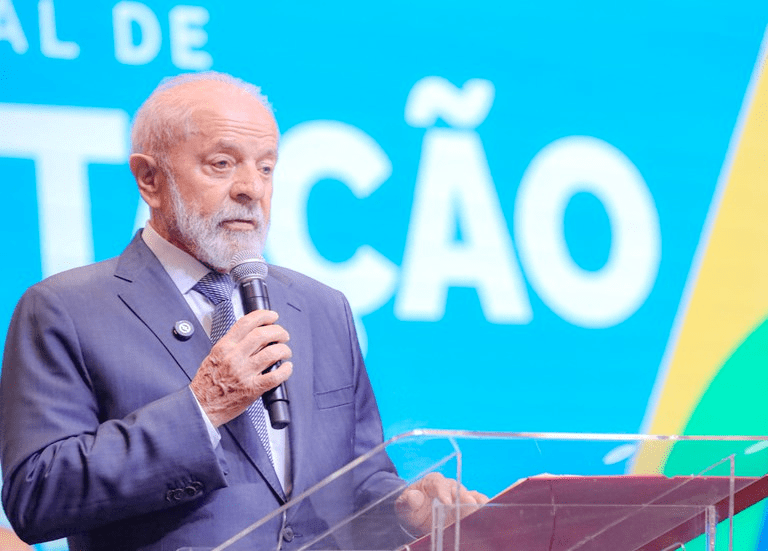
The Federal Government aims to offer a healthier diet to students, through more balanced menus, by reducing to 15% the limit of processed and ultra-processed foods in public school menus by 2025. The measure was announced by President Luiz Inácio Lula da Silva in Brasilia.

The president spoke about the impacts of the change during the 6th edition of the National Meeting of the National School Meals Program (PNAE). The reduction will be made through an amendment to Resolution No. 6/2020, which establishes the PNAE guidelines. Nationwide, the initiative will affect 40 million students in nearly 150,000 public schools, which provide approximately 10 billion meals per year.

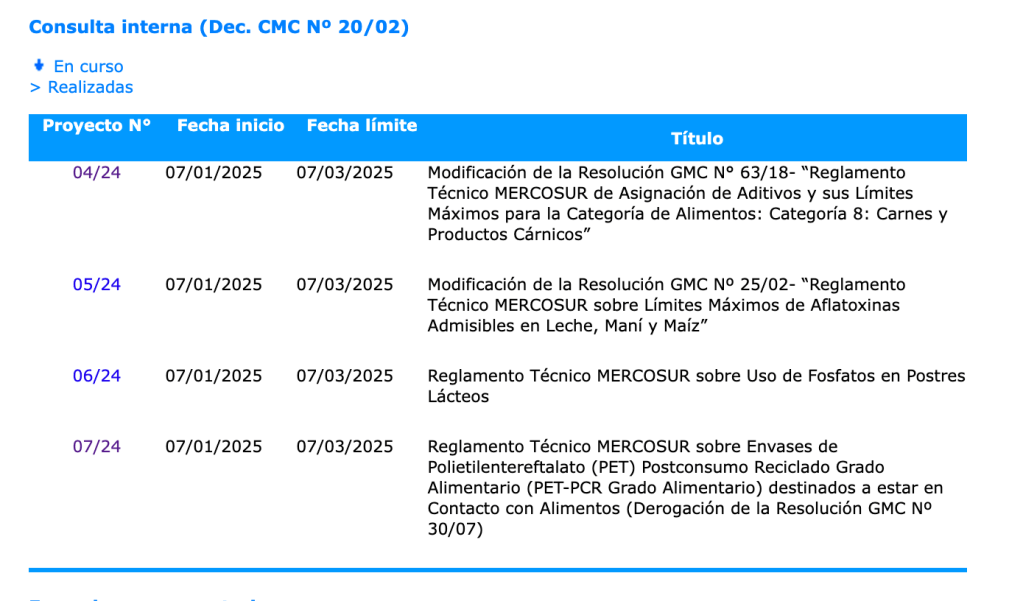
Argentina – The National Directorate of Technical Regulations announces the consultation of several projects related to contaminants, additives and food contact materials

  • Modification of GMC Resolution No. 63/18 – “MERCOSUR Technical Regulation for the Allocation of Additives and their Maximum Limits for the Food Category: Category 8: Meat and Meat Products”.

  • Modification of GMC Resolution No. 25/02 – “MERCOSUR Technical Regulation on Maximum Allowable Limits of Aflatoxins in Milk, Peanuts and Corn”.

  • Reglamento Técnico MERCOSUR sobre Uso de Fosfatos en Postres Lácteos.

  • MERCOSUR Technical Regulations on Food Grade Recycled Postconsumer Polyethylene Terephthalate (PET) Containers (Food Grade PET-PCR) intended to be in Contact with Food (Repeal of Resolution GMC Nº 30/07).

Argentina – ANMAT establishes new procedures for food imports and exports

The National Administration of Medicines, Food and Medical Technology (ANMAT in Spanish) announced an update in food import and export procedures (Provision 537/2025), which will now be managed through the National Food Institute (INAL in Spanish) and the TAD digital platform.
The changes to the Argentine Food Code through Decree 35/25, aims to streamline both the entry of foreign food products and the export of domestic food. The measure establishes a simplified system for imports from certain countries and relaxes the requirements for the exit of domestic products.
Products from countries with high sanitary control standards, such as the United States, Canada, Australia, Japan and the European Union, may be marketed in Argentina with a sworn declaration and the “Import Notice”. For the rest of the countries, the procedure will include registrations in the Federal Food Management System (SIFEGA in Spanish) and the approval of the National Register of Establishments (RNE in Spanish) and the National Register of Food Products (RNPA in Spanish).