Brazil – Anvisa has temporarily halted the integration with the Siscomex Unified Portal for food imports

The National Health Surveillance Agency (ANVISA in Portuguese) informs the temporary suspension of the implementation schedule of the integration of its systems with the Single Foreign Trade Portal (Siscomex in Portuguese) for food imports, previously announced.

The decision was taken due to the identification of systemic inconsistencies in the integration flow and in the status of requests in the Single Portal. New dates for the implementation of the integration will be announced in due course.

During this period, the protocols already completed will continue to be analyzed by ANVISA, being the importer’s responsibility to monitor the final status of each LPCO (license, permit, certificate and other documents – Siscomex Single Portal module that allows requesting documents required for foreign trade operations).

In addition, it is recommended that food import processes be re-registered through the Solicita system, using the LPCO I00046 model, without integration with the Single Portal, in accordance with the guidelines of the LPCO Manual.

Colombia – INVIMA introduces new guidelines for the depletion of food and beverage labels

The National Institute for Food and Drug Surveillance (INVIMA in Spanish) informs all stakeholders that guidelines have been established for the process of depleting labels and using adhesives on food and beverages, in accordance with Resolution 5109 of 2005 and 810 of 2021.

The requirements were set forth in resolution 2025013945. This administrative act introduces significant changes compared to the previous procedure, aiming to enhance clarity, efficiency, and proportionality in the regulation for users of the health system:

  • Depletion without prior authorization: For the first time, it is permitted that, in specific cases where there is no health risk or error in the product’s nature, labels can be depleted without the need for prior authorization from Invima. This measure aims to reduce unnecessary administrative burdens on the entity, facilitating the legal marketing of products with minor labeling errors.
  • Authorizations with a defined timeframe: In instances where prior authorization is required, it will be granted for a single period of 18 months through a duly justified administrative act.
  • Individual analysis for unaddressed cases: Situations not explicitly covered by the new resolution will be evaluated on a case-by-case basis to ensure a technical, consistent, and fair application of the regulation.

It is important to note that there will be no changes to the cost of the process or the time taken to review applications. This ensures that regulatory adjustments do not impose additional burdens on industry stakeholders. Through this resolution, Invima reaffirms its commitment to advancing a technical, proportional health regulation that serves public health and development.

Brazil – Anvisa is the competent authority for regulating the labeling of foods containing gluten

The Attorney General’s Office (AGU) ensured the enforcement of legislation mandating the labeling of processed food products sold in the country with “contains gluten” or “does not contain gluten.” It also confirmed the regulatory authority of the National Health Surveillance Agency (ANVISA in Portuguese) regarding such labeling.

A consumer association has filed a lawsuit against a food company, requesting that the packaging of processed food products include the message: “contains gluten: gluten is harmful to the health of individuals with celiac disease.” The lower court accepted this request.

Subsequently, the AGU, through the Federal Regional Attorney’s Office for the 3rd Region, representing Anvisa, appealed the ruling. The appeal emphasized that this decision overlooked health regulations and the specific technical and regulatory aspects of food labeling.

In its appeal, the AGU argued that if the association’s claim were accepted, the information on the packaging would be incomplete and could mislead consumers into believing that only individuals with celiac disease are intolerant to gluten.

According to information from ANVISA presented during the proceedings, gluten “is also harmful to consumers with other conditions, not just those with celiac disease.” Therefore, “current regulations require labels to indicate the presence or absence of this substance without additional specifications, while providing significantly more informative content,” states an excerpt from the agency’s technical communication.

Thus, the clear indication of gluten presence or absence on processed food labels, as mandated by Law No. 10,674 of 2003, is deemed sufficient to alert individuals with celiac disease about the risks associated with consuming gluten-containing foods.

Brazil – Anvisa updates Guide on food shelf life

The National Health Surveillance Agency (ANVISA in Portuguese) published the third version of Guide 16 – Guidelines for determining the shelf life of foods. The document was revised and restructured to make consultation easier and more objective, in addition to improving the procedures, methods and protocols used to define the expiration date of foods.

The new edition also includes explanatory figures, appendices and updated bibliographical references, making it easier to understand and apply in practice.

The update was submitted for public consultation between July and December 2024. The contributions received were analyzed and incorporated into the new version, bringing the guide more in line with the needs of the sector and the current regulatory scenario.

Chile – Proposal for a new graphic standard for food labeling in Chile

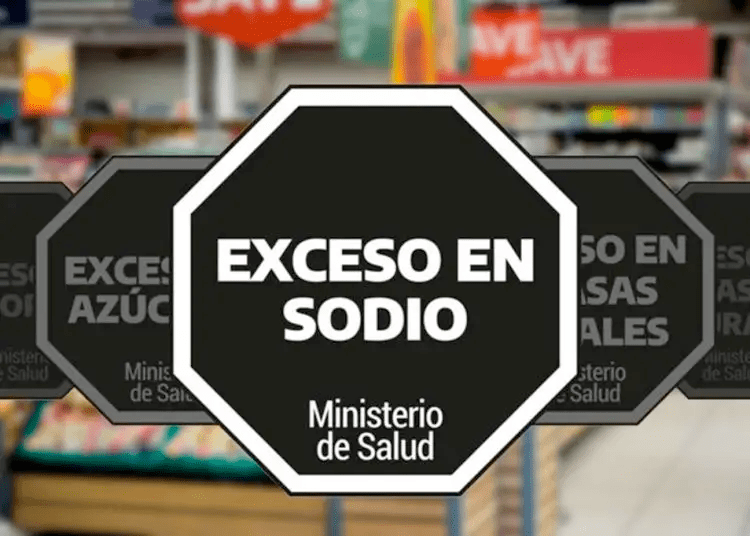
Article published in the book Propuestas para Chile 2024. The research was developed within the framework of the UC 2024 Public Policy Competition. Despite existing regulations, in Chile there are still deficiencies in the legibility and comprehension of labeling, exposing the population, especially those with dietary restrictions, to health risks. This report proposes a new graphic standard for labeling, based on a study of 300 products and a usability test that revealed legibility problems in aspects such as the size and contrast of the typography, the format of the allergen declaration and the difficulty to identify the ingredients section.