Peru – Draft Regulation of Law No. 29632, Law to eradicate the production and marketing of informal, adulterated, or unfit alcoholic beverages for human consumption

The Ministry of Production and Commerce has published the draft regulations for Law No. 29632, the Law to Eradicate the Production and Marketing of Informal, Adulterated, or Unfit for Human Consumption Alcoholic Beverages. The purpose of the law is to establish the regulatory provisions of said law and to establish the specifications and procedures for implementing control, oversight, and sanctioning actions related to the production or entry into the country of ethyl alcohol to its final destination, as well as to prevent the manufacture, marketing, and consumption of informal, adulterated, or unfit for human consumption alcoholic beverages.

Uruguay – Amendment to GMC Resolutions No 50/97, 53/98, 51/00, 08/06 and 09/07 on Food Additives” – Draft Resolution No 01/25

The document Draft Resolution No. 01/25 “Amendment of GMC Resolutions Nos. 50/97, 53/98, 51/00, 08/06, and 09/07 on Food Additives” is available in the “Related Documents” section at the end of this page. Interested institutions and individuals can submit contributions or proposals through the public consultation option.

The contributions received will be submitted to the technical specialists who participated in the discussion and preparation of the document. If deemed relevant, these contributions will be taken into account to consolidate the country’s position within SGT No. 3, where they will be discussed with representatives of the other States Parties. In accordance with the procedures established in GMC Resolution No. 45/17, if a consensus is reached, the final draft will be submitted to the Common Market Group (GMC) for consideration and eventually approved by said decision-making body for subsequent incorporation into national law.
It is worth noting that on May 12, 2025, Draft Resolution No. 01/25 was notified to the World Trade Organization (WTO) Committee on Technical Barriers to Trade, pursuant to Notification G/TBT/N/URY/104.
Therefore, proposals from other WTO Members outside MERCOSUR are scheduled to be received until July 11, 2025, i.e., for 60 days from the date of notification.

Guatemala – The Minister of Health proposed increasing taxes on ultra-processed products such as sugared beverages and tobacco to prevent chronic diseases

The Minister of Health, Joaquín Barnoya, proposed increasing taxes on ultra-processed products such as sugared beverages and tobacco to prevent chronic diseases. He also proposed measures such as front labeling and salt reduction in processed foods.

The Minister of Health, Joaquín Barnoya, presented proposals aimed at the prevention of chronic diseases, highlighting the increase of taxes on sugary drinks and tobacco. This measure aims to reduce the consumption of ultra-processed products, which, according to Barnoya, contribute significantly to the increase of diseases such as cancer.

In addition, he proposed the implementation of front labeling on these products and the reduction of the amount of salt in processed foods, thus seeking to improve public health at the population level.

Mexico – Ministry of Economy and Health extend deadline to implement next phases of nutrition labeling

The Ministry of Economy, through the Regulations, Competitiveness and Competition Unit, in coordination with the Ministry of Health, through the Federal Commission for the Protection against Health Risks (COFEPRIS in Spanish), inform companies in the pre-packaged food and non-alcoholic beverages sector that, through a joint agreement, it has been decided to extend the deadline for the second phase of implementation of the criteria for the evaluation of complementary nutritional information established in the Mexican Official Standard NOM-051-SCFI/SSA1-2010.

This decision, taken based on the applicable legal frameworks and considering the principles of legal certainty, transparency and regulatory improvement, was published today in the Official Journal of the Federation (DOF in Spanish) and responds to the need for adequate technical conditions for the transition to the third phase of compliance.

  • The period of the second phase of complementary nutritional labeling is extended from October 1, 2023 to December 31, 2025, thus granting three additional months for compliance under the current criteria.
  • The start of the third phase is deferred to January 1, 2026, at which time it will be mandatory to fully apply the provisions contained in numeral 4.5.3 and Table 6 of the NOM-051 amendment.
  • The measure allows the National Standardization Advisory Committees of the SE and COFEPRIS to move forward with the technical analysis of numeral 4.5.3, in accordance with the National Quality Infrastructure Program 2025, published on February 17 of this year.

Honduras – Health Commission and private enterprise deepen analysis and discussion of the Front End Labeling Law

The Health Commission of the National Congress, with the accompaniment of the Health Regulation Agency (ARSA in Spanish), continued this Tuesday the socialization of the Front Labeling Bill with representatives of the Honduran Council of Private Enterprise (COHEP in Spanish), the National Association of Industrialists (ANDI in Spanish) and companies producing packaged foods.

The president of the Commission, congressman Wilfredo Sabio, explained that the initiative seeks to strengthen public policies that allow the population to have access to clear information on the critical nutritional content of such foods.

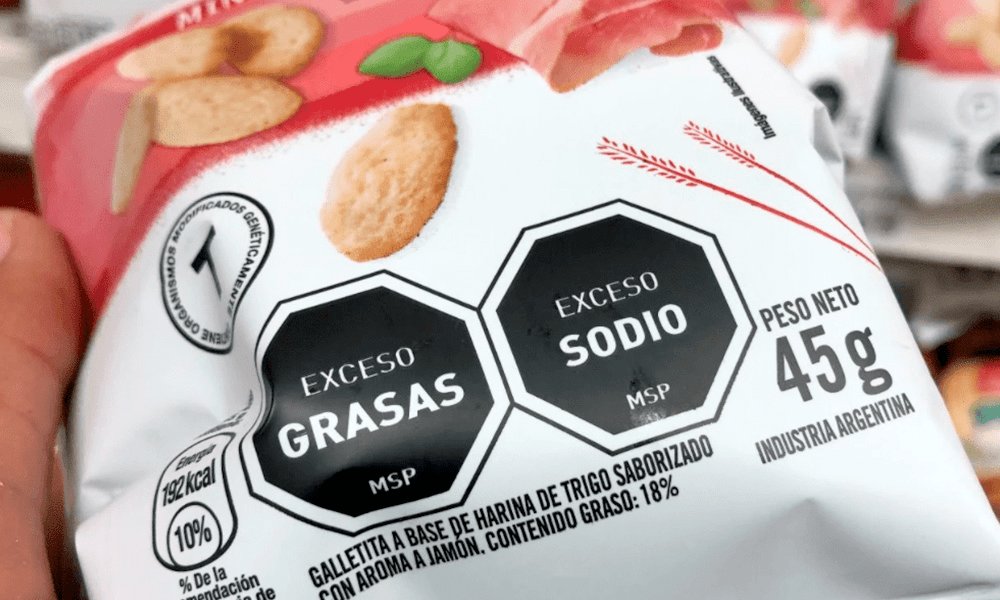
To this end, it is necessary to place warning octagons on the labeling of certain packaged products, a labeling system that clearly, simply and visibly indicates when a product contains excess nutrients such as sugar, sodium, saturated fats or sweeteners, among others.

Sabio emphasized that, although the private sector has raised the importance of harmonizing the regulations with regional legislative policies, together with ARSA it has been possible to demonstrate that the proposal does not contravene any Central American technical regulation, which allows the project to move forward at the national level.