The National Consumer Service (SENAC in Spanish) will supervise companies that commercialize alcoholic beverages, both in person and digitally.
Next Sunday, July 7, the regulation that expands the label requirement to drinks with an alcohol content equal to or greater than 0.5° sold in Chile will come into force.
For this reason, SERNAC will carry out inspection actions to companies that sell alcoholic beverages, either in person or digitally, in different e-commerce sites.
The National Administration of Medicines, Food and Medical Technology (ANMAT in Spanish) prohibited the manufacture and marketing of a number of products, through its publication in the Official Gazette (Provision 5884/2024).
The products that were restricted are: “Magnesium Citrate”; “Potassium Citrate”; “Natural Ginger”; “Analgesic Black Nettle”; “Yacon Diabetes”; “Memorex Cerebral”; “Maca Forte Multivitamin”; “Higazan Plus”; “Hydrolyzed Collagen”; “Biotin Hair and Nails”; “Magnesium Chloride”; “Chupa Panza Fat Burner”; “Stem Cells Premature Aging Hyaluronic Acid/Folic Acid”; “Zinc Magnesium Calcium +D Hydrolyzed Collagen Shark Cartilage” and “Biotin Hydrolyzed Collagen” all from the brand “Natural Medix”.
The tax reform is being regulated in Congress and there are proposals for surcharges on processed foods and beverages, including the selective tax. The tax is intended to discourage the consumption of products considered “harmful to health and the environment”. According to the current draft regulations, the tax covers the following products and services: sugared beverages, alcoholic beverages, cigarettes and tobacco products, vehicles, and extraction of mineral goods and petroleum.
Only 28% of the people surveyed responded that they know a lot or a fair amount about the Healthy Food Promotion Act, better known as front labeling. The data is derived from research conducted by ShopApp until June 2023. This figure contrasts with the 67% of respondents who said they agreed with this measure.
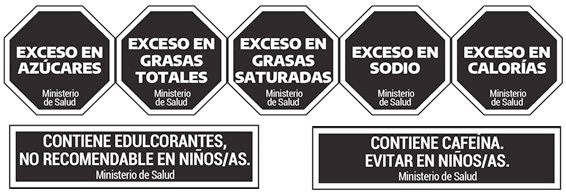
With the aim of raising awareness and helping the population to understand the seals currently displayed on foods, the Argentine Federation of Cardiology (FAC in Spanish) analyzes each of these insignia and their effect on cardiovascular health.
At present, as regulated by law, food manufacturers are obliged to declare up to five categories of excesses and two warnings. Each of them has a reference value following the recommendations of the Pan American Health Organization (PAHO). “As a scientific organization, we have a responsibility to help the population understand the meaning of these values on packaging. The correct understanding of these warnings brings both therapeutic and preventive benefits,” says Dr. José María Silveyra (MN 118085), cardiologist; president of the Obesity and Diabetes Committee of the Argentine Federation of Cardiology (FAC).
Campaign developed by Moringa agency focuses attention on ingredients that indicate whether a product is ultra-processed or not
The Consumer Protection Institute (Idec) takes another step in raising awareness among the population about the consumption of ultra-processed products. In the new campaign created by the agency Moringa, Idec calls on consumers to read the fine print on food product labels and pay attention to ingredients such as colorings, flavorings and sweeteners (popularly known as sweeteners). The presence of these food additives indicates that the product is ultra-processed and its consumption can be harmful to health.



 infoAlimentario