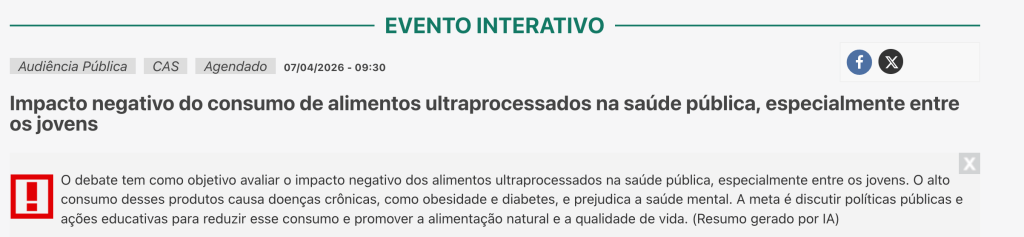
The permanent committees of the Senate are debating and voting this week on various topics. Among the most notable topics are the hearings on the consumption of ultra-processed foods. The debate seeks to evaluate the negative impact of ultra-processed foods on public health, especially among young people. The objective is to analyze public policies and educational actions to reduce this consumption and promote natural foods and a better quality of life.
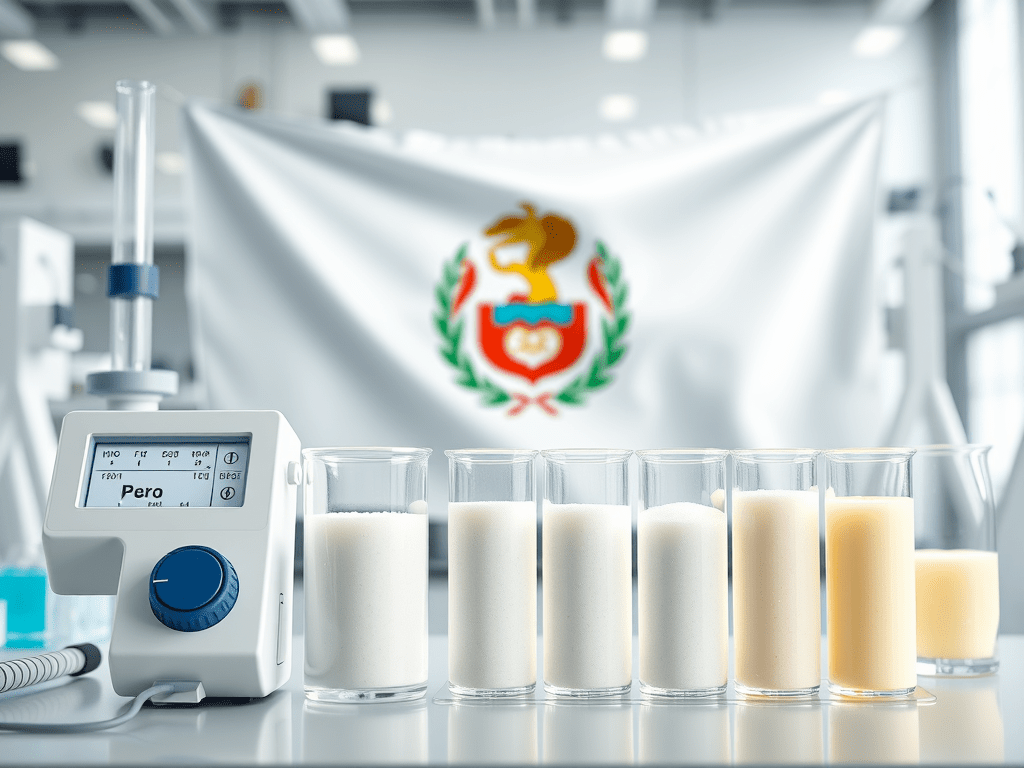
The National Institute of Quality (INACAL) thru Directoral Resolution No. 000004-2026-INACAL/DN has published NTP 209.069:2026 FOOD ADDITIVES. Starches and starches. Determination of pH by the potentiometric method. 2nd Edition. This standard replaces NTP 209.069:1974 (revised in 2018).
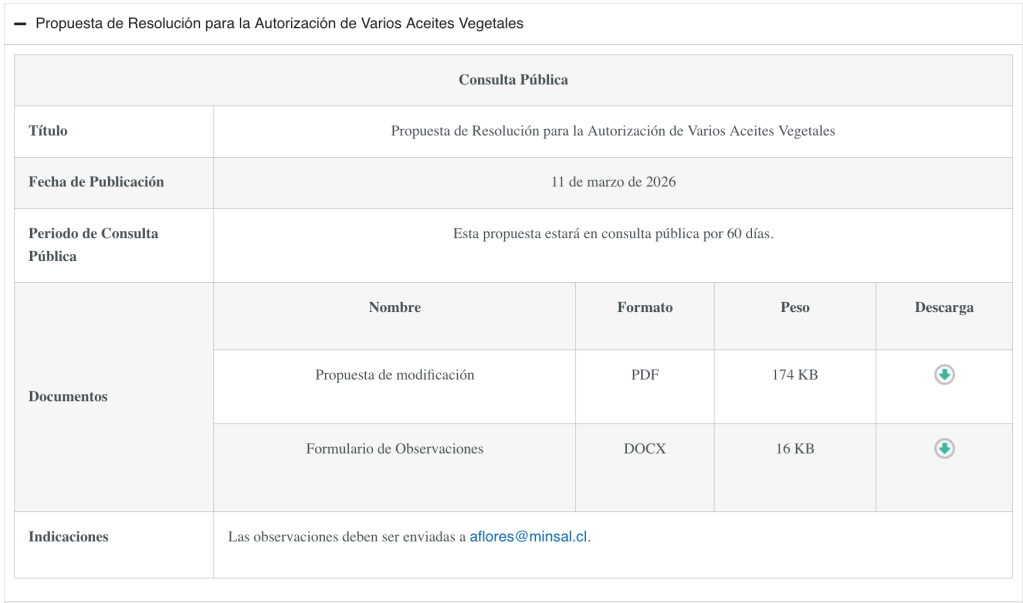
The Ministry of Health announces a project to amend the Food Sanitary Regulation to authorize the production of edible oils from the seeds of Shorea robusta, Garcinia indica, and Mangifera indica, commonly known as sal or sala seed, kokum seed, and mango seed, respectively, to be used in the preparation of food intended for human consumption. The evolution of the food market and the development of new processing technologies justify the incorporation of alternative sources of plant-based lipids, such as the oils extracted from the seeds of Shorea robusta, Garcinia indica, and Mangifera indica, which possess functional and technological properties comparable to other authorized vegetable fats, allowing for the diversification of food ingredient offerings without compromising safety food safety.
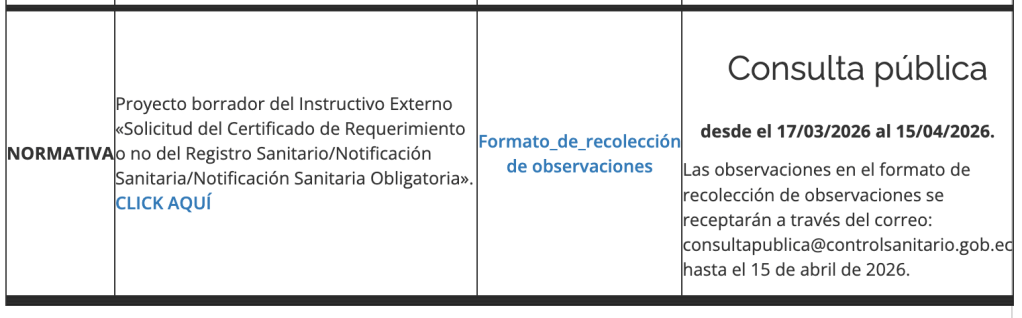
The National Agency for Regulation, Control, and Sanitary Surveillance (ARCSA in Spanish) has published a draft External Instruction for the application for the certificate of requirement or not of sanitary registration/sanitary notification/mandatory sanitary notification with the aim of guiding external users with procedures and instructions in a detailed, clear, and precise manner in order to expedite and optimize the submission of requests for the issuance of the Certificate of Requirement or not of Sanitary Registration/Sanitary Notification/Mandatory Sanitary Notification for products for human use and consumption subject to sanitary control and surveillance.
In the Chamber of Deputies, Representative Amom Mandel (Cidadania-AM) has introduced Bill 6427/25, which requires that the packaging of processed and unprocessed foods contain clear, visible, and easily perceptible information about the presence of pesticide or herbicide residues. The project modifies the Consumer Protection Code (Law 8.078/90) and is currently under review in the Chamber of Deputies.
According to the text, the labeling must explicitly indicate whether the product complies with the maximum residue limits established by law and health authorities. Additionally, companies must inform consumers about the potential health risks of the substances present in the product.
Amom Mandel argues that the measure is necessary because Brazil is one of the largest consumers of pesticides in the world and that the limits only manage the risks, without eliminating them. The deputy also criticizes the current labeling system, considering it limited to essential data about the production chain.


 infoAlimentario