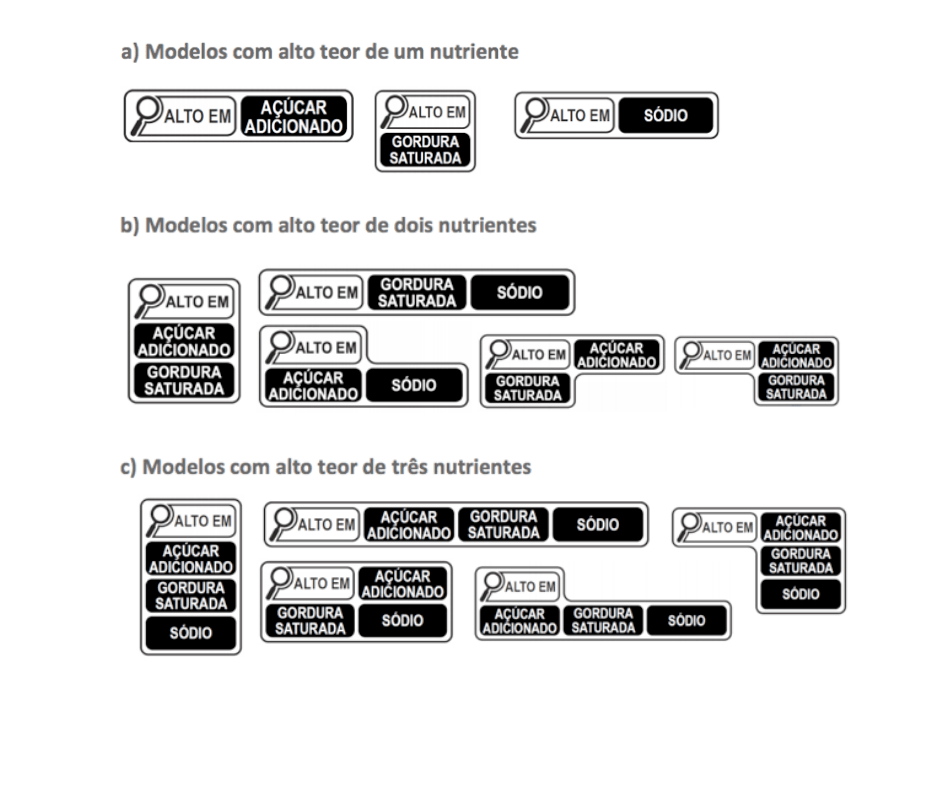
The research topic “Strengthening Food Labeling Policies in Brazil” provided an overview of food labeling policies in Brazil. Regarding the implementation of front-ofpackage nutrition labeling (FoPNL), the results discussed in the research topic suggest that the effectiveness of FoPNL systems depends on a number of factors including the design of the label, see for example, Prates et al. (1), Fernandes et al. (2), and Scapin et al. (3); and the nutrient profile model used to define which products are subject to them, see for example, Borges et al. (4), and Tomaz et al. (5). Thus, Prates et al. (1) showed that the Brazilian magnifying glass model did not perform as well as the triangular or octagonal FoPNL models, while Borges et al. (4) showed that because of the nutrient profile model adopted in Brazil, which is considerably more permissive than the nutrient profile model of the Pan-American Health Organization (PAHO), fewer products will receive FoPNL in Brazil.The aim of this commentary is to extend the discussion on the new Brazilian FoPNL regulations. Here, we will briefly comment on how Brazil missed an opportunity to make a more significant public health advance during the implementation of FoPNL by failing to learn from the experience of other Latin American countries.
 infoAlimentario