Argentina – Ministry of Economy updated the regulations for evaluating organisms obtained thru New Genetic Improvement Techniques

The Secretariat of Agriculture, Livestock, and Fisheries of the Ministry of Economy of the Nation, thru Resolution No. 24/2026, approves a new regulation that governs activities related to GMOs for agricultural, food, and agro-industrial use.

In this sense, the regulation updates and optimizes the Prior Consultation Instance (PCI), already provided for in the current regime, with the aim of organizing procedures and clarifying definitions, required information, response times, and evaluation criteria, in order to provide greater predictability to developers, researchers, and companies. In this way, a key tool is strengthened to determine, in advance, whether an organism is subject to the regulations applicable to GMOs.

The new resolution replaces the previous regime and simplifies the processes, incorporating more precise technical criteria, reducing evaluation times, costs, and eliminating unnecessary administrative burdens. In particular, it improves the procedures for small and medium developers, promoting a more equitable and competitive environment.
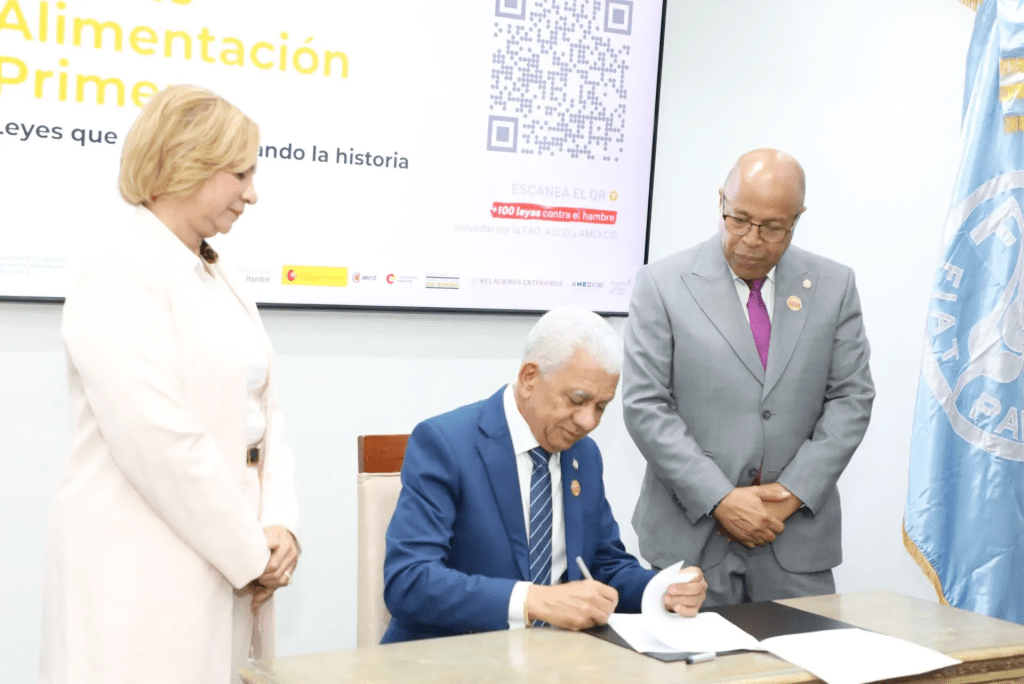
Dominican Republic – In the National Congress, the “Food First” Pact was signed

The National Congress of the Dominican Republic was the venue this Tuesday for the signing of the Parliamentary Pact “Food First,” an initiative that reaffirms the country’s commitment to strengthening food security and achieving more efficient, inclusive, resilient, and sustainable agri-food systems.

The signing of the pact was led by the presidents of the Senate and the Chamber of Deputies, Ricardo de los Santos and Alfredo Pacheco, respectively, along with the General Coordinator of the Parliamentary Front Against Hunger in Latin America and the Caribbean, Deputy Soraya Suárez.

During the event, Suárez, in her capacity as Regional Coordinator for Latin America and the Caribbean-FPCH FAO, highlighted that she will continue to promote initiatives to achieve “zero hunger” in the Dominican Republic.

Brazil – Updated Food Library

Libraries are documents that compile all current regulations on a specific broad topic, organized by subject. Their purpose is to facilitate access to and understanding of the regulatory body for both internal and external audiences, as well as to improve the process of drafting and revising regulations.

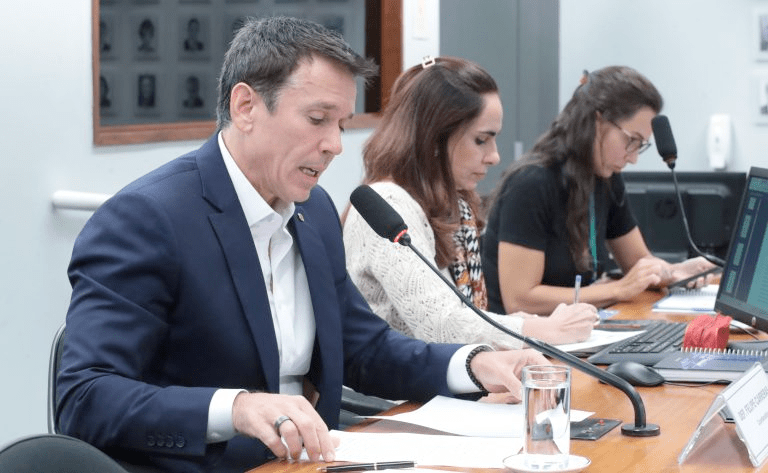
Brazil – Working group of the Chamber of Deputies proposes an urgent control of dietary supplements

The Working Group of the Chamber of Deputies, responsible for analyzing the marketing of dietary supplements, approved a report proposing an urgent reform of the sector. The document recommends the expedited processing of three bills aimed at increasing health control and sanctions related to fraud and misleading advertising.

The bills in question are: PL 5229/25, by Pedro Paulo (PSD-RJ); PL 5319/25, by Tabata Amaral (PSB-SP); and PL 6000/25, by Mário Heringer (PDT-MG). The coordinator of the group, Deputy Felipe Carreras (PSB-PE), highlighted the seriousness of the current situation, stating that “the scenario of total insecurity regarding the consumption of dietary supplements in Brazil demands urgent measures.”

Currently, most supplements do not require health registration, according to Anvisa’s resolution (Resolution 240/18), which is based on prior notification, assuming the manufacturer’s good faith. The current sanctions, according to Law 6.437/77, are limited to fines and batch withdrawals, which are insufficient to address serious frauds, such as ingredient adulteration and the use of prohibited substances.

Brazil – ANVISA announces that the materials from the sectorial dialog on dietary supplements containing turmeric are now available

The National Health Surveillance Agency (ANVISA in Portuguese) held a virtual sectoral dialog on dietary supplements containing turmeric-derived ingredients on March 17, 2026. The meeting brought together 696 participants from different sectors of society and aimed to present the regulatory proposal on the topic, clarify doubts, and gather contributions from stakeholders.

During the meeting, the international and national context related to the use of ingredients derived from Curcuma longa L. was addressed, including safety evidence, monitoring data, and current usage conditions in dietary supplements. The main proposed modifications to Normative Instruction No. 28/2018 were also presented, focusing on the inclusion of warnings on the labeling and the clarification of curcumin limits. During the participation phase, aspects such as the scope of the proposal, the interpretation of regulatory limits, the repercussions on already regulated products, and the adaptation period were addressed, in addition to technical issues related to the safety and use of these ingredients.

Anvisa provides the following materials for consultation and monitoring of the issue: