Ecuador – Congress proposes regulating front-of-pack nutrition labeling

With the aim of preventing non-communicable chronic diseases such as obesity, malnutrition, and childhood undernutrition, the representative of the province of Guayas, Cristina Jácome, presented the Organic Law Reform Bill to the Organic Health Law for the Comprehensive Regulation of Front-of-Package Nutrition Labeling.

The proposal seeks to update and strengthen compliance with the comprehensive technical regulations for front-of-pack nutritional labeling using the Octagon Graphic System (OGS) on processed foods. This includes classification parameters, graphic design, analytical methodologies, and nutritional profiles, in coordination with the national standardization body.

It also proposes the implementation and maintenance of population-based nutritional surveillance systems, monitoring compliance with labeling requirements, evaluating the impact on consumption patterns, and industrial product reformulation.

The legislator argued that non-communicable chronic diseases (NCDs) are the leading cause of morbidity and mortality in Ecuador, generating a high disease burden that significantly affects the population’s quality of life and the sustainability of the health system, according to data from the Ministry of Public Health updated for the 2024–2025 period.
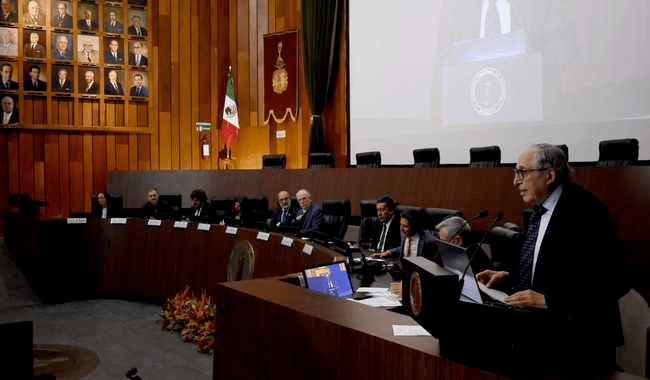
Mexico – Secretaries of Health and Agriculture agree to transform Mexico’s food system with health, social justice, and sustainability.

During the presentation of the EAT–Lancet Commission’s report on Healthy and Sustainable Diets, held at the National Academy of Medicine, Secretary of Health David Kershenobich stated that Mexico faces the urgent challenge of transforming its food system with a focus on health, social justice, and planetary boundaries. In his remarks, he acknowledged the work of the scientific community and the value of the analysis presented in the report.

The secretary also presented progress achieved thru front-of-pack warning labels, school policies, and fiscal measures to reduce the consumption of sugary drinks. He highlighted its impact on purchasing behavior: “Due to the measures we have implemented, up to 38% of people have changed their purchasing habits: 30.5% chose a product with fewer seals, and 38.7% reported not buying the labeled products.”

Colombia – INVIMA publishes the Application Guide for Resolutions 683 and 4143 of 2012, key for the sanitary surveillance of materials, packaging, and equipment in contact with food

The National Institute for Food and Drug Surveillance (INVIMA), in partnership with the trade association representing the plastics, paints, rubber, basic chemicals, inks, fibers, and related industries (Acoplásticos), officially launched the Application Guide for Resolutions 683 of 2012 and 4143 of 2012, fundamental regulations for the sanitary surveillance of materials, objects, containers, and equipment that come into direct contact with food and beverages.

These standards define composition criteria, labeling requirements, substance migration limits, manufacturing conditions, and measures to ensure that materials do not transfer components that could affect the safety, quality, or security of the food. Its objective is to protect consumer health and ensure compliance with technical and sanitary standards throughout the entire production chain.

The document, technically prepared by Invima and designed and printed by Acoplásticos, aims to provide clear and practical guidance for complying with current regulations, thereby strengthening the safety and quality of the products that reach consumers.

The guide facilitates the understanding and management of the procedures for approving food-contact materials and packaging, a technical process that requires specialized knowledge. Its objective is to unify criteria between industry and the public sector, streamline procedures, and ensure that both speak the same language. “Furthermore, it clarifies Invima’s role in approving and monitoring all materials that come into direct contact with food,” said Alba Jiménez, Director of Food and Beverages at INVIMA.

Brazil – ANVISA updates regulations on ingredients and labeling for food supplements

The National Health Surveillance Agency (ANVISA in Portuguese) has published an amendment to Normative Instruction No. 28/2018, which establishes the lists of components, usage limits, claims, and supplementary labeling for food supplements.


Brazil – ANVISA prohibits products containing allulose as an ingredient.

The National Health Surveillance Agency (ANVISA) published RESOLUTION-RE No 5,157 of December 19, 2025, which prohibits all lots of the product Allulose from Sainte Marie Importação e Exportação. The measure prohibits the sale, distribution, import, advertising, and use of the product.
Allulose is not included on the list of substances authorized by ANVISA for use as a sweetener or food ingredient in Brazil.
All foods or ingredients without a history of consumption in Brazil are classified as novel and, therefore, must be submitted to ANVISA for evaluation. Therefore, the interested company must submit technical and scientific documents for review by the Agency.
In this analysis, ANVISA verifies whether the manufacturing process of the new food or ingredient introduces or concentrates substances that may have harmful health effects, or whether the recommended intake exceeds levels considered safe.