Chile – Santiago Court rejects appeals regarding the modification of food advertising featuring warning labels

The Santiago Court of Appeals has dismissed the appeals filed against the decree from the Ministry of Health, which altered the message “Prefer foods with fewer labels” that must be included in advertising campaigns for foods labeled as high in calories, fats, sugars, or salt, replacing it with the new statement “Food with ‘high in’ label, avoid its consumption”.

In a unanimous ruling (case role 1.276-2025), the Third Chamber of the appellate court –composed of Ministers Paula Hasbún, María Paula Merino, and attorney (i) Jorge Gómez– rejected the economic protection appeal submitted by Ideal SA, concluding that the change in messaging, aimed at informing consumers about public health and healthy nutrition, does not adversely impact the economic activities of the appellant.

According to the court: “Thus, these guidelines are the directives that shape public policies regarding food, which were undoubtedly considered in determining how the message should be conveyed as specified in the contested decree, so that such inputs are part of the reasoning that the appellant finds lacking, thus this section cannot succeed either.”

“It is important to highlight that the contested decree does not prevent the appellant companies from conducting their commercial activities, nor from marketing their products, nor does it impose any disproportionate or discriminatory restrictions within the context of the general health regulations applicable to all industry participants, as it only modifies the message that must be used in the advertising of ‘High in’ products that will be employed in mass media specifically indicated, such as television, radio, print, and those displayed in public spaces and on the internet, all aimed at more effectively guiding the population on such a sensitive issue as nutrition,” it concludes.

Brazil – MAPA proposes to modify regulations on dairy-based products for human consumption

The Ministry of Agriculture and Livestock (MAPA) published Draft Ordinance SDA/MAPA No. 1414. Proposes modifications to Ordinance No. Ordinance No. 1170 of 2024, which regulates the technical characteristics and quality of composite dairy products for human consumption.

Uruguay – In a public consultation, MERCOSUR Technical Regulations projects regarding the Labeling of Packaged Foods and Nutritional Labeling of Packaged Foods

The Ministry of Industry, Energy and Mining has released for public consultation two MERCOSUR projects concerning food labeling:

  • Project Resolution No. 03/25 Revision 1 “Technical Regulation MERCOSUR for the Labeling of Packaged Foods (Repeal of GMC Resolution No. 06/94 and 26/03). The document submitted for public consultation proposes the approval of a new Technical Regulation MERCOSUR for the labeling of packaged foods, which modernizes and replaces previous standards to ensure that consumer information is truthful, clear, legible, and sufficient. It establishes definitions, general and specific requirements for the presentation of mandatory information (including ingredients, origin, expiration date, storage, and nutritional information), sets formatting criteria to ensure readability, determines conditions for specific cases (such as small packages, foods for industrial processing, or imported products), and provides differentiated adjustment deadlines for various types of products and economic operators.

  • Resolution Project No. 05/25 “MERCOSUR Technical Regulation on Nutritional Labeling of Packaged Foods (Repeal of Resolutions GMC No. 44/03, 46/03, 48/06, and 40/11).” The document submitted for public consultation approves a new MERCOSUR Technical Regulation on nutritional labeling of packaged foods, which updates and replaces previous standards. It defines the nutritional information that must be declared mandatorily, the formats and readability criteria to be followed, the circumstances under which the declaration is voluntary or exempt, how values should be calculated and expressed, and the adjustment periods that different types of products and operators will have before mandatory incorporation in the Member States.

Belize – Bureau of Standards conducts training on requirements of Revised National Standard for Labelling of Prepackaged Foods

The Belize Bureau of Standards (BBS) through an invitation from the Belize Trade and Investment Development Service (BELTRAIDE) conducted a training on the requirements of the Revised National Standard for Labelling of Prepackaged Foods to Coconut producers.

Participants were introduced to the requirements of the National Standard for BZS 1: Part 3: 2025 (Revised) – Belize Standard: Specification for Labelling: Labelling of Prepackaged Foods, while getting an opportunity to conduct a self-assessment of their current labels.  

The BBS noted that proper packaging and labeling are critical aspects of food safety and quality assurance, and marketing especially for pre-packaged foods.

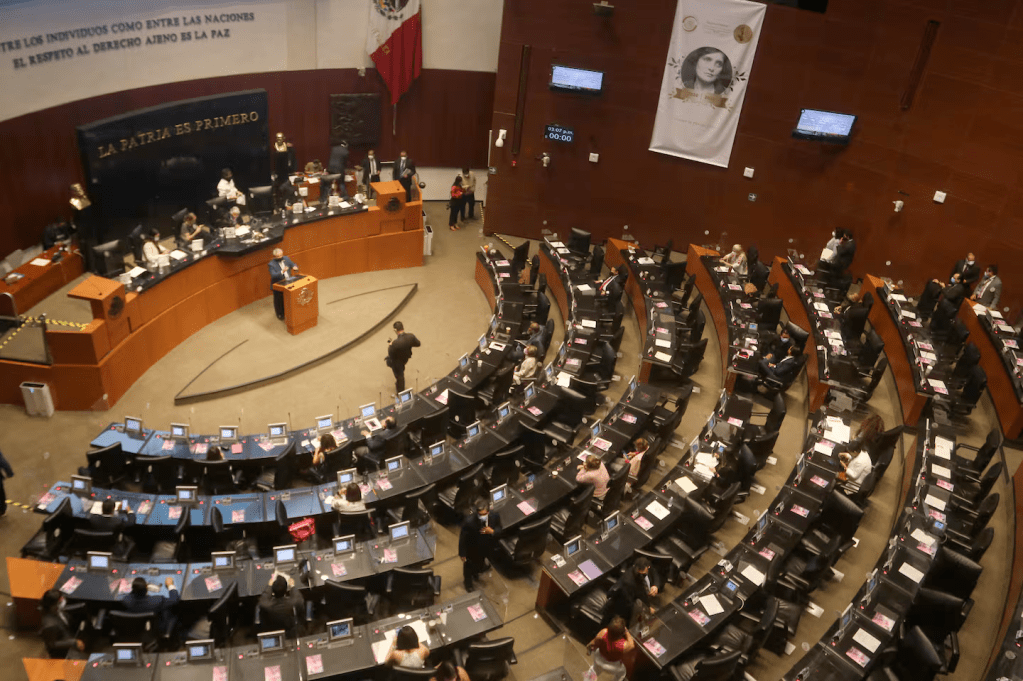
Mexico – Senators propose labeling of food products containing genetically modified ingredients

The President of the Senate, Laura Itzel Castillo, announced that within the framework of discussions regarding the economic package (reforms to the Federal Tax Code and the Federal Rights Law), she will present a complementary initiative concerning the labeling of genetically modified products. The aim is to provide consumers with clear information about the food they purchase. The legislator clarified that this proposal will support the reform of Articles 4 and 27 of the Political Constitution of the United Mexican States, which protects native corn and prohibits the cultivation of genetically modified grains in Mexico.

She also emphasized that the review of these issues will be a priority on the economic agenda, as the modifications seek to strengthen public revenues and promote responsible consumption, particularly concerning products that have a significant impact on health.

For further information, please consult: Link / Link