The National Health Surveillance Agency (ANVISA) has published Public Consultation No. 1,357, dated October 31, 2025, regarding the revision of the regulations on the general labeling of packaged foods.
Month: November 2025
Argentina – New ingredients for dietary supplements and fortified foods are incorporated into the Argentine Food Code
The National Administration of Medicines, Food and Medical Technology and the Secretariat of Agriculture, Livestock and Fisheries, by Joint Resolution 8/2025, incorporate “22-FERRIC GLYCINATE and 23-FERROUS GLYCINATE” into the Argentine Food Code.
ARTICLE 1.- The following paragraphs 22 and 23 are added to Article 1.417 of the Argentine Food Code (CAA), which shall be worded as follows:
22 – Ferrous Glycinate
Identification and purity as established in the FCC, USP, and other pharmacopeias.
Use: as an ingredient in dietary supplements and fortified foods.
23 – Ferrous Glycinate
Identification and purity as established in the FCC, USP, and other pharmacopeias.
Use: as an ingredient in dietary supplements and fortified foods.
Argentina – Modification regarding partially dealcoholized wine and alcohol-free wine published in the Argentine Food Code
The National Administration of Medicines, Food and Medical Technology and the Secretariat of Agriculture, Livestock and Fisheries, by Joint Resolution 6/2025, have amended Article 1.102 “CHAPTER XIII FERMENTED BEVERAGES” of the Argentine Food Code:
ARTICLE 1.- Article 1.102 bis is hereby incorporated into “CHAPTER XIII FERMENTED BEVERAGES” of the Argentine Food Code, and shall be worded as follows: “Article 1102 bis: The term “partially dealcoholized wine” refers to a product obtained by partially dealcoholizing wine, resulting in a reduction of the wine’s alcohol content by more than 20% vol. Provided that its final alcoholic strength by volume is equal to or greater than 0.5% vol. and comply with Law No. 14,878 – General Wine Law.
ARTICLE 2.- Article 1.102 tris is hereby incorporated into “CHAPTER XIII FERMENTED BEVERAGES” of the Argentine Food Code, and shall be worded as follows: “Article 1102 tris: The term “dealcoholized wine” or “alcohol-free wine” refers to the product obtained by dealcoholizing wine, with an alcohol content of less than 0.5% vol. and comply with Law No. 14,878 – General Wine Law.
Argentina – ANMAT continues to modernize the food control and import regime
The National Administration of Medicines, Food and Medical Technology (ANMAT in Spanish) announces Decree 790/2025, which updates and amends Decree No. 1812/92 and joins the reforms implemented by this administration thru Decree No. 35/25, which introduced changes to the historic Decree No. 2126/71.
These updates aim for a more modern, agile, and less bureaucratic public administration, aligned with international health surveillance standards.
Among the most relevant novelties, the possibility of expanding the list of recognized countries stands out, based on reciprocity agreements or economic integration treaties.
Likewise, obsolete articles containing redundant provisions on product stability are repealed, and the powers of this National Administration of Medicines, Food and Medical Technology (ANMAT), thru the National Food Institute (INAL), are consolidated as the authority responsible for the registration and authorization of imported packaged foods, and those of the National Agri-Food Health and Quality Service (SENASA) in matters under its jurisdiction.
In this way, the new decree promotes a series of structural transformations in the food control system:
- Simplification of procedures: Procedures for packaged food products intended for direct sale to the public are optimized, in line with the changes already introduced by Decree 35/25. Reforms are also being promoted by SENASA.
- International recognition: The validity of health certificates issued by high-surveillance countries, such as the United States, Canada, the European Union, Japan, and Australia, among others, which had already been introduced by Decree 35/25, is reaffirmed.
- Reduction of processing times: Inspection and release times for goods are shortened, thanks to the import authorization and notification system interoperating with the Customs Revenue and Control Agency (ARCA) thru the Single Window for Foreign Trade (VUCE).
Furthermore, inter-institutional coordination between ANMAT and SENASA—key technical agencies in health oversight and control—is strengthened, with a special focus on ex-post supervision by INAL.
With these reforms, the Government seeks to consolidate a more dynamic, reliable food system aligned with international best practices, reaffirming its commitment to protecting public health and ensuring institutional efficiency.
Peru – Government strengthens food safety and quality with new SENASA seal
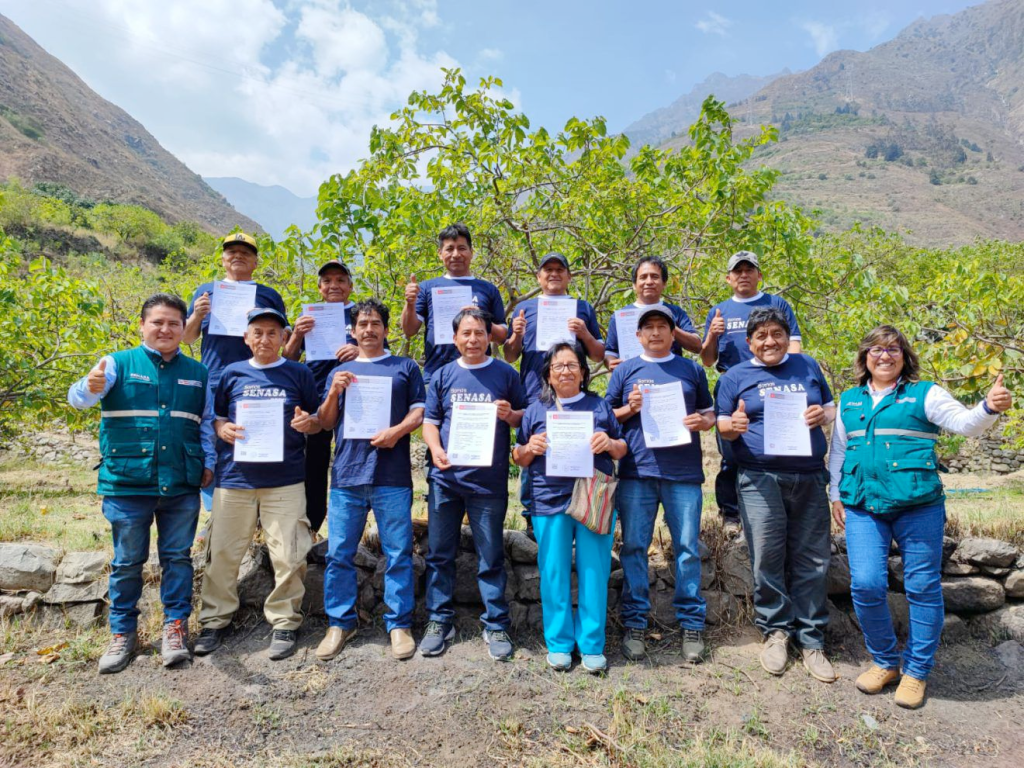
The Government, thru the Ministry of Agrarian Development and Irrigation (MIDAGRI), approved the creation of the Good Agricultural Practices Seal (BPA), with the aim of enabling thousands of Peruvians to identify and trust healthy, safe, and contaminant-free foods. The BPA Seal aims to strengthen competitiveness in agricultural production by promoting the consumption of safe, high-quality food in the country’s markets.
The BPA seal will serve as a visible mark or emblem that complements the good agricultural practices certification issued by the National Agrarian Health Service (SENASA in Spain) to farms that meet health and food safety standards, enabling the primary agricultural products they produce to access markets that require such certifications and to be easily identified as healthy and safe for consumption by having reduced risks in the agri-food chain.
Each seal will be associated with the Good Agricultural Practices certificate issued by SENASA to producers, primarily those participating in the Field Schools (ECA); this seal will feature a code that will serve as a guaranty for consumers, enabling them to recognize that the products come from certified farms that meet production standards.
 infoAlimentario