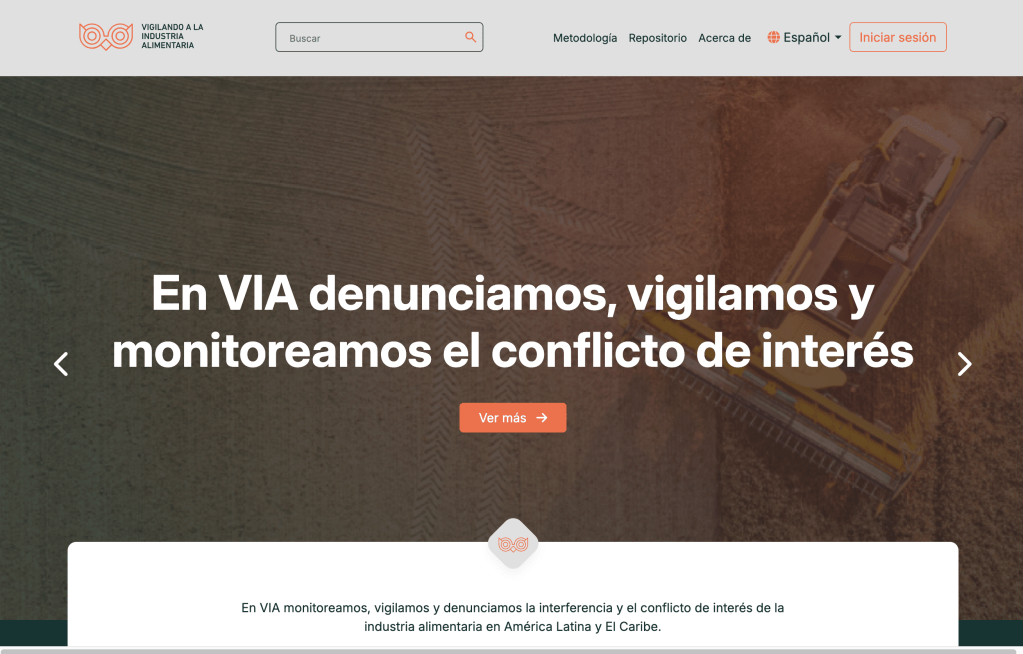
Mexico – Civil organizations announce the new platform Monitoring the Food Industry

In order to expose, monitor, oversee, and report on the detrimental practices and interference strategies of the food industry in Latin America and the Caribbean, Power of the Consumer and the Latin American and Caribbean Community of Nutrition and Health (COLANSA in Spanihs) present Monitoring the Food Industry (VIA in Spanish), an innovative collaborative and open-access platform for civil society, academia, students, activists, and the media.

VIA emerges as a crucial tool to highlight and denounce the interference of the food industry in public policies, communication, scientific research, and other areas that directly impact the right to healthy food. Through rigorous documentation, analysis, and denunciation, VIA aims to enhance citizen oversight and accountability. Commercial entities employ a sophisticated and integrated machinery of strategies. These strategies are designed to protect and promote commercial interests, often at the expense of public health, the environment, democracy, and human rights, a phenomenon known as Corporate Political Activity.
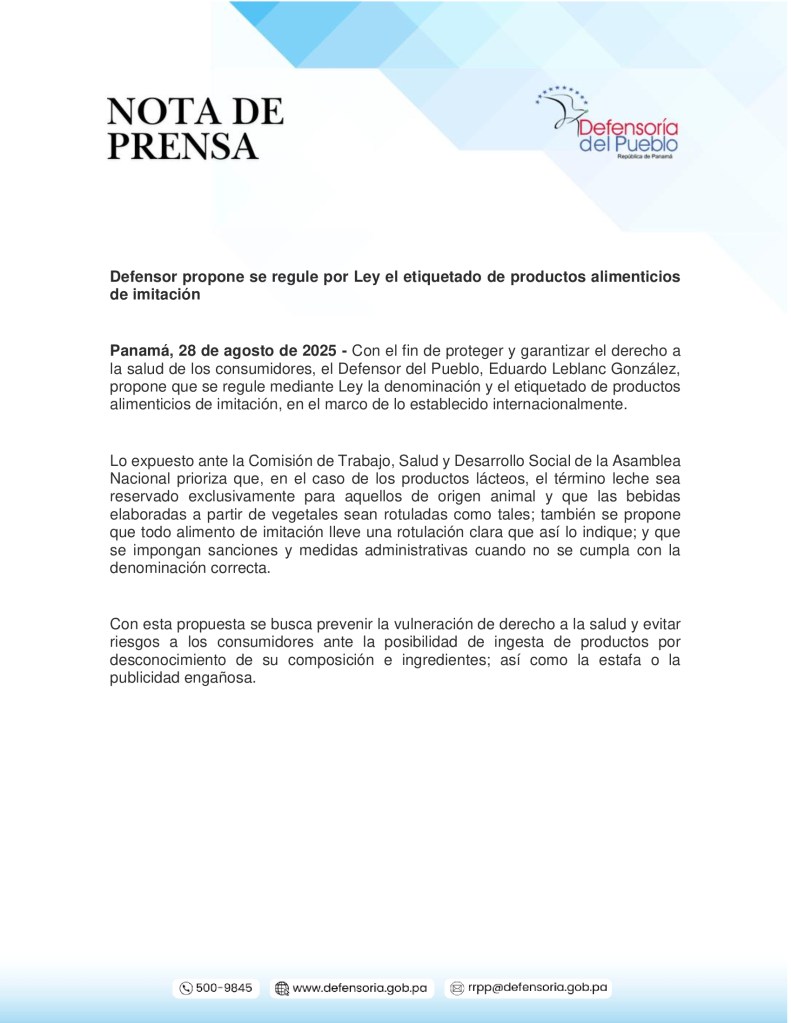
Panama – Defensor suggests that the labeling of imitation food products be regulated by law

In order to protect and ensure consumers’ right to health, the Ombudsman, Eduardo Leblanc González, suggests that the naming and labeling of imitation food products be regulated by law, in accordance with international standards.

The presentation made before the Commission on Labor, Health, and Social Development of the National Assembly emphasizes that, in the case of dairy products, the term “milk” should be reserved exclusively for those derived from animals, and that beverages made from plants should be labeled as such; it is also proposed that all imitation foods carry clear labeling indicating this; furthermore, penalties and administrative measures should be imposed for non-compliance with the correct naming.

Brazil – ANVISA in Portuguese has published the preparatory documents for the virtual sector dialogue regarding the review of the general MERCOSUR food labeling regulations

The National Health Surveillance Agency (ANVISA in Portuguese) has released preparatory documents for the virtual sector dialogue regarding the review of the general food labeling regulations. The meeting is scheduled for Thursday, September 4th, from 9:30 AM to 12:00 PM, via Microsoft Teams.

The sector dialogue will focus on presenting the key changes agreed upon within the Mercosur framework for the general labeling of packaged foods, as well as addressing any questions that may qualify participation in the public consultation phase.

A spreadsheet containing the commented proposal for public consultation, which includes:

  • A comparison of the provisions of RDC 727/2022 with those of the Mercosur Resolution Project on general labeling.
  • A proposal for the revision of RDC 727/2022.
  • Additional clarifications regarding the proposed changes.
  • A public consultation project, containing the complete text of the regulatory proposal that will be submitted for deliberation by the Collegiate Council.

Jamaica – BSJ Request Comments on Draft Jamaican Standard Condensed Molasses Solubles of Sugar Cane Origin

The Jamaican Bureau of Standards issued Notice DJS 375:2025, proposing a revision to the standard for Concentrated Molasses Solubles (CMS) derived from sugarcane.

Brazil – STF holds a public hearing on the advertising and promotion of foods deemed harmful to health

The Supreme Federal Court (STF in Portuguese) has held a public hearing regarding the advertising rules for foods and medicines deemed harmful to health. This discussion is part of the Direct Action of Unconstitutionality (ADI) No. 7788 filed by the Brazilian Association of Broadcasters and Television (ABERT in Portuguese) against the regulations set by the National Health Surveillance Agency (ANVISA in Portuguese) that govern the advertising of foods and medicines. The organization claims that the resolutions impose restrictions that should only be established by federal law. It also argues that the measures are excessive and harmful to economic freedom.

The procedure will take place in the session room of the First Chamber of the STF, with live broadcasts on TV Justice, Radio Justice, and the STF’s YouTube channel. Public participation as an audience member is open without prior registration and is subject to capacity limits.

The presiding judge approved the participation of 33 speakers, including representatives from the parties involved in the action, as well as organizations and entities addressing the issue. Each speaker will have 10 minutes to present. The presentations are divided into three sections. Discussion in progress.