Brazil – ANVISA reviews the classification process for border products

The National Health Surveillance Agency (ANVISA in Portuguese) has taken an additional step in reviewing the classification process for border products. The call for proposals 9/2025, dated August 8, was published this Monday (August 11), inviting contributions to the Preliminary Report on Regulatory Impact Analysis (AIR in Portuguese) regarding this matter.

Border products are those that raise questions about their classification—whether they are medications, cosmetics, food, or medical devices—due to their characteristics, such as composition, usage, appearance, and mode of action. They are referred to as “border products” until ANVISA determines the correct category and the regulations that must be followed.
Peru – INACAL has published the Peruvian Technical Standard NTP 209.013:2025 – Edible oils and fats. Olive oil. Requirements

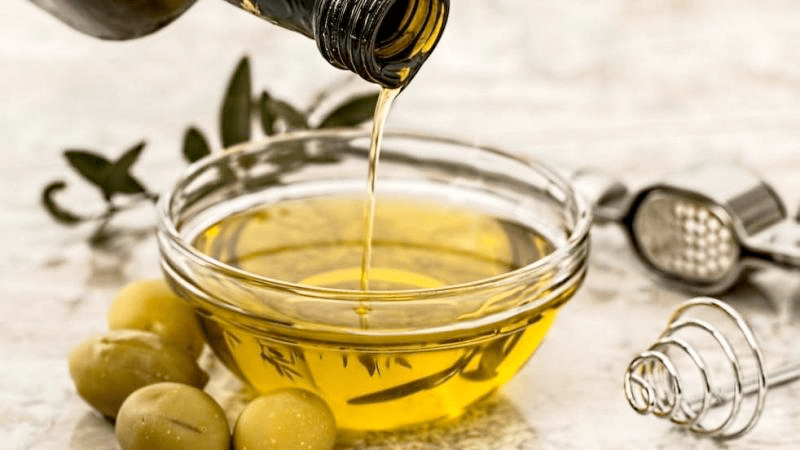
Through Directoral Resolution N° 017-2025-INACAL/DN, the National Institute of Quality (INACAL) approved NTP 209.013:2025 – Edible oils and fats. Olive oil. Requirements.

The standard outlines the technical requirements that olive oils produced in Peru must meet for national and international marketing. It encompasses technical criteria related to quality, purity, and traceability, fostering a competitive product that aligns with global standards.

Argentina – They warn about the risks associated with the dissolution of the National Food Commission

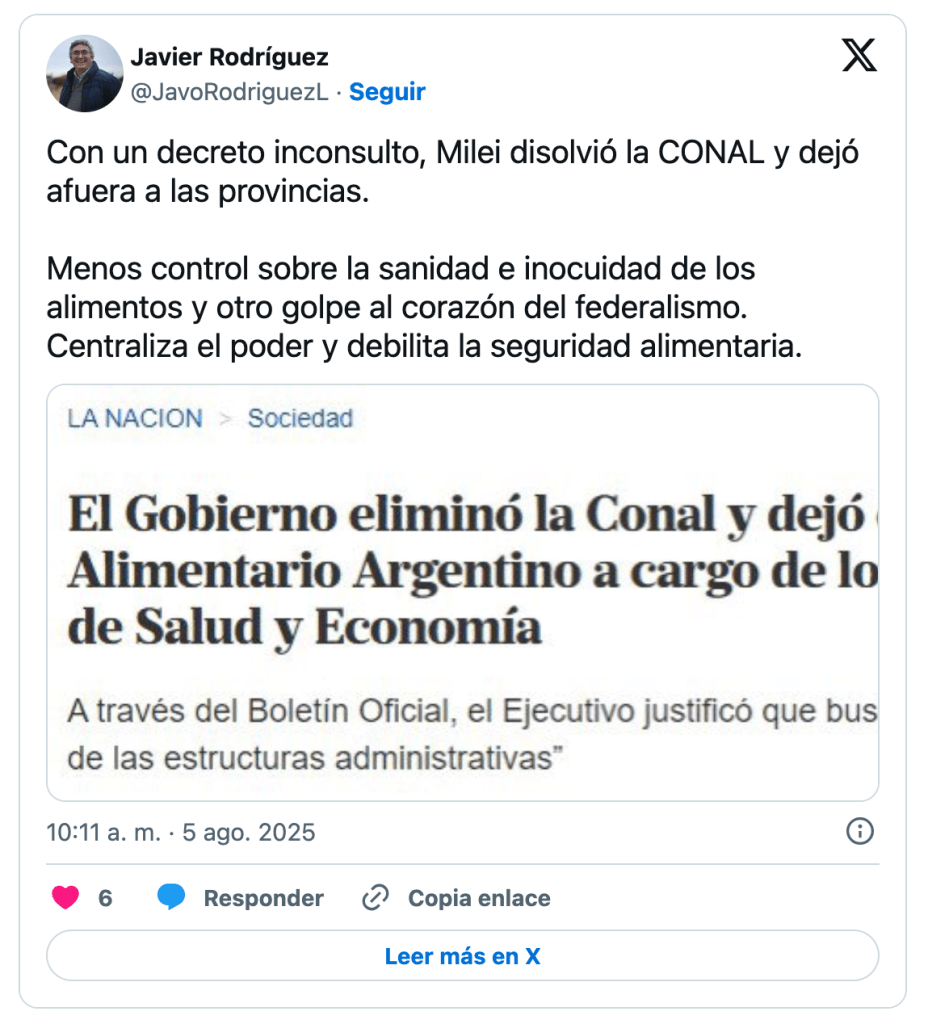
In a new offensive against the technical and participatory bodies of the State, the government of Javier Milei has dissolved the National Food Commission (CONAL in Spanish), a crucial institution for food security in the country. What was previously decided in a federal, scientific, and pluralistic space is now left in the hands of a few officials and companies, without opportunities for debate or citizen oversight.
The dismantling of CONAL was formalized through decree 538/2025, which amends the Argentine Food Code and transfers decision-making authority to the National Institute of Food (INAL in Spanish), which is under the National Administration of Medicines, Foods and Medical Technology (ANMAT in Spanish), and the National Service of Health and Quality of Agro-Food (SENASA in Spanish). Although these agencies possess technical expertise, what disappears with this measure is the participatory and federal architecture that ensured balanced regulation aimed at the public good.
The elimination of this space signifies much more than an administrative restructuring: it represents a setback in terms of transparency, social control, and the safeguarding of public interest against market interests. The official argument — ‘to streamline processes’ through platforms like SIFEGA — conceals the true impact: without plural deliberation, the Argentine food system becomes more vulnerable to corporate pressures and discretionary decisions.
Experts and sector leaders are already warning of the consequences: weakening of health consensus, loss of citizen and federal participation, and increased opacity in regulatory decisions. All of this occurs in a context where ultra-processed foods, controversial additives, and misleading advertising strategies, particularly aimed at children and adolescents, are proliferating.

Argentina – Six new enzymes are incorporated into the Argentine Food Code

Through Joint Resolution 40/2025, the Secretariat of Health Management and the Secretariat of Agriculture, Livestock, and Fisheries have approved the addition of six new enzymes to the Argentine Food Code (CAA), a measure that directly affects the food industry and the development of new processing technologies.

The newly incorporated enzymes — sourced from Bacillus licheniformis, Pichia pastoris, Aspergillus niger, and Trichoderma reesei — will be utilized as technological aids in industrial processes, particularly in enhancing textures, flavors, and food preservation.

The incorporated enzymes and their origins

The resolution specifies the enzymes that will be included in Article 1263 of the CAA:

- Phospholipase C (Bacillus licheniformis).
- Phosphoinositide phospholipase C (Bacillus licheniformis).
- Acid prolyl endopeptidase (Pichia pastoris).
- Triacylglycerol lipase (Pichia pastoris).
- Prolyl oligopeptidase (Aspergillus niger expressed in Trichoderma reesei).
- Prolyl oligopeptidase (Aspergillus niger expressed in Aspergillus niger).

These enzymes perform functions such as the hydrolysis of proteins and lipids, the enhancement of organoleptic properties, and the optimization of industrial processes in baked goods, dairy products, oils, and beverages.

Brazil – IDEC warns that the labeling of proteins in ultra-processed foods may mislead consumers

The Brazilian Institute for Consumer Protection (IDEC in Portuguese) has released a survey indicating that many claims regarding the protein content of food and beverages sold in Brazil may lead consumers to erroneous conclusions. The study warns about the increasing number of products that emphasize added protein as a healthy differentiating factor, even in the case of ultra-processed foods.

Sixty-five claims related to protein were identified across these 52 products. Most of these claims pertained to the amount present in the food, but 11 instances contained information deemed potentially misleading. One cited example was a granola that claimed to contain 30 grams of protein per package; however, upon checking the recommended serving size on the label, the value was reduced to only 5 grams, which represents merely 5% of the daily recommended intake, a quantity insufficient for the product to be considered a good source of this nutrient.