Peru – Consumer Defense Commission warns of risk in labeling of foods with GMOs

The president of the Consumer Defense Commission and Regulatory Bodies of Public Services in Congress, Katy Ugarte, expressed her strong opposition to the proposal that would limit information regarding the presence of genetically modified organisms in packaged foods, arguing that this measure would undermine consumers’ right to receive clear and comprehensive information.

During the first ordinary session, the commission’s president voiced her concerns regarding the proposal included in Ministerial Resolution No. 010-2025-PCM, which suggests mandatory labeling only when the content of genetically modified components exceeds 3%. “The Consumer Protection and Defense Code, in its article 37, stipulates that all foods containing genetically modified organisms must indicate this on their label, without exceptions or thresholds. We cannot allow this right to be restricted,” the legislator emphasized.

Costa Rica – ALAIAB emphasizes the need for front labeling regulation in Central America

The Latin American Alliance of Food and Beverage Industry Associations (ALAIAB in Spanish) emphasized this Friday the significance of regulating front labeling of food and beverages in Central America on a regional basis, through a Central American Technical Regulation (RTCA in Spanish), in order to prevent trade barriers and enhance economic integration.

The process was officially initiated at the end of June during the meeting of the Council of Ministers of Economic Integration (COMIECO in Spanish), where the countries of the region agreed to move towards a common framework in this area.

According to ALAIAB, the implementation of unilateral measures by states could lead to “distortions in the trade of food and beverages, impact the competitiveness of the industry, and restrict consumers’ access to a diverse and affordable range of products.”

Original source

Argentina – ANMAT has published a report regarding the management of the Department of Health and Nutritional Surveillance of Food

The National Administration of Medicines, Foods and Medical Technology (ANMAT in Spanish) has released a report regarding the management of the Department of Health and Nutritional Surveillance of Foods. The Department’s mission is to implement actions aimed at identifying, controlling, and preventing the risks associated with the foods we consume. This report outlines the details of some of the surveillance activities conducted during the first half of the year 2025.

Brazil – ANVISA updates the regulations regarding food additives and authorized technological adjuvants for use in food

The National Health Surveillance Agency (ANVISA in Portuguese) has released Normative Instruction IN No. 395/2025, which amends Normative Instruction – IN No. 211, dated March 1, 2023, that defines the technological functions, maximum limits, and usage conditions of food additives and authorized technological adjuvants for use in food.

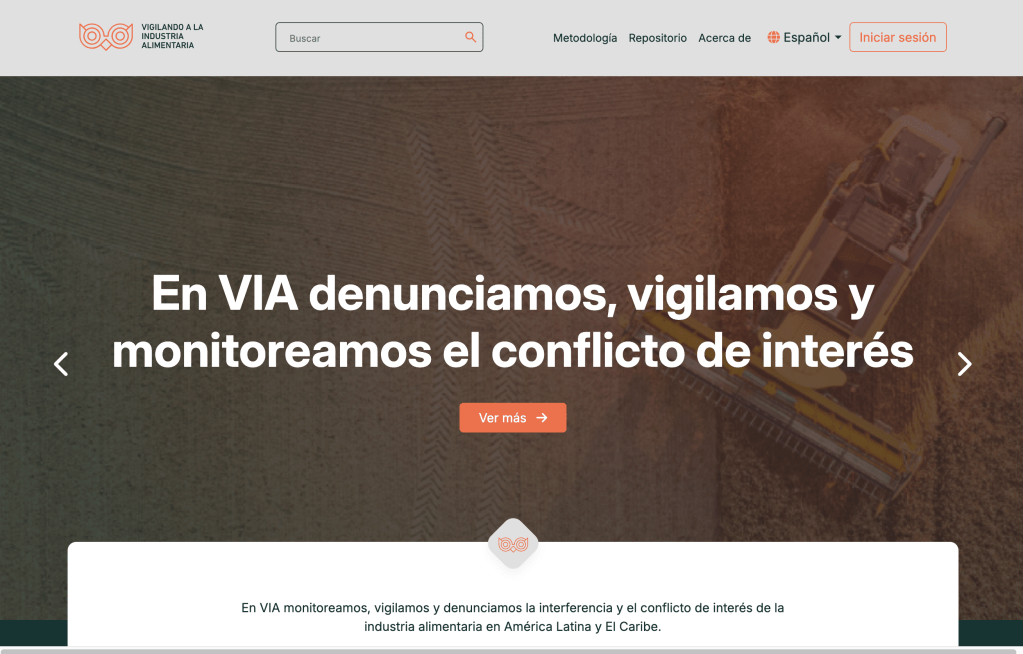
Mexico – Civil organizations announce the new platform Monitoring the Food Industry

In order to expose, monitor, oversee, and report on the detrimental practices and interference strategies of the food industry in Latin America and the Caribbean, Power of the Consumer and the Latin American and Caribbean Community of Nutrition and Health (COLANSA in Spanihs) present Monitoring the Food Industry (VIA in Spanish), an innovative collaborative and open-access platform for civil society, academia, students, activists, and the media.

VIA emerges as a crucial tool to highlight and denounce the interference of the food industry in public policies, communication, scientific research, and other areas that directly impact the right to healthy food. Through rigorous documentation, analysis, and denunciation, VIA aims to enhance citizen oversight and accountability. Commercial entities employ a sophisticated and integrated machinery of strategies. These strategies are designed to protect and promote commercial interests, often at the expense of public health, the environment, democracy, and human rights, a phenomenon known as Corporate Political Activity.