Argentina – The National Food Commission is dissolved, and ANMAT and SENASA will take over the mechanisms for updating the Argentine Food Code

The government ordered the dissolution of the National Food Commission (CONAL in Spanish) and modified the control and updating regime of the Argentine Food Code (CAA in Spanish), according to Decree 538/2025. In this way, food management and control were centralized in the National Administration of Medicines, Food, and Medical Technology (ANMAT in Spanish) and the National Service for Agrifood Health and Quality (SENASA Spanish).

The Ministry of Health, through the National Administration of Medicines, Food, and Medical Technology (ANMAT ), and the Ministry of Economy, through the Secretariat of Agriculture, Livestock, and Fisheries, by Joint Resolution, will keep the standards of the Argentine Food Code (CAA) up to date, resolving any modifications that may be necessary for its ongoing adaptation to advances in the field, taking as references international standards and agreements entered into within the Southern Common Market (MERCOSUR in Spanish).

The government argues that CONAL’s collegial structure slowed down procedures and that technical agencies have sufficient capacity to take on the tasks of drafting, reviewing, and proposing regulatory changes.

Among its arguments, the Executive maintains that “the dissolution of CONAL does not imply a reduction in the protection of public health or in the quality and safety of food, but rather seeks to optimize decision-making processes by concentrating responsibilities in the entities that have the power of oversight and control.”
Argentina – Authorities continue to modernize food regulation for international trade

The Revenue and Customs Control Agency (ARCA in Spanish) has added Resolution General 5731/25, which incorporates the National Single Window Regime for Foreign Trade in Argentina (VUCEA in Spanish) to include the import notice and the import authorization for food products from the National Institute of Foods (INAL in Spanish) – National Administration of Medicines, Foods and Medical Technology (ANMAT in Spanish).

The Regulatory Decree 35/2025, which amended the Argentine Food Code, enabled the modernization of procedures related to the import and export of food, thereby facilitating trade and enhancing public health protection.

The implementation of this decree was carried out through ANMAT Disposition No. 537/2025, which established new guidelines for obtaining import notices and authorizations, adapting the system to the challenges of the global context and technological advancements.

Among the main achievements are the simplification of procedures, significantly reducing the time and administrative steps required to import or export food, the recognition of international standards, integrating high surveillance sanitary certifications from countries such as Australia, Canada, the European Union, and the United States, among others, as well as the guidelines of the Codex Alimentarius.

Brazil – Anvisa authorizes the depletion of already produced containers following the regularization of food products

The National Health Surveillance Agency (ANVISA in Portuguese) has approved a proposal to specifically amend the Collegiate Council Resolution (RDC) 843/2024, allowing for the removal of food and beverage packaging that was produced prior to the inclusion of the new regulatory number mandated by the legislation.

This amendment, formalized through RDC 983/2025 and published on July 28, 2025, addresses the requests from the production sector and prevents material waste, all while ensuring that health safety is not compromised. The removal period will extend up to 180 days following the approval of the registration or notification.

This measure poses no health risks, does not alter the composition of the products, and retains all mandatory information on the labels.

Mexico – Ministry of Economy has postponed the third phase of the front labeling of food products

The Ministry of Economy (SE in Spanish) has postponed the implementation of the third phase of front labeling for food products until 2028, which was originally scheduled to commence on January 1st. The reasoning provided was to “avoid generating negative economic impacts on the inputs that make up the food baskets of various social assistance programs,” despite the fact that the labels do not lead to an increase in product prices.

In an agreement published today in the Official Journal of the Federation (DOF in Spanish), the agency led by Marcelo Ebrard Casaubón stated that, due to their characteristics, the products included in the food baskets of social programs “are not susceptible to reformulation” and represent “nutrient-dense foods” for the “approximately over 9 million” beneficiaries of these programs.

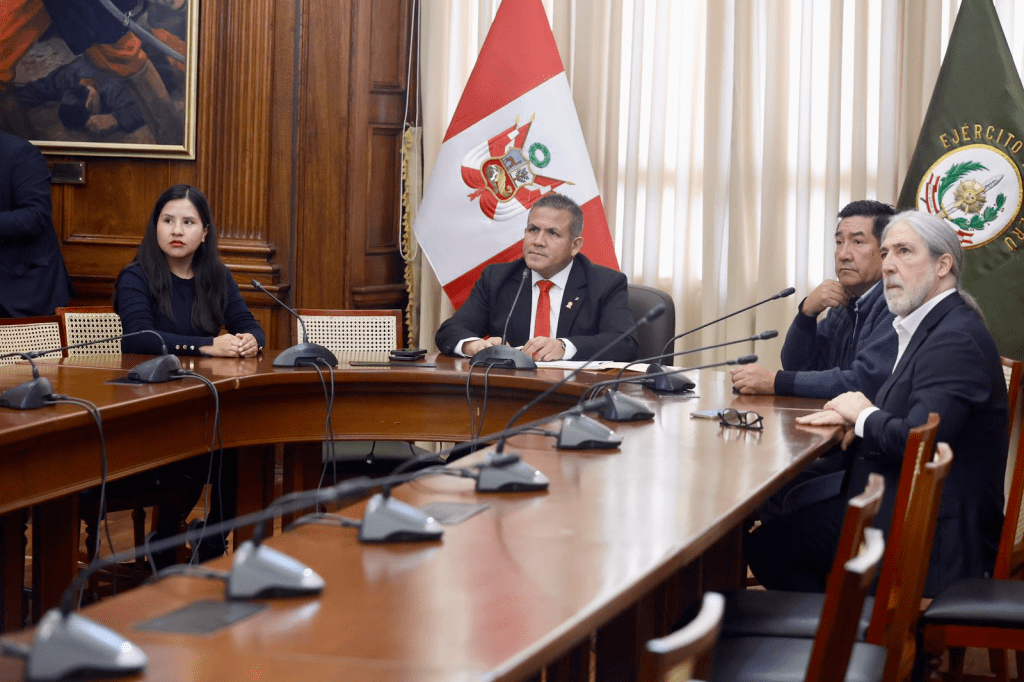
Peru – Regulatory framework for food security in the Andean region analyzed

Aspects related to the regulatory framework of food security with nutritional quality were examined on Thursday, the 31st, during the session of the Special Commission for the Fight Against Hunger of the Andean Parliament, led by the Andean parliamentarian from Peru, Fernando Arce Alvarado.

During the meeting, it was revealed that the Andean Parliament is developing a regulatory framework for school feeding in the region, aiming to ensure the right to food and to eradicate hunger and malnutrition, particularly among schoolchildren.

This framework focuses on food and nutritional security, incorporating a gender perspective, and promotes the establishment of national nutrition observatories and food surveillance systems. In Peru, the Wasi Mikuna program (formerly known as Qali Warma) is implementing a new economic subsidy modality for school feeding, with the involvement of management committees formed by mothers and other social actors.