Brazil – Bill introduced to make mandatory the inclusion of warnings on labels of ultra-processed foods

Senator Dr. Eudócia (PL/AL) presented a bill that seeks to make mandatory the inclusion of warnings on the labels of ultra-processed foods, alerting consumers about the high carcinogenic potential of these products. The proposal amends Decree-Law No. 986 of 1969, which establishes the basic standards for food, and introduces the requirement that packaging must clearly and visibly display the warning: “High carcinogenic potential”.

The measure seeks to guarantee the consumer’s right to information, as provided for in the Consumer Protection Code (CDC), and seeks to increase transparency about the health risks associated with excessive consumption of these products, especially among children and young people. National and international scientific studies cited in the justification of the bill point to a direct relationship between the consumption of ultra-processed foods and the increase in the incidence of various types of cancer, with special emphasis on early stage colorectal cancer, whose increase has been worrisome among those under 50 years of age.

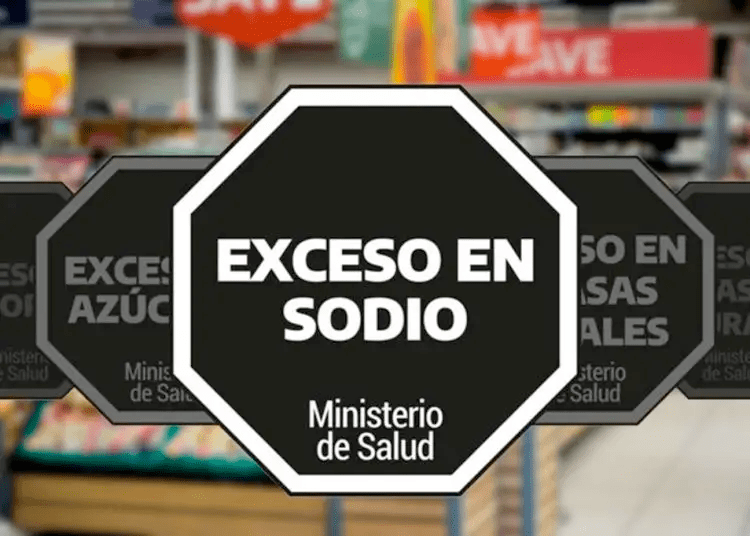
Dominican Republic – Congresswoman supports implementation of front warning labeling on processed foods

The deputy of Santo Domingo East, Juliana O’Neal, expressed her support for the implementation of the front warning labeling on processed foods, considering it a fundamental tool to protect the health of Dominican families and guarantee that consumers have clear information about what they consume.

“The discussion about this labeling is not merely technical, it is a matter of rights. We must assume the commitment to defend our communities and ensure that children and young people grow up in an environment that favors healthy eating habits,” he said.

Dominican Republic – Frontal warning labeling: health in the face of industry and consumers

The health of the population has a direct impact on the economy, as the health condition of citizens is a significant asset for a country. Therefore, the Ministry of Public Health and Social Assistance (MiSPAS) aims to address and counteract non-communicable diseases through the public consultation proposal of a resolution regarding the “Front Warning Nutritional Labeling (EFAN)”. This initiative seeks to inform consumers about non-alcoholic foods and beverages that contain high levels of sodium, sugars, total fats, saturated fats, trans fats, and sweeteners.

Industry Opinion
The Executive Vice President of the Association of Industries of the Dominican Republic (AIRD), Mario Pujols Ortiz, described the MiSPAS regulation as the most inflexible and radical. He questioned why nutritional guidelines or values established by the World Health Organization (WHO), which have been implemented in other countries such as Brazil, are not considered. He stated that Public Health overlooks the culture of non-compliance with basic labeling in the Dominican Republic and that it is not only the document under discussion but also other legislative projects related to front labeling that are currently in the Senate and the Chamber of Deputies.

Brazil – Authorities launch initiative to promote international cooperation among countries of the Global South on healthy and sustainable food systems

The countries of the Global South often face common challenges, such as hunger, poverty, inequality, food insecurity and climate change.

Understanding the importance of this mutual contribution, the Brazilian government, through the Ministry of Development and Social Assistance, Family and Fight against Hunger (MDS in Portuguese), in partnership with the Center of Excellence against Hunger of the World Food Program in Brazil (WFP in Portuguese) and the Brazilian Cooperation Agency of the Ministry of Foreign Affairs (ABC/MRE in Portuguese), invites the countries of the Global South to share experiences of innovation in public policies aimed at strengthening healthy and sustainable food systems, in practice in these territories.

A notice, launched this Thursday (26.06), whose construction was coordinated by the National Secretariat of Food and Nutritional Security (SESAN in Portuguese) of the MDS, marks the launch of the Laboratory of Innovation in Public Policies for Healthy and Sustainable Food Systems – AlimentaLAB – a joint initiative, which aims to identify and disseminate experiences, through South-South cooperation.

Peru – DIGESA confirms the mandatory declaration of Tartrazine SIN 102 in food labeling and urges companies to replace it with other additives

The Ministry of Health- MINSA, through the General Directorate of Environmental Health and Food Safety (DIGESA in Spanish), communicates (COMMUNICATION N° 006-2025-DIGESA/MINSA) to manufacturers of industrially processed foods that use the additive Tartrazine SIN 102 the following:

1. In the framework of the sentence issued by the Tenth Constitutional Court of the Superior Court of Justice of Lima (file N° 08388-2013-0-1801-JR-CI-10, confirmed by Resolution N° 07 of July 17, 2020 by the Third Civil Chamber of the Superior Court of Justice of Lima), any product that employs the additive in mention must declare on the labeling, at the end of the list of ingredients; in a specific, prominent, clear, visible and indubitable manner, in bold capital letters: “CONTAINS TARTRAZINE” and add the following phrase; “recommended use up to 7. 5 mg/kg b.w./day”.