Argentina – Dried grape pomace is included in the Argentine Food Code

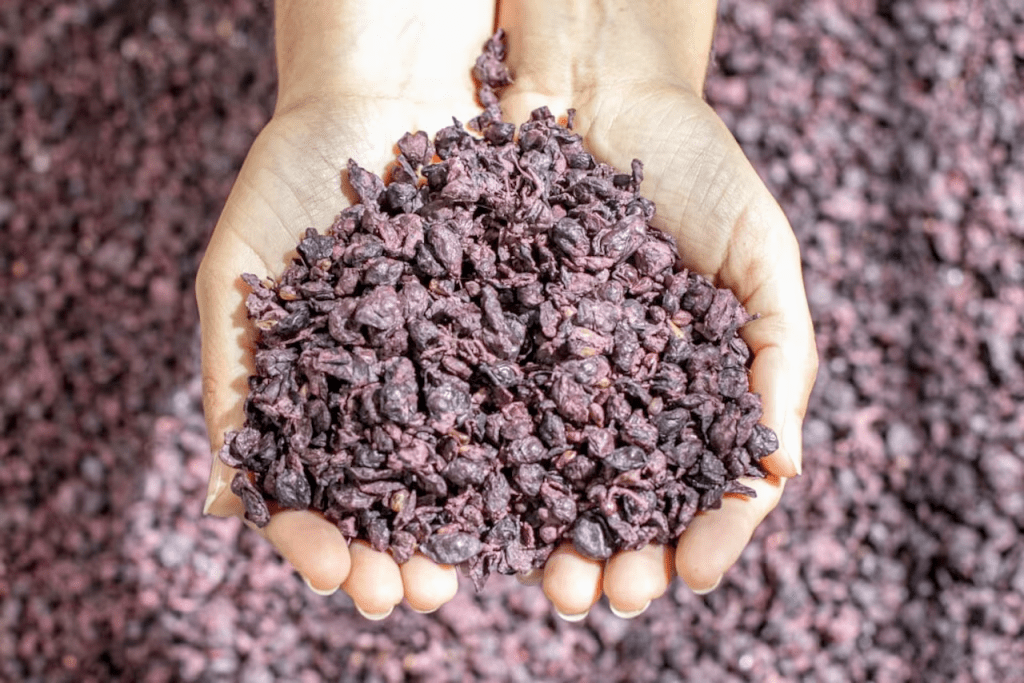
By means of Joint Resolution 37/2025, the Secretariat of Health Management and the Secretariat of Agriculture, Livestock and Fisheries modify Article 107 of the Argentine Food Code to incorporate dried grape pomace which contains important retained nutrients, mainly polyphenols (such as Resveratrol) and fibers.

ARTICLE 1.- Article 1107 tris is hereby incorporated into the Argentine Food Code, which shall be worded as follows: “Article 1107 tris: The term dry grape pomace means the solid product resulting from the operations of pressing and/or filtration of grape must and/or wine, composed of seeds and grape skins subjected to dehydration processes, which may be subsequently milled.

Grape pomace shall be subjected to a dehydration process that ensures a moisture content of less than 8% on a wet basis.

Its composition will depend on the raw materials used in winemaking. In any case, it must meet the following characteristics:

Dietary fiber (%): Min. 25 (1)

Proteins (%): Min. 10 (1)

Moisture (%): Max. 8
Argentina – New fruits and vegetables are incorporated into the Argentine Food Code

Through Joint Resolution 36/2025, the Secretariat of Health Management and the Secretariat of Agriculture, Livestock and Fisheries amend articles 822 and 888 of the Argentine Food Code related to Fresh Vegetables and Fresh Edible Fruits.
Among the incorporations, fruits with names that evoke the richness of our land stand out: the jabuticaba (Plinia cauliflora and Plinia peruviana), the yvapority (Plinia rivularis), the uvaia (Eugenia pyriformis), the caraguatá (Bromelia balanceae), the chañar (Geoffroea decorticans). or coconut (Allophylus edulis). Also included are the achojcha or caigua (Cyclanthera pedata), the pindó (Syagrus romanzoffiana), the wild fig (Vasconcellea quercifolia), the ubajay (Eugenia myrcianthes), the guabiyú (Myrcianthes pungens) and the wild cereal or cherry (Eugenia involucrata). The list of new fruits is completed by tasi or doca (Araujia odorata), chili pepper (Capsicum baccatum var. baccatum), jacaratia (Jacaratia spinosa), mbocayá (Acrocomia aculeata), arachichú (Annona emarginata) and large grapefruit (Berberis commutata). In the heading of vegetables, the inclusion of the petiole of the quirusilla (Gunnera apiculata) is official.

Argentina – ANMAT simplifies and unifies the tariff charged for the importation of food and food inputs

The National Administration of Medicines, Food and Medical Technology (ANMAT in Spanish) decided to replace the regime of tariff scales paid by companies importing food and materials that may be in contact with them, such as packaging, with a single rate of 0.5% of the FOB value of the good acquired abroad.

This was so decided by this Administration through Provision No 4538/2025, which was published on Friday, June 27 in the Official Gazette, effective 30 days after its publication.

The revision and modification of the tariff regime applicable to import procedures before the National Food Institute (INAL in Spanish) aims at promoting regulatory simplification, administrative efficiency and greater economic equity in tariff procedures related to imported food products.

The current system of scale tariffs generates distortions in terms of proportionality with respect to the declared value of the goods. Indeed, under the current system, situations may arise in which the tariff to be levied is higher than the FOB value declared or represents a disproportionate percentage in relation to it.

Argentina – ANMAT presented the new regulatory framework for the importation of foodstuffs

On Thursday, June 27, representatives of the National Food Institute (INAL in Spanish) participated in a new edition of the Innocuus 2025 Congress, a recognized space for technical and scientific exchange focused on food safety.

During the meeting, the main guidelines of the recent Decree No 35/2025, which establishes a simplified procedure for food imports into Argentina, were presented. This new regulation replaces Decree No. 2126/71, in force for more than five decades, and marks a milestone in the modernization of the regulatory system for foreign food trade, in line with technological advances and the requirements of the international context.

One of the most important aspects was the role of INAL as a key technical and sanitary agency, not only in the development of the new regulatory circuit in coordination with other entities involved, but also in its implementation, particularly with regard to ex post controls through tools such as the Imported Food Monitoring Program (PMI in Spanish).