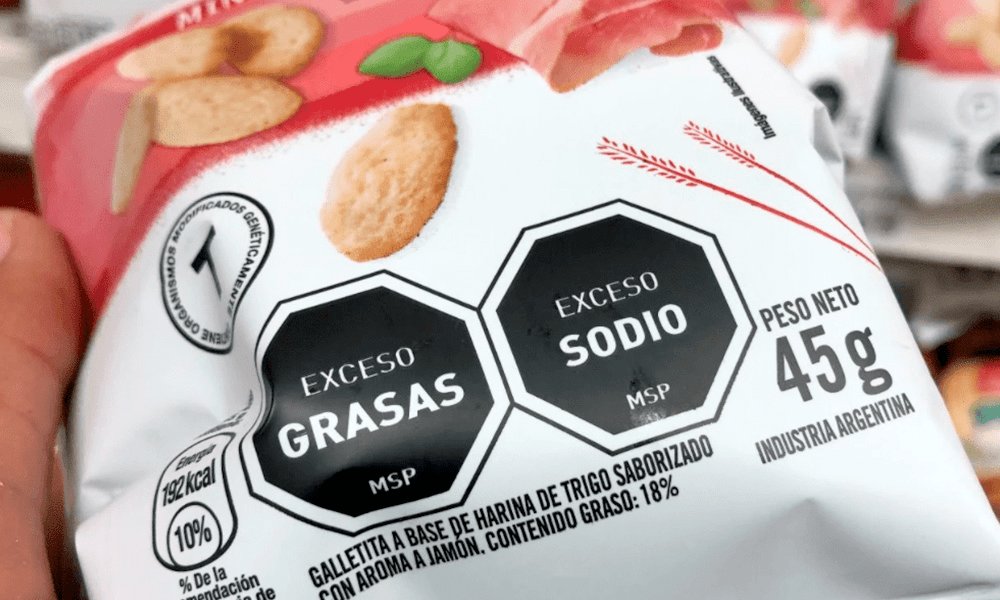
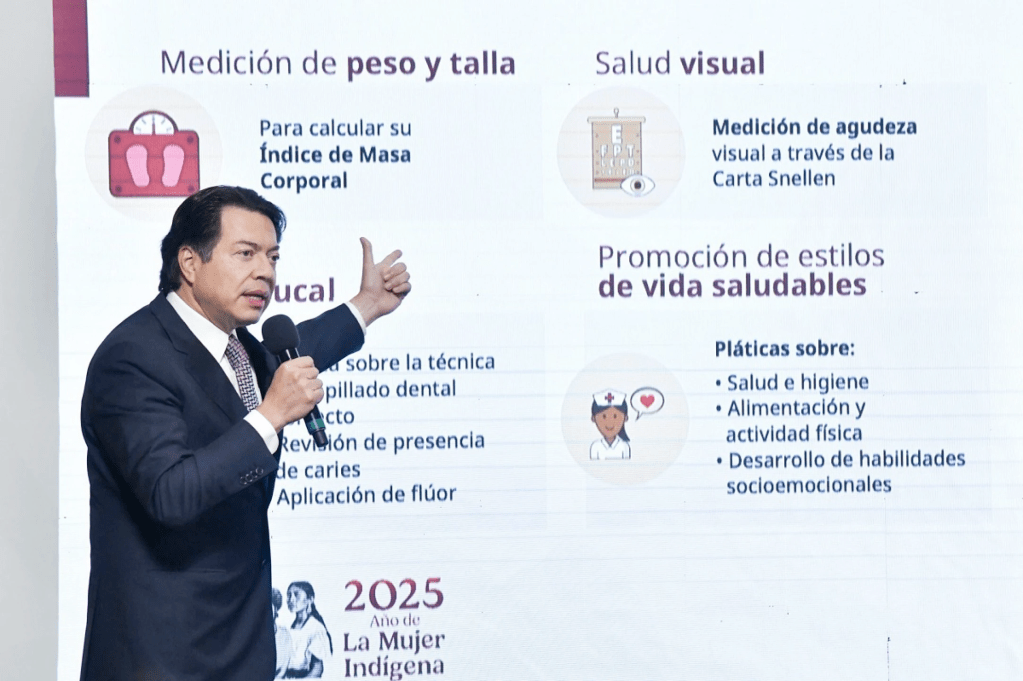
Mexico – Secretary of Public Education defends front labeling: helps to make healthier food choices

The Secretary of Public Education, Mario Delgado Carrillo, urged Mexican school communities and families to learn about the front labeling of processed foods, a key tool to choose healthier options and reduce diseases.

The recommendation is part of the “Live healthy, live happy” campaign, promoted by President Claudia Sheinbaum Pardo, whose goal is to form the healthiest generation in the country’s history.

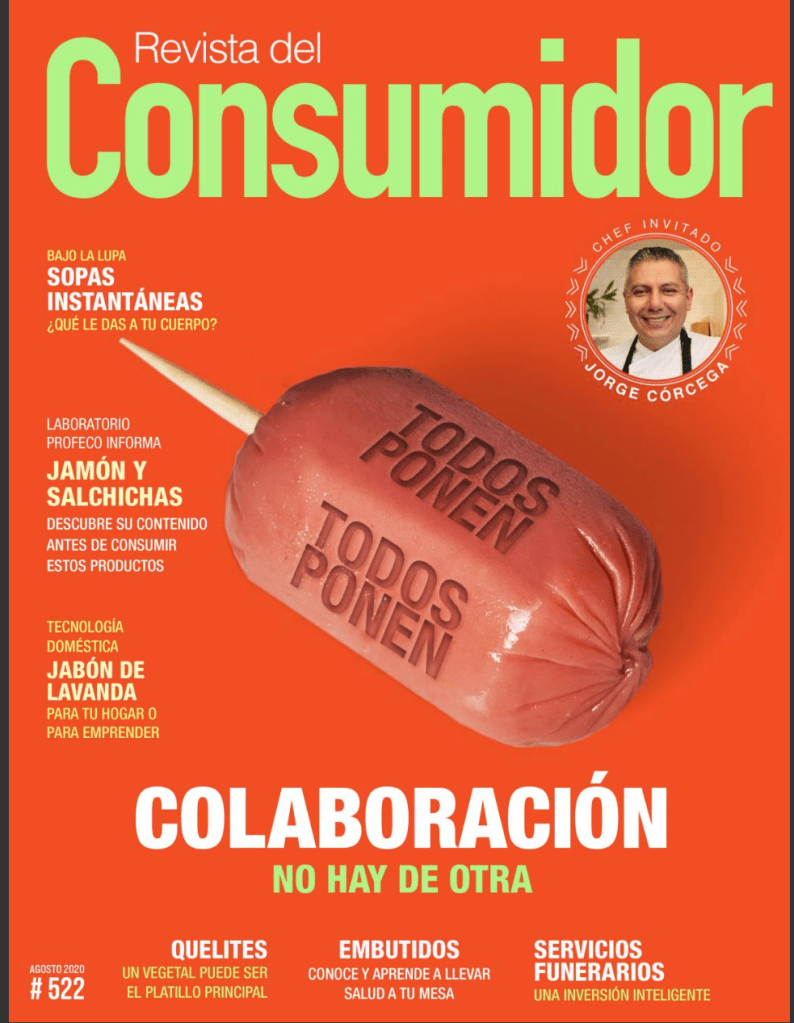
Mexico – Federal Consumer Protection Agency will notify Cofepris and the Ministry of Agriculture about products posing as ham

Following up on the findings obtained from the Quality Study carried out by the National Consumer Protection Laboratory on ham, according to which 13 of the 40 products analyzed do not comply with the Official Mexican Standard, the head of the Federal Consumer Protection Agency, Iván Escalante Ruiz, announced that the corresponding notifications will be made to the competent authorities.

During his participation in the Mañanera del Pueblo conference, the public servant indicated that official notices will be sent to the Federal Commission for the Protection (PROFECO in Spanish) against Sanitary Risks (COFEPRIS in Spanish) and to the Ministry of Agriculture and Rural Development to inform them of the results published in the July edition of the Consumer Magazine.

He added that, starting this week, they will be reviewing the characteristics of the labeling and possible non-compliance with laws and regulations that may result in Proceedings for Violations of the Law (PIL).

The characteristics of the products that could result in immobilizations and even in the withdrawal of these foods from the market, due to the declaration in their labeling of untruthful and misleading information for the consumers, will also be monitored.

He explained that the Laboratory analyzed 40 products, of which 13 are outside the Standard that regulates hams, NOM-158- SCFI-2003, which defines the characteristics that ham must have in order to be called ham.
Argentina – Nutritionists Guild warns that changes to Labeling Law confuses consumers

The Association of Nutritionists of the Province of Buenos Aires expressed their “deep concern” about what they consider a setback in terms of public health, since the recent amendments to the Law for the Promotion of Healthy Food – better known as the Front Labeling Law – have set off alarm bells among specialists in nutrition and public health. Two provisions of the ANMAT, promoted under the administration of Javier Milei, altered central points of the regulation and, according to professionals, put at risk the right to information and healthy eating. Provisions 11362/2024 and 11378/2024 introduced changes in the calculation of critical nutrients and relaxed controls on food composition and advertising.
One of the most controversial changes is the exclusion of intrinsic nutrients – fats, sugars, sodium and calories naturally present in foods – from the calculation to determine whether a product bears a warning label. From now on, only nutrients added during the production process will be considered.

Peru – The category of food supplements needs to be regulated

Without a specific regulatory category that clearly defines what a dietary supplement is, based on its nature, confusion arises in Peru about whether it should be treated as food or medicine (despite being distinct products). This impacts the regulatory treatment given to it, which constitutes a barrier to the development of this industry in the country.
Therefore, it is imperative that Peruvian legislation clearly differentiate dietary supplements from pharmaceutical products and from the food category. Having an autonomous classification would allow for the establishment of technical and health criteria appropriate to their nature, guarantee oversight of their characteristics, and provide greater legal certainty for all involved. This regulatory differentiation would not only strengthen the protection of public health but would also promote the development of a more dynamic, safe, and competitive supplement market. Currently, the General Directorate of Medicines, Supplies, and Drugs (DIGEMID in Spanish) has the authority to regulate and establish the procedures applicable to dietary supplements, pursuant to Law 29459, the Law on Pharmaceutical Products, Medical Devices, and Health Products. This law defines pharmaceutical products as preparations intended to prevent, diagnose, treat, or cure diseases, a classification that includes the category of dietary products, even though the latter do not have a therapeutic purpose.
However, Article 17 of Decision No. 9 of the Free Trade Commission of the Additional Protocol to the Pacific Alliance Framework Agreement (the decision applicable to Peru) establishes that the competent authority to regulate the category of dietary supplements should be the General Directorate of Environmental Health and Food Safety (DIGESA in Spanish).

CARICOM – 49th Regular Meeting of the Conference of CARICOM Heads of Government: food and nutrition security

Jamaica will host the Forty-ninth Regular Meeting of the Conference of Heads of Government of the Caribbean Community (CARICOM) from 6-8 July in Montego Bay, under the chairmanship of Dr the Most Honourable Andrew Holness, Prime Minister of Jamaica.
Prime Minister Holness will assume the six-month chairmanship of the Community on 1 July 2025, succeeding the Hon. Mia Amor Mottley, Prime Minister of Barbados. A founding member of CARICOM, Jamaica holds responsibility for external trade negotiations in the CARICOM Quasi Cabinet.
Heads of Government will begin the two-day business sessions of the Conference on 7 July at the MBCC. They will focus on developments in the CARICOM Single Market and Economy (CSME); security issues; Haiti; external trade negotiations; climate change and the climate finance agenda; food and nutrition security; and preparations for the second Africa-CARICOM Summit.
Other matters for the attention of the CARICOM leaders include transportation, telecommunications, digitalisation of the tourism industry and the CARICOM Industrial Policy.