Peru – INACAL approves a series of Peruvian Technical Standards on milk, dairy products and water quality

Through Resolution No. 000015-2025-INACAL/DN, the National Quality Institute (INACAL in Spanish) has approved a series of Peruvian Technical Standards in its 2025 version, on milk, dairy products and water quality.

  • NTP 202.162:2025 MILK AND DAIRY PRODUCTS. Milk. Detection of reconstituted milk powder in raw or pasteurized milk. 2nd Edition. Replaces NTP 202.162:1998 (revised 2014).
  • NTP-CODEX CXS 280:2020/MT 1:2025 STANDARD FOR MILK FAT BASED PRODUCTS. TECHNICAL AMENDMENT 1. 1st Edition
  • NTP-ISO 6091:2025 Milk powder. Determination of titratable acidity (reference method). 1st Edition.
  • NTP 214.029:2025 WATER QUALITY. Determination of pH in water. Electrometric method. 5th Edition. Replaces NTP 214.029:2023.
  • NTP 360.518:2025 WATER QUALITY. Plankton. Determination of Phytoplankton in water matrices for human use and consumption. 1st Edition

Peru – INACAL approves Peruvian Technical Standards on vegetables and avocados

By means of Directorial Resolution No. 000013-2025-INACAL/DN, the National Quality Institute (INACAL in Spanish) has approved a series of Peruvian Technical Standards in its 2025 version, on vegetables and avocado:

NTP 011.710:2025 VEGETABLES. Spinach. Requirements. 1st Edition

NTP 011.018:2025 AVOCADO. Requirements. 7th Edition Replaces NTP 011.018:2019

Peru – INACAL has approved a series of Peruvian Technical Standards on Food Additives

By means of Directorial Resolution No. 000012-2025-INACAL/DN, the National Institute of Quality (INACAL in Spanish) has approved a series of Peruvian Technical Standards in its 2025 version, on food additives:

  • NTP 209.700:2015 (revised 2025) FOOD ADDITIVES. Acidity regulators. Definition and classification. 2nd Edition. Replaces NTP 209.700:2015.
  • NTP 209.701:2016 (revised 2025) FOOD ADDITIVES. Colorants and color retention agents. Definitions and classification. 2nd Edition. Replaces NTP 209.701:2016.
  • NTP 209.716:2015 (revised 2025) FOOD ADDITIVES. Humectants. Definitions and classification. 1st Edition Replaces NTP 209.716:2015.

Peru – PAHO/Peru’s challenges in updating processed food regulations

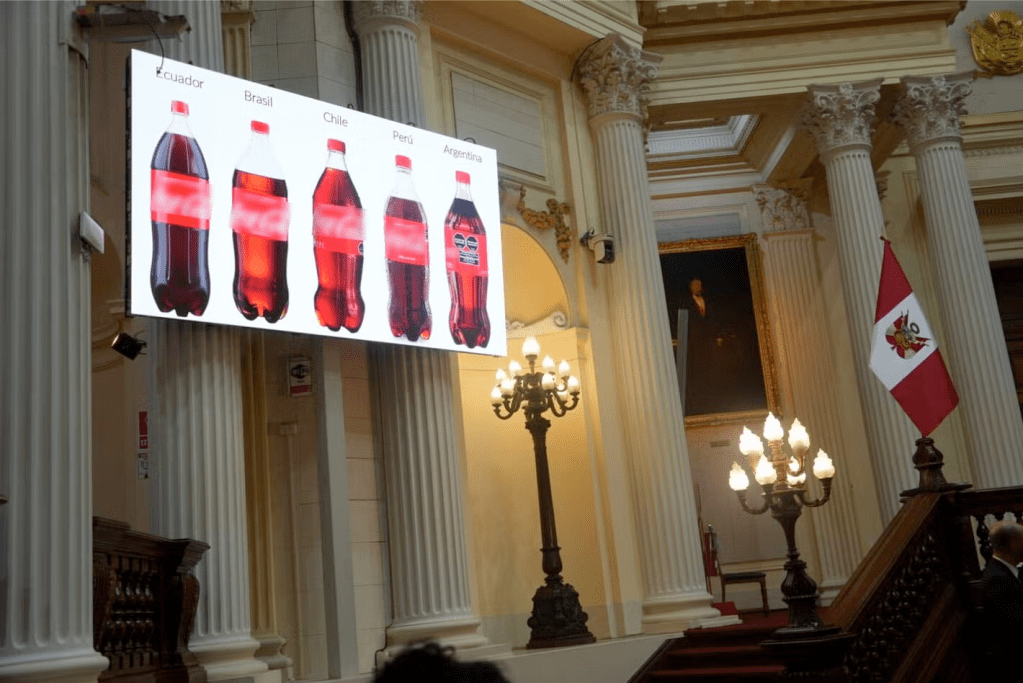
Within the framework of the WHO’s Acceleration Plan for the Prevention of Obesity, the Pan American Health Organization (PAHO) facilitated spaces for dialogue and accompanied technical experts and key actors from various government sectors, international cooperation agencies and civil society in the search for consensus and actions to help strengthen regulatory policies that promote healthy eating in Peru.

Regarding Peruvian legislation, in 2013, Law No. 30021 on the promotion of healthy eating for children and adolescents (NNA) came into force, which includes the supervision of advertising, information and other practices related to food aimed at children and adolescents, to reduce and eliminate diseases related to overweight, obesity and other non-communicable diseases. However, in 2021 the Supreme Court declared that the technical parameters of the regulation of this law do not comply with WHO standards and ordered the Executive Branch to modify it. It also annulled the provision that exempted products such as breast milk substitutes, which must include advertising warnings.

Faced with these needs for action in governance for the good of children, PAHO has been accompanying the efforts of various sectors of the country to put on the agenda the revision of the regulation and thus have a stronger law, which reaches the regulation of labeling of infant formulas and proposes improvements for proper infant nutrition.

Brazil – Federal Court Judge convenes public hearing to discuss rules governing advertising of food and drugs considered harmful to health

Judge Cristiano Zanin of the Federal Supreme Court (STF in Portuguese) has called for a public hearing to discuss the regulations governing the advertising of food and medications deemed harmful to health. This hearing is scheduled for August 26, 2025, starting at 10:00 AM, in the First Chamber’s Session Room of the STF.

The subject is the focus of Direct Action of Unconstitutionality (ADI in Portuguese) 7788, filed by the Brazilian Association of Radio and Television Broadcasters (ABERT in Portuguese) against regulations set forth by the National Health Surveillance Agency (ANVISA in Portuguese) that govern this matter.

ABERT contends that ANVISA’s resolutions regarding advertising, information, and other commercial dissemination and promotion practices for food and medications impose restrictions on advertising that could only be established through federal law. The organization further argues that this measure is disproportionate and undermines economic freedom because, rather than informing consumers, it would hinder the advertising of these products.

In the citation, the minister explained that the public hearing will allow for the participation of experts and representatives from public authorities and civil society, aiming to provide the Supreme Court with specialized knowledge, technical clarifications, and diverse perspectives, focusing on the analysis of the action.

According to the minister, “the law will allow for a deeper exploration of the consumer’s right to information and the limits on imposing restrictions on the advertising of potentially harmful medications and foods to public health.”