Brazil – Bill proposed to suspend government decree on healthy eating in schools

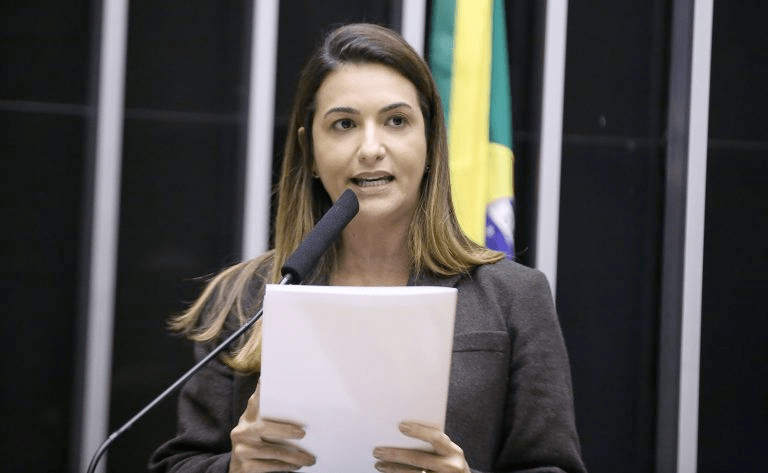
Legislative Decree Bill (PDL) 18/24, currently pending in the Chamber of Deputies, suspends the government decree establishing guidelines for healthy eating in schools. The suspension was requested by Congresswoman Roberta Roma (PL-BA), who points out a number of problems with the law.

The deputy considers that Decree 11.821/23 adopts scientifically questionable concepts and defames the food and beverage industry, with serious economic and food safety consequences.

Degree of processing

The deputy especially criticizes the use of the new classification, which groups foods according to their degree of processing. The decree limits the display and sale of ultra-processed foods in schools, such as filled cookies and soft drinks.

According to Roberta, the classification contradicts the opinion of representatives from the areas of food research and science, who consider it wrong to classify the quality of an industrialized product according to its degree of processing.

“After all, there is no such thing as good or bad food, only an unbalanced diet,” says the congresswoman. According to her, “the level of processing to which food and beverages are subjected does not determine the nutritional content of the final product”.

Jamaica – Front-of-Package Warning Labels to Help Persons Make Healthier Food Choices

The Government remains committed to introducing front-of-package warning labelling as a policy tool to support healthier food choices, says Director, Health Promotion and Protection in the Ministry of Health and Wellness, Dr. Simone Spence.

However, Dr. Spence informed that no final decision has yet been made regarding the specific format that will be adopted.

“We are continuing to examine the evidence and engage stakeholders to ensure that whatever solution is chosen will be practical, effective, and aligned with our national health goals,” she said.

Dr. Spence was speaking at the launch of ‘Fix My Food Jamaica: Youth-Led Advocacy for Healthier Food Environments’, held at the Spanish Court Hotel in Kingston on June 5.

Jamaica is the first country in Latin America to launch Fix My Food (FMF), a United Nations Children’s Fund (UNICEF)-led global youth movement.

Brazil – New bill to require alcohol content indication on foods

Bill 447/25 requires manufacturers of foods containing alcohol to clearly and prominently indicate the alcohol content on the label, expressed as a volume percentage (% v/v).
According to the bill’s author, Deputy Nitinho (PSD-SE), the initiative enables consumers to make informed decisions about their food.
The proposal, currently under analysis in the Chamber of Deputies, the requirement applies even when the alcohol comes from fermentation processes. The information must appear on the label, in an easily visible place and with legible characters, according to the rules of the National Health Surveillance Agency (ANVISA in Portuguese).
Failure to comply with the measure will subject the company to the sanctions provided for in the Consumer Protection Code, which include warnings, fines and suspension of the sale of the product.

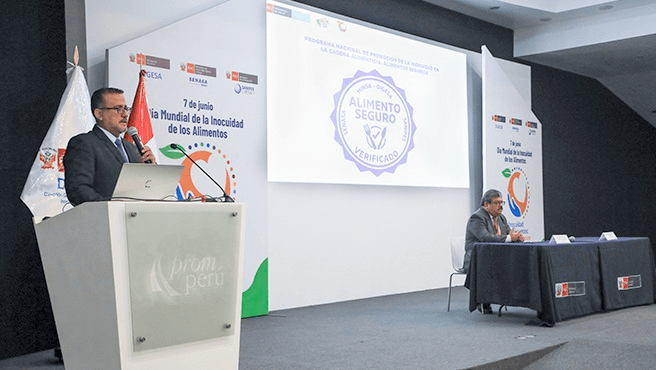
Peru – Ministry of Health announces the “National Program for the Promotion of Food Safety in the Food Chain: Safe Food”

In the framework of World Food Safety Day, which is celebrated on June 7 and this year has the slogan “Food Safety: Science in Action”, the Ministry of Health (MINSA in Spanish), through the General Directorate of Environmental Health and Food Safety (DIGESA in Spanish), launched the “National Program for the Promotion of Food Safety in the Food Chain: Safe Food”, in order for the authorities to enforce the Sanitary Technical Standard no. 142/MINSA/DIGESA “Sanitary Standard for restaurants and related services”, which grant the respective certification. No. 142/MINSA/DIGESA “Sanitary Standard for restaurants and related services”, which grant the respective certification.
The ceremony was attended by the Vice Minister of Public Health, Ricardo Peña Sánchez, representing the Minister of Health, César Vásquez, who stressed that “food safety is a shared responsibility between governments, producers and consumers and that we all play a role in the chain to ensure that the food we consume is safe and not harmful to our health”.
Regarding the referred norm, it contemplates that restaurants and services must apply the General Principles of Hygiene (PGH), supported by the Good Handling Practices programs and the Hygiene and Sanitation programs, evidenced in the PGH sanitary certification issued by the municipality in its jurisdictions.

Brazil – MAPA publishes books on “Identification of biological, chemical and physical hazards in foods of plant origin”

In commemoration of World Food Safety Day, celebrated on June 7, the Ministry of Agriculture and Livestock (MAPA in Portuguese), through the Secretariat of Agricultural Defense (SDA in Portuguese), announces the launch of the publication “Identification of biological, chemical and physical hazards in food of plant origin”.

The book was produced in partnership with the Federal University of Rio Grande do Sul (UFRGS in Portuguese), through a technical consultancy contracted under the BRA/IICA/16/001 Technical Cooperation Project. The initiative is part of MAPA’s efforts to modernize strategic management, with a focus on food safety, sustainability and agribusiness competitiveness.

The publication’s main objective is to subsidize inspection actions, support the production sector in mitigating risks, improve audits and contribute to the harmonization of plant inspection, especially in the context of Normative Instruction 23/2020 and the requirements of international markets.

Aimed at federal agricultural inspectors, the production sector, consultants, food safety professionals and academic institutions, the material offers a technical overview of contamination routes and control measures applicable to plant foods, based on scientific evidence.