Mexico – Ministry of Economy and Health extend deadline to implement next phases of nutrition labeling

The Ministry of Economy, through the Regulations, Competitiveness and Competition Unit, in coordination with the Ministry of Health, through the Federal Commission for the Protection against Health Risks (COFEPRIS in Spanish), inform companies in the pre-packaged food and non-alcoholic beverages sector that, through a joint agreement, it has been decided to extend the deadline for the second phase of implementation of the criteria for the evaluation of complementary nutritional information established in the Mexican Official Standard NOM-051-SCFI/SSA1-2010.

This decision, taken based on the applicable legal frameworks and considering the principles of legal certainty, transparency and regulatory improvement, was published today in the Official Journal of the Federation (DOF in Spanish) and responds to the need for adequate technical conditions for the transition to the third phase of compliance.

  • The period of the second phase of complementary nutritional labeling is extended from October 1, 2023 to December 31, 2025, thus granting three additional months for compliance under the current criteria.
  • The start of the third phase is deferred to January 1, 2026, at which time it will be mandatory to fully apply the provisions contained in numeral 4.5.3 and Table 6 of the NOM-051 amendment.
  • The measure allows the National Standardization Advisory Committees of the SE and COFEPRIS to move forward with the technical analysis of numeral 4.5.3, in accordance with the National Quality Infrastructure Program 2025, published on February 17 of this year.

Honduras – Health Commission and private enterprise deepen analysis and discussion of the Front End Labeling Law

The Health Commission of the National Congress, with the accompaniment of the Health Regulation Agency (ARSA in Spanish), continued this Tuesday the socialization of the Front Labeling Bill with representatives of the Honduran Council of Private Enterprise (COHEP in Spanish), the National Association of Industrialists (ANDI in Spanish) and companies producing packaged foods.

The president of the Commission, congressman Wilfredo Sabio, explained that the initiative seeks to strengthen public policies that allow the population to have access to clear information on the critical nutritional content of such foods.

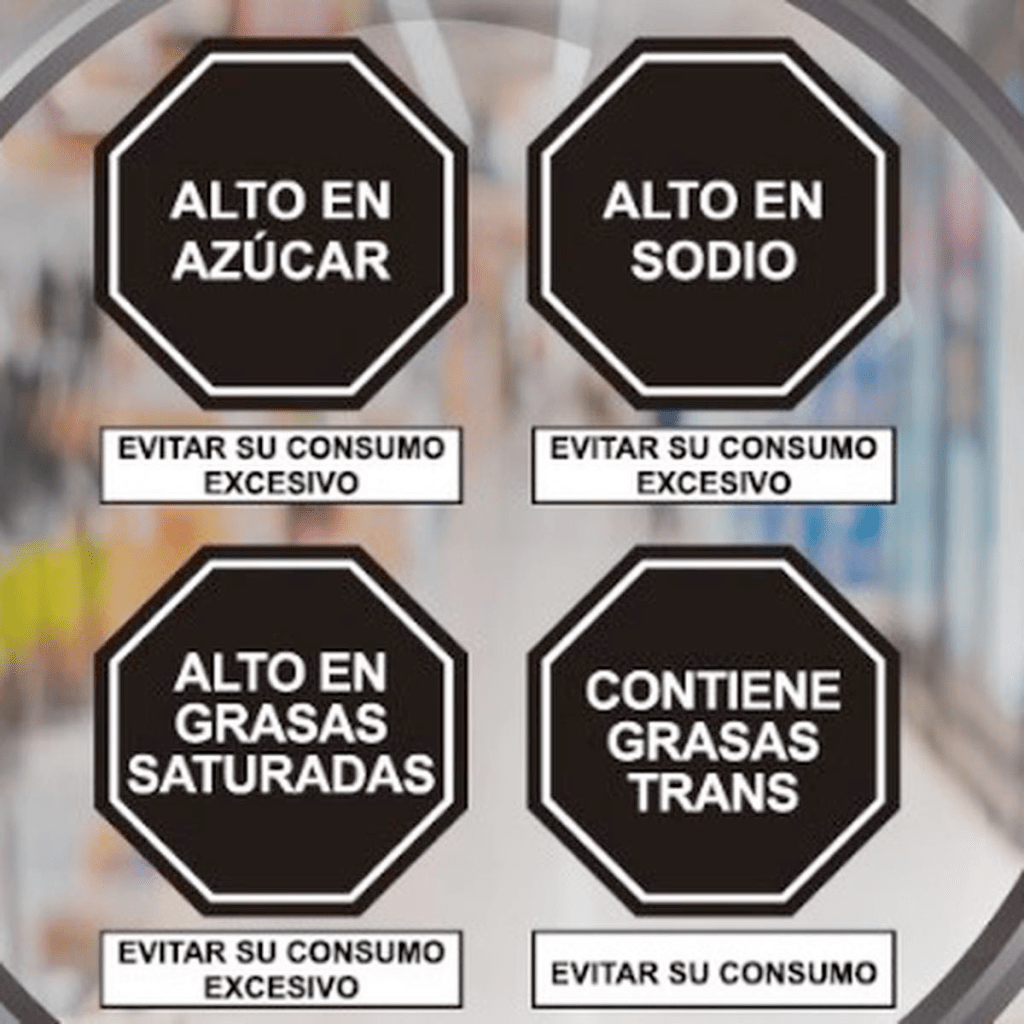
To this end, it is necessary to place warning octagons on the labeling of certain packaged products, a labeling system that clearly, simply and visibly indicates when a product contains excess nutrients such as sugar, sodium, saturated fats or sweeteners, among others.

Sabio emphasized that, although the private sector has raised the importance of harmonizing the regulations with regional legislative policies, together with ARSA it has been possible to demonstrate that the proposal does not contravene any Central American technical regulation, which allows the project to move forward at the national level.

Dominican Republic – Industry warns that implementing front-end warning labeling will have a negative impact

The Association of Industries of the Dominican Republic (AIRD in Spanish) expressed its concern over the proposal to implement a system of front labeling on food products, warning of the possible negative impacts for the national industry if equitable measures adapted to the reality of the country are not adopted.
During its Industrial Meeting, entitled “Front Labeling: A Challenge for the National Industry”, the business association advocated for an informative system that is clear, understandable and does not generate alarm among consumers. “We want a system that informs, not alarms; that empowers, not stigmatizes,” emphasized Julio Virgilio Brache, president of the AIRD.

Argentina – The Argentine Food Code has been amended regarding carob flour

Through Joint Resolution 25/2025, the Secretariat of Health Management and the Secretariat of Agriculture, Livestock, and Fisheries amend the Argentine Food Code regarding carob flour.

ARTICLE 1.- Article 681 of the Argentine Food Code is hereby replaced, which shall be worded as follows: “Article 681: The name Carob Flour means the product of the grinding of clean, healthy and dry seeds of the white carob tree n.c. Neltuma alba (Griseb.) C.E. Hughes & G.P. Lewis and Neltuma chilensis (Molina) C.E. Hughes & G.P. Lewis, black carob tree: Neltuma nigra (Griseb.) C.E. Hughes & G.P. Lewis, sweet carob tree: Neltuma flexuosa (DC.) C.E. Hughes & G.P. Lewis, alpataco tree: Neltuma alpataco (Phil.) C.E. Hughes & G.P. Lewis, caldén tree: Neltuma caldenia (Burkart) C.E. Hughes & G.P. Lewis and Vinal: Neltuma ruscifolia (Griseb.) C.E.


Must comply with the microbiological requirements of this Code.
– The product must be called: “Carob flour,” indicating the corresponding species(es).
Carob flour obtained exclusively from Caldén or Vinal may be called: “Caldén flour” or “Vinal flour,” as appropriate.
– The product that has been roasted during its production must be called: “Toasted carob flour,” indicating the corresponding species(es).
– Toasted carob flour obtained exclusively from Caldén or Vinal may be called: “Toasted caldén flour” or “Toasted vinal flour,” as appropriate.