Mexico – Mexico City Congress approves draft decree on the protection of native maize

As a member of the Permanent Constituent, the Congress of Mexico City approved the draft decree reforming and adding several provisions of articles 4 and 27 of the Political Constitution of the United Mexican States, regarding the conservation and protection of native corn.

Legislator Olivia Garza de los Santos (PAN) indicated that her parliamentary group is in favor of protecting traditions and diversity, but that banning transgenic corn may bring consequences that must be considered, since a reform of this type cannot be applied in isolation, without mitigation measures. He said that “we still do not have food sufficiency in this basic product of the daily diet”, since a historic investment is needed to achieve it.

Congressman César Emilio Guijosa Hernández (MORENA in Spanish) emphasized his support for the protection of the identity and sovereignty of native corn, and pointed out that transgenic corn must be evaluated with strict criteria to avoid risks to the population.

“Mexico is the cradle of corn, a grain that has been an essential part of the culture, tradition and history of our people for millennia. Native corn not only feeds our bodies, but also nourishes our roots and traditions,” said Congresswoman Erika Lizeth Rosales Medina (Asociación Parlamentaria Progresista de la Transformación), who considered that the introduction of transgenic corn puts cultural identity, the autonomy of farmers and public health at risk.

Argentina – Modification of the denomination of edible mushrooms in the Argentine Food Code is published

By means of Joint Resolution 4/2025, the Secretariat of Health Management and the Secretariat of Agriculture, Livestock and Fisheries have published the modification of the denomination of edible mushrooms.

ARTICLE 1.- Article 1249 of the Argentine Food Code is hereby replaced and shall be worded as follows: “Article 1249: The term edible fungi means the fruiting body of higher fungi belonging to the Kingdom Fungii (Ascomycetes and Basidiomycetes) wild or cultivated and that fresh, dried or canned, are used in human food. For the purposes of this Code for edible mushrooms it is understood by:

  • Broken or crushed: those parts of mushrooms that pass through a 15 x 15 mm mesh sieve in the case of fresh mushrooms and 5 x 5 mm mesh sieve in the case of dried mushrooms.
  • Charred: whole or cut mushrooms with traces of damage due to high surface temperature or burnt.

Argentina – Modification of the definition of millet grain in the Argentine Food Code

By means of Joint Resolution 3/2025, the Secretariat of Health Management and the Secretariat of Agriculture, Livestock and Fisheries have published the modification of the definition of millet grain:

ARTICLE 1. Article 676 is hereby incorporated into the Argentine Food Code and shall read as follows: “Article 676: The term millet grain means the whole or decorticated grain obtained from Pennisetum americanum L (pearl millet) and Panicum miliaceum (millet).
Millet grains must be whole or decorticated and, if necessary, have been adequately dried.

  • Whole grains: millet grains obtained after proper threshing without any mechanical treatment.
  • Decorticated grains are millet grains from which the external parts, which constitute 20% to 22% of the weight of the whole grain, have been removed in an appropriate manner and by mechanical means.

Brazil – ANVISA participates in the 55th Meeting of the Codex Alimentarius Committee on Food Additives in Seoul

From March 24 to 28, 2025, representatives of the National Health Surveillance Agency (ANVISA in Portuguese) will participate in the 55th meeting of the Codex Alimentarius Committee on Food Additives, to be held in Seoul, South Korea. The Brazilian delegation is composed of the deputy director of the Second Directorate, Leandro Rodrigues, the advisor of the General Directorate of Food, Rebeca Vinhas, and the official of the Ministry of Agriculture, Livestock and Supply (MAPA), Isabela de Ávila.
In addition, on March 21 and 22, meetings of the food additives working group were held to discuss issues relevant to the development of international food-related standards.
During the meeting, crucial issues related to the safety and regulation of food additives will be discussed, including new safety evaluations and proposed standards aimed at ensuring consumer health. Codex Alimentarius, an initiative of the Food and Agriculture Organization of the United Nations (FAO) and the World Health Organization (WHO), sets international standards that help ensure fair practices in the food trade.

Peru – Ministry of Health promotes nutritional properties of Quinoa

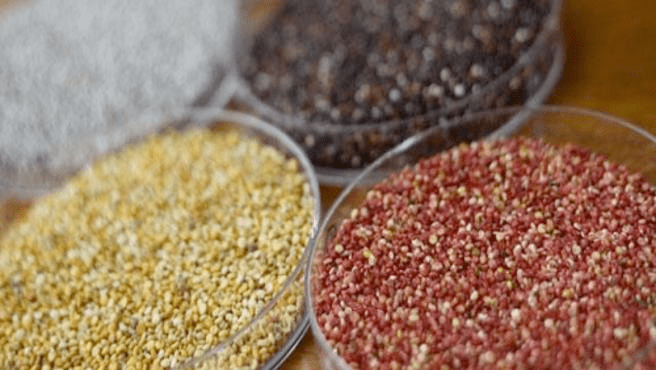
Through a press release, the Ministry of Health promotes the nutritional properties of Quinoa, highlighting that this Andean cereal helps to prevent and combat malnutrition, as it is one of the richest cereals in iron, with 7.5 mg per 100 g. It also contains a high nutritional value of proteins, vitamins B and E, and other minerals such as magnesium and zinc.
It does not contain gluten and is ideal for people with celiac disease or gluten sensitivity. It is one of the few foods that contains the 9 essential amino acids that our body cannot produce on its own.
It is also an allied food for people with diabetes, as it can help regulate blood sugar levels. Quinoa is very versatile and can be included in breakfasts. It can also be consumed in various ways: in stews, salads, soups or as an accompaniment to main dishes.