Argentina – Appeal filed with the Ministry of Health against changes in the front-end labeling law

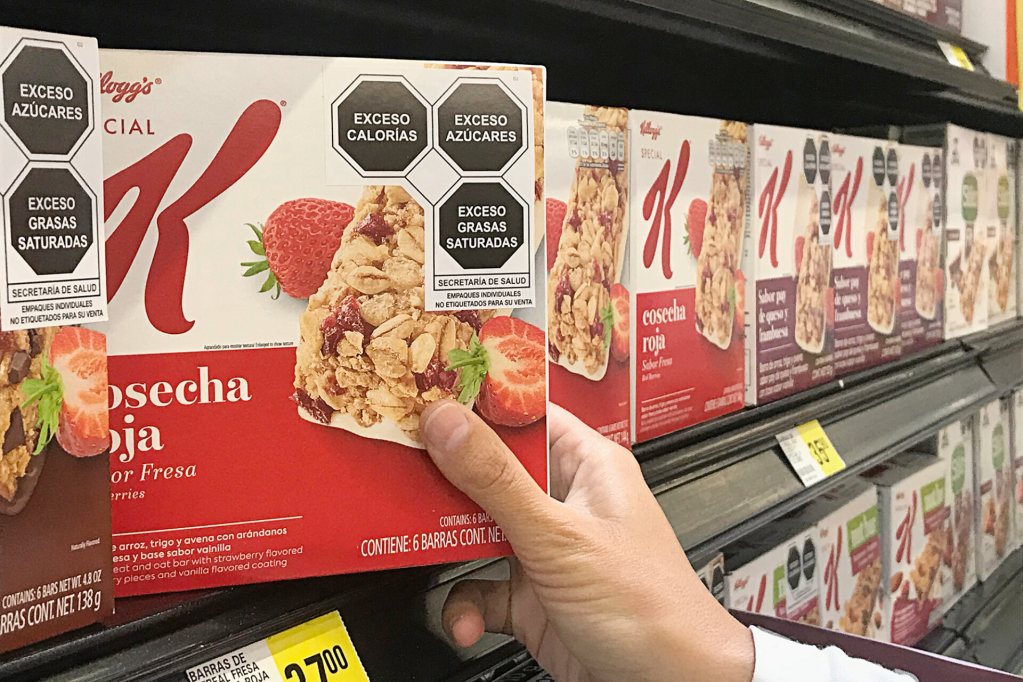
The Inter-American Heart Foundation (FIC in Spanish), together with the Argentine Federation of Graduates in Nutrition (FAGRAN in Spanish), filed two appeals before the Ministry of Health to demand the suspension of the modifications to the front labeling law, implemented late last year by Milei’s administration.

“These modifications, published at the end of 2024 in the Official Gazette, introduce regressive changes that contradict the spirit of the law and directly affect the right of the population to access clear and truthful information about the products they consume”, stated from FIC.

The foundation maintains that “provisions 11362/2024 and 11378/2024” of the National Administration of Medicines, Food and Medical Technology (ANMAT in Spanish) “alarmingly weaken the Law for the Promotion of Healthy Food (PAS Law) and its regulations”.

For further information, check the original source at the following link
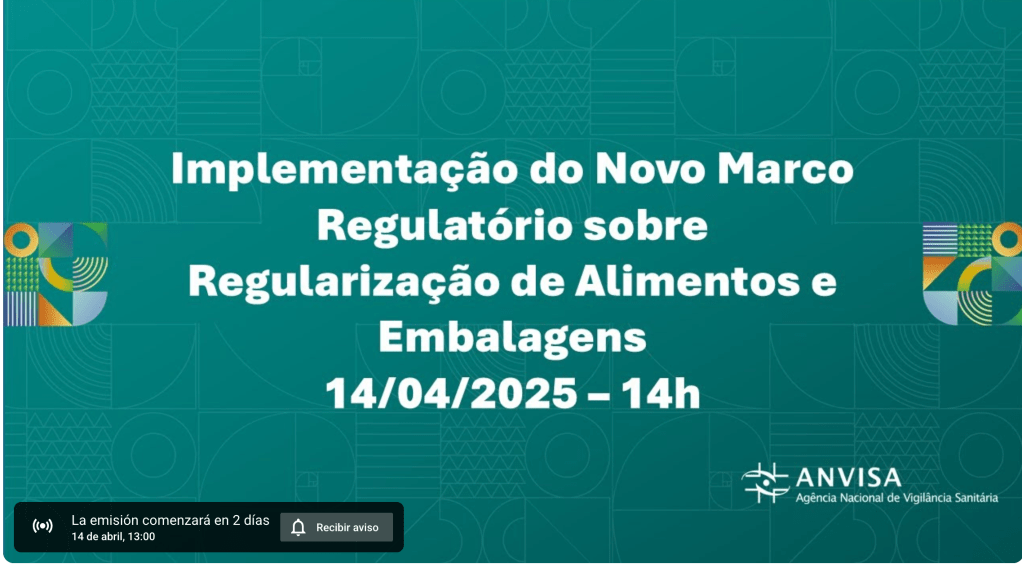
Brazil – ANVISA extends invitation to the event on the new regulatory framework for food and packaging

The National Health Surveillance Agency (ANVISA) has shared a link for those interested in watching live the event titled “Implementation of the New Regulatory Framework for Food and Packaging Regulation.” This meeting is scheduled for April 14 at 2 PM, taking place in the auditorium of the Agency’s headquarters in Brasília (DF). The purpose of the event is to outline the key changes in the forms, procedures, and electronic guidelines provided by the Agency for the implementation of the new regulations.

As in-person registrations filled up quickly, the Agency will stream the event on its YouTube channel, allowing all interested parties to participate. Those who registered for the in-person event have received a confirmation email.

Additionally, during the meeting, the release of the third version of Guide 16 – Determination of the Shelf Life of Foods will be announced, along with the launch of specific training sessions aimed at ensuring the proper application of this guide.

Peru – Bill proposed to highlight synthetic dyes in food and beverage labeling

Congressman Idelso García Correa presented Bill N°10373/2024 – CR which proposes to establish the labeling of food, beverages, medicines and cosmetics containing synthetic dyes.

The purpose of the legislative proposal is to guarantee the integrity and health of consumers in the event of exposure to synthetic dyes N°03, yellow N°05 and bright blue N° E133 in the consumption of such products.

Products must clearly, legibly, prominently and understandably state the following phrases, as the case may be:

“Contains red synthetic coloring N°03: Excessive consumption of this product could be related to adverse health effects”.

“Contains yellow synthetic coloring N°05: Excessive consumption of this product could be related to adverse health effects”.

“Contains bright blue dye N°E133: Excessive consumption of this product could be related to adverse health effects.”

It also mentions that the National Institute for the Defense of Competition and Protection of Intellectual Property (INDECOPI in Spanish), within the framework of its functions, will be the entity in charge of overseeing compliance with the law.

Brazil – ABERT requests before the Federal Supreme Court the nullity of ANVISA resolutions that establish rules for the advertising of foods considered harmful to health

The Brazilian Association of Radio and Television Broadcasters (ABERT in Portuguese) filed a Direct Action of Unconstitutionality before the Supreme Federal Court in which it questions two resolutions (24/10 and 96/08) of the National Health Surveillance Agency (ANVISA in Portuguese) that establish rules for the advertising of foods considered harmful to health and for the advertising of medicines.
According to ABERT, ANVISA’s rules (24/10) and (96/08) establish limits that could only be created by federal law. The association also maintains that the restrictions are disproportionate and affect economic freedom, since instead of providing information to consumers, they seek to make the advertising of these products unfeasible.
In the request, Abert stressed that the resolutions have already been suspended by court decisions, but may be reinstated soon.
Resolution 24 of 2010 imposes new restrictions on advertising of “foods considered to have high amounts of sugar, saturated fats, trans fats, sodium and beverages with low nutritional content,” according to the lawsuit. Regulation 96 of 2008 deals with practices aimed at advertising or promoting medicines.
The lawsuit alleges that the resolutions violate the principles of “legal reserve, proportionality and free initiative,” as well as the “rights to freedom of commercial expression and consumer information” and should be declared unconstitutional.
Some of the restrictions challenged by Anvisa restricted, for example, the participation of celebrities in product advertising and prohibited the use of expressions such as “proven in clinical trials” and “scientifically proven.”
The rules have been suspended for more than 10 years by judicial decisions, but are being discussed in the Supreme Court in some appeals. In one of the actions, the rapporteur, Minister Cristiano Zanin, ruled that Resolution 24 of 2010 was valid. He is also the rapporteur of the current Abert action.
In another case, Minister Flávio Dino recognized the validity of Rule 96 of 2008. Both trials of the cases were suspended in 2024 at the request of Minister Cármen Lúcia to have more time for analysis.
The association denounces that the decisions generate “legal uncertainty” and asks the rapporteur to unilaterally grant a precautionary measure (urgent) “to immediately suspend the effectiveness” of the resolutions. It also requests that the analysis be sent to the full Court.

Source:

https://www.opoder.com.br/noticias/22779/abert-questiona-normas-da-anvisa-sobre-propaganda-de-alimentos-e-remedios

https://www.migalhas.com.br/quentes/425728/regras-de-publicidade-de-remedios-e-alimentos-sao-questionadas-no-stf

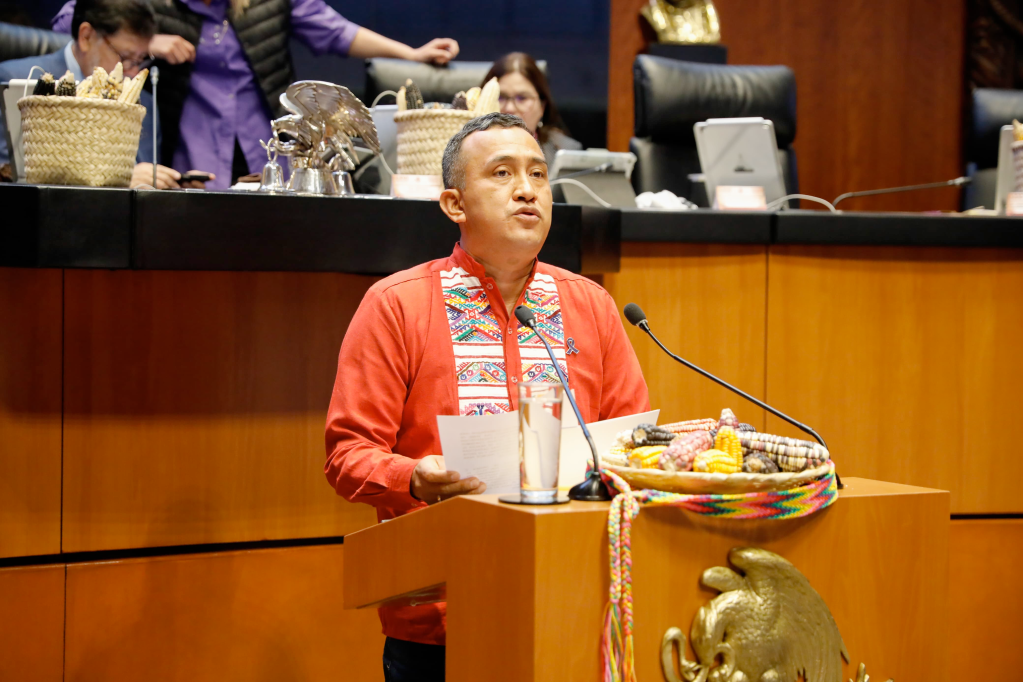
Mexico – Morena political party proposes frontal labeling of foods with transgenic content

In order to protect the health of consumers, Morena Senator Antonino Morales Toledo proposed a frontal labeling for foods with transgenic content.

Within the framework of the discussion of the reform to prohibit the cultivation of transgenic corn in our country, the Morena Senator emphasized that the population must have certainty as to whether the products they consume are free of genetically modified organisms.

He proposed, in this sense, that seals be placed on food packages to inform consumers about their content and make them aware of the products they eat.