Brazil – Anvisa is the competent authority for regulating the labeling of foods containing gluten

The Attorney General’s Office (AGU) ensured the enforcement of legislation mandating the labeling of processed food products sold in the country with “contains gluten” or “does not contain gluten.” It also confirmed the regulatory authority of the National Health Surveillance Agency (ANVISA in Portuguese) regarding such labeling.

A consumer association has filed a lawsuit against a food company, requesting that the packaging of processed food products include the message: “contains gluten: gluten is harmful to the health of individuals with celiac disease.” The lower court accepted this request.

Subsequently, the AGU, through the Federal Regional Attorney’s Office for the 3rd Region, representing Anvisa, appealed the ruling. The appeal emphasized that this decision overlooked health regulations and the specific technical and regulatory aspects of food labeling.

In its appeal, the AGU argued that if the association’s claim were accepted, the information on the packaging would be incomplete and could mislead consumers into believing that only individuals with celiac disease are intolerant to gluten.

According to information from ANVISA presented during the proceedings, gluten “is also harmful to consumers with other conditions, not just those with celiac disease.” Therefore, “current regulations require labels to indicate the presence or absence of this substance without additional specifications, while providing significantly more informative content,” states an excerpt from the agency’s technical communication.

Thus, the clear indication of gluten presence or absence on processed food labels, as mandated by Law No. 10,674 of 2003, is deemed sufficient to alert individuals with celiac disease about the risks associated with consuming gluten-containing foods.
Brazil – Anvisa updates Guide on food shelf life

The National Health Surveillance Agency (ANVISA in Portuguese) published the third version of Guide 16 – Guidelines for determining the shelf life of foods. The document was revised and restructured to make consultation easier and more objective, in addition to improving the procedures, methods and protocols used to define the expiration date of foods.

The new edition also includes explanatory figures, appendices and updated bibliographical references, making it easier to understand and apply in practice.

The update was submitted for public consultation between July and December 2024. The contributions received were analyzed and incorporated into the new version, bringing the guide more in line with the needs of the sector and the current regulatory scenario.

Chile – Proposal for a new graphic standard for food labeling in Chile

Article published in the book Propuestas para Chile 2024. The research was developed within the framework of the UC 2024 Public Policy Competition. Despite existing regulations, in Chile there are still deficiencies in the legibility and comprehension of labeling, exposing the population, especially those with dietary restrictions, to health risks. This report proposes a new graphic standard for labeling, based on a study of 300 products and a usability test that revealed legibility problems in aspects such as the size and contrast of the typography, the format of the allergen declaration and the difficulty to identify the ingredients section.

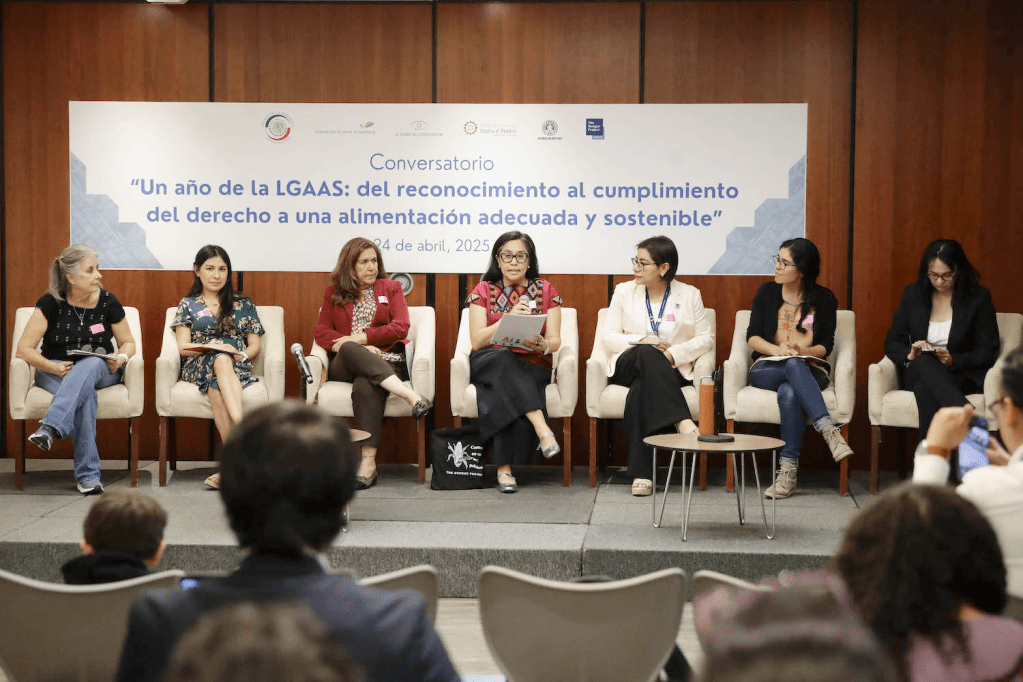
Mexico – Unanimous request to present the regulation of the General Law on the Right to Adequate and Sustainable Food

Specialists, officials and representatives of civil society participated in the discussion “One year of the General Law on the Right to Adequate and Sustainable Food: from recognition to fulfillment of the right to adequate and sustainable food”, at the invitation of Senator Ana Lilia Rivera Rivera, president of the National Defense Committee.
The participants in the event agreed that one year after the General Law on the Right to Adequate and Sustainable Food was approved, the publication of its regulations is urgent in order to realize the result of a struggle of many years.
In this regard, Lina Pohl Alfaro, representative in Mexico of the Food and Agriculture Organization of the United Nations (FAO) expressed her support for the regulation to become a reality and thus leave behind a development model that was in force for many decades, but has become obsolete.

Argentina – Food Code for canned food and fishery products updated

Joint Resolution 18/2025, issued by the Secretaries of Health Management and Agriculture, Livestock and Fisheries, amended several articles of the Argentine Food Code (CAA in Spanish) relating to canned food and products made from raw material from fisheries and aquaculture.

  • Redefinition of the concept of fishery and aquaculture products, including both vertebrate animals and aquatic invertebrates, excluding mammals and reptiles.
  • Mandatory technical identification for products labeled as “Sardines”, including new categories such as “sardina fueguina” and specific coding for traceability according to species.
  • Updating of the article on salted anchovies, including requirements for salinity, maturation and absence of Anisakis sp. larvae, as well as specific sensory conditions.
  • Addition of Article 473 bis, which prohibits the presence of foreign matter in canned fish and requires compliance with hygiene and raw material quality standards.
  • Repeal of Article 453, as part of a more precise regulatory reorganization for this type of food.