Costa Rica – Commission rejects and archives bill on front labeling of food and beverages

The Committee on Disability and Senior Citizen Affairs archived a bill that sought to require the placement of front labels on prepackaged foods to warn of excess calories, sugars, sodium and fats.
After two tied votes, the legislative forum proceeded to archive file 23,861 that was presented in August 2023 by the Liberationist deputy Andrea Álvarez Marín.
Álvarez Marín and the Frente Amplio member Priscilla Vindas Salazar voted in favor of the project, while the Christian Socialist Daniela Rojas Salas and the independent María Marta Padilla Bonilla voted against it.
As part of the arguments against the project, Deputy Padilla expressed that the file raised legitimate concerns about the “repercussions of front labeling on regional trade.” She pointed out that this type of initiative mainly affects those who sell products in a more informal manner.

Sources (in Spanish):
Costa Rica – Bill on Front Labeling with Nutritional Warnings for Food Products and Beverages Reintroduced in the National Assembly

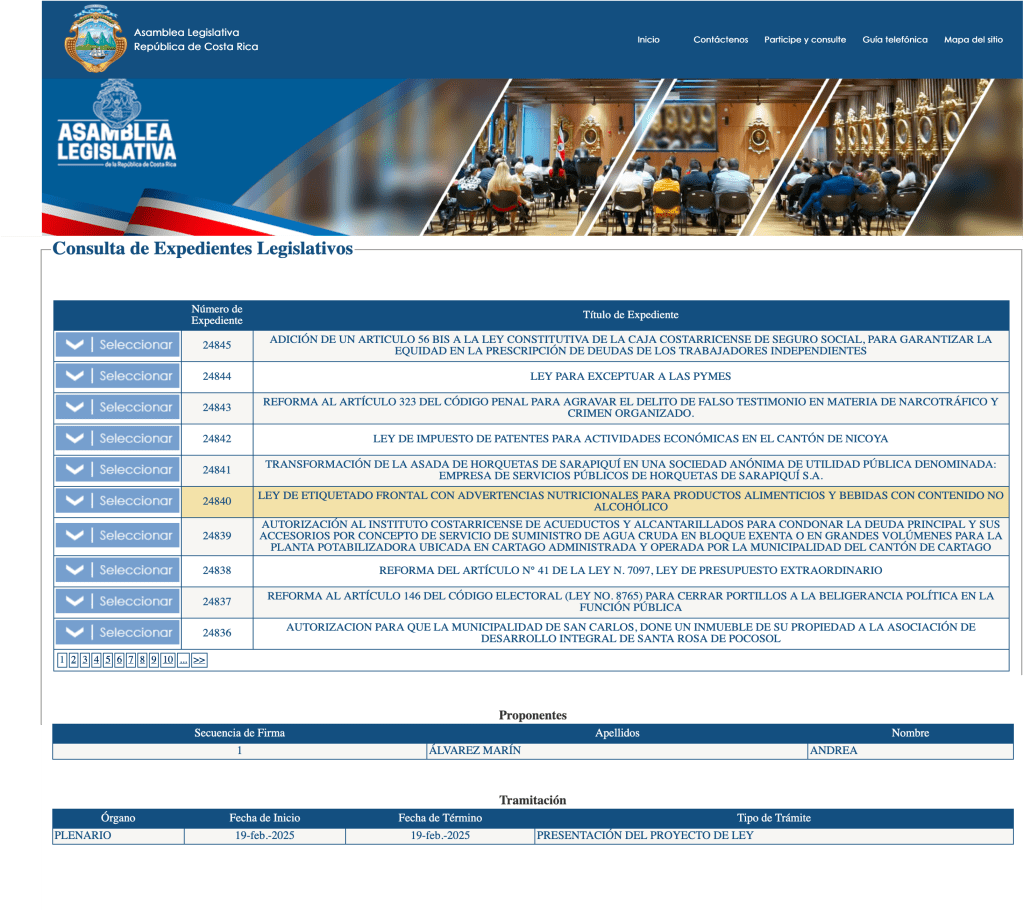
On the same day that Deputies of the Legislative Assembly of Costa Rica sent to the archive File No. 23,861, on the draft Law on Front Labeling with Nutritional Warnings for Food Products and Beverages with Non-Alcoholic Content, the deputy of the National Liberation Party, Andrea Álvarez, again presented the draft law to include warnings on the nutritional labeling of food products and non-alcoholic beverages. The initiative, now processed under file 24.840, defends the use of front seals or labels that allow citizens to identify products with a high content of calories, sugars, sodium or fats. It also seeks to warn about the use of sweeteners.

Costa Rica – Healthy Costa Rica Organization defends front labeling of foods after the bill is shelved

The organization Healthy Costa Rica continues its fight for the implementation of front-of-package warning labels on food products, despite the recent filing of Bill No. 23,861 in the Legislative Assembly. In an interview given this afternoon to CRprensa.com, Dr. Lydia Amador, representative of the organization, explained her position on the importance of this measure for the country’s public health.

According to Dr. Amador, front-of-package labeling is a fundamental tool to inform consumers about the sugar, sodium and fat content in processed products. “Our goal is for the population to have access to clear and simple information to make healthier decisions. Currently, nutritional labeling can be confusing for many people,” she said.

Argentina/Paraguay – ANMAT and DINASVISA signed a sanitary agreement that will facilitate food trade between the two countries

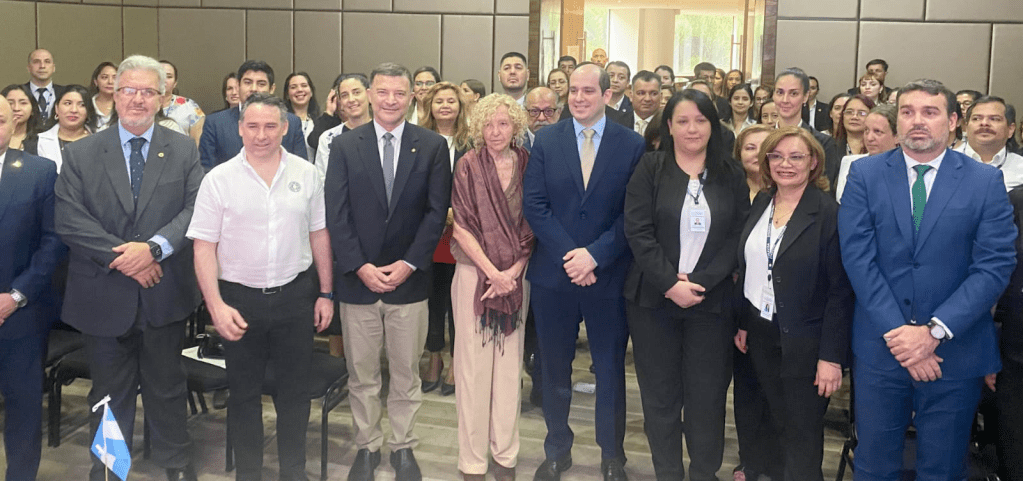
The head of the National Administration of Medicines, Food and Medical Technology (ANMAT in Spanish), Agustina Bisio, and her counterpart of the National Directorate of Health Surveillance (DINAVISA in Spanish), Jorge Iliou Silvero, signed in Asunción an agreement by which food, packaging and materials in contact with food can be imported by Argentina, and the same with those sent from Argentina to Paraguay by mutual recognition.

From now on, foods approved by DINAVISA will have, when imported, the same level of sanitary quality as those endorsed by ANMAT, and vice versa, a procedure that will facilitate trade between both nations.

The document represents a significant step towards strengthening food safety in the region, as Paraguay is the first country to sign this type of agreement after the modification of the Argentine Food Code (CAA in Spanish).

By recognizing their control systems, Argentina and Paraguay seek to eliminate technical barriers to trade, while maintaining high standards of protection for the health of their citizens, generating mutual benefits for both parties.
The director of DINAVISA, Jorge Iliou Silvero, mentioned that the document agreed on the simplification and mutual recognition of regulatory decisions, which will facilitate the requirements for food imports and exports between both countries.

Brazil – Anvisa publishes Regulatory Instruction that establishes an optimized procedure for the analysis of requests in the area of ​​food

The National Health Surveillance Agency (ANVISA in Portuguese) published Normative Instruction (IN) No. 344/25, which establishes the conditions for the optimized procedure for the analysis of requests for evaluation in the food area through the admission of supporting documentation issued by an Equivalent Foreign Regulatory Authority (AREE in Portuguese).

The NI comes into force on March 23, 2025. Simplified petitions submitted before March 23, 2025 that do not comply with the NI may be subject to technical requirements for the submission of additional supporting documentation in accordance with the new NI.

This Normative Instruction applies to the following assessments:

I – Food additives, except flavourings of regional botanical species;

II – Processing aids, except enzymes as processing aids;

III – Enzymes used as processing aids;

IV – A new substance for materials in contact with food;

V – New technology applied to materials in contact with food;

VI – Safety and efficacy of the functional or health properties of new foods and new ingredients, except probiotics and enzymes;

VII – Safety and efficacy of the functional or health properties of enzymes as ingredients;

VIII – safety and efficacy of the functional or health properties of probiotics; and

IX – risk of products for veterinary use.