Two questions were included in the 7th edition (in Portuguese), one on the designation of phosphates in the list of ingredients (question 32) and the other on the form of expression of the limit of paprika extract in processed or processed cheeses (question 81).
Day: 05/03/2025
Mexico – Secretary of Economy publishes AGREEMENT that leaves without effect the application of various provisions on genetically modified corn
Through the February 5, 2025 agreement published in the Official Gazette of the Federation (DOF), the Government repealed the Decree that prohibited the use of transgenic corn for human consumption, thus complying with the ruling issued by a panel of the Treaty between Mexico, the United States and Canada (T-MEC). The Ministry of Economy confirmed that it repeals the provision established on February 13, 2023, which prohibited authorizing the use of genetically modified corn for human consumption. The controversial measure was adopted after the Mexican government decided to impose restrictions on transgenic corn, which led the United States to request the intervention of a panel under the T-MEC in August 2023. The US government argued that the ban was not supported by scientific evidence showing that genetically modified corn posed a risk to human health.
Brazil – 1st DICOL Public Meeting of 2025, reviews the topic of substances in contact with food
The National Health Surveillance Agency (ANVISA in Portuguese) announced the holding of the 1st Public Meeting of the Collegiate Council (DICOL) of 2025 where the RDC proposal to modify the positive list of monomers, other starting substances and polymers authorized for the production of plastic containers and equipment in contact with food, published by RDC 56/2012, was reviewed. The subject is part of the Regulatory Agenda 2024-2025. According to the acting CEO, the proposal does not contain any legal irregularities. Materials in contact with food, such as plastics, metals, cellulose and glass, are present in stages of transport or consumption, for example. In this sense, it is up to the Agency to act in the definition of the sanitary requirements and the evaluation of the safety of the substances used, in order to avoid the migration of substances to the food in quantities that pose a risk to the health of consumers or that produce unacceptable changes in its composition or sensory characteristics. These substances are therefore limited to those defined by Anvisa, with specific composition and migration limits, an approach that helps in risk management. The article was approved unanimously.
Mexico – The National Quality Infrastructure PROGRAM 2025 has been published, which includes modifications to the Mexican Official Standard on labeling for food and beverages, non-alcoholic flavored beverages and microbial and pathogenic indicators in food
The Ministry of Economy published the 2025 National Quality Infrastructure Program, which includes a modification to:
- Section 4.5.3 of NOM-051-SCFI/SSA1-2010 on labeling prepackaged food and non-alcoholic beverages. The Standardizing Authorities determined that it was necessary to modify only section 4.5.3 of this regulatory instrument in order to update the criteria for the evaluation and calculation of critical nutrients added to prepackaged foods and non-alcoholic beverages regulated within the scope of the standard in question.
- Modification to the Mexican Official Standard NOM-210-SSA1-2014, Products and Services. Microbiological test methods. Determination of indicator microorganisms. Determination of pathogenic microorganisms. Inclusion of new regulatory appendices for V. parahaemolyticus, V. Cholera, Staphylococcal toxin, Sisella spp. Legionella spp, Listeria spp. and Listeria monocytogenes, E. coli and sample preparation.
- Modification to the Mexican Official Standard NOM-218-SSA1-2011, Products and services. Non-alcoholic flavored beverages, their frozen products, concentrated products to prepare them and beverages with added caffeine. Specifications and sanitary provisions. Test methods. Establishment of the minimum value of sugars in sports drinks, to avoid the existence of drinks with only electrolytes, especially with sodium, which do not rehydrate. Avoid the existence in the market of drinks with electrolytes that, according to current regulations, are considered as inputs. Inclusion of specifications for non-alcoholic beverages with vegetable or fruit or vegetable content, as they are included in NOM-173-SE-2021, Juices, coconut water, nectars, non-alcoholic beverages with vegetable or fruit or vegetable content and prepackaged non-alcoholic flavored beverages – Names – Specifications – Commercial information and test methods.
Costa Rica – Ministry of Health takes action on artificial food coloring Red No. 3
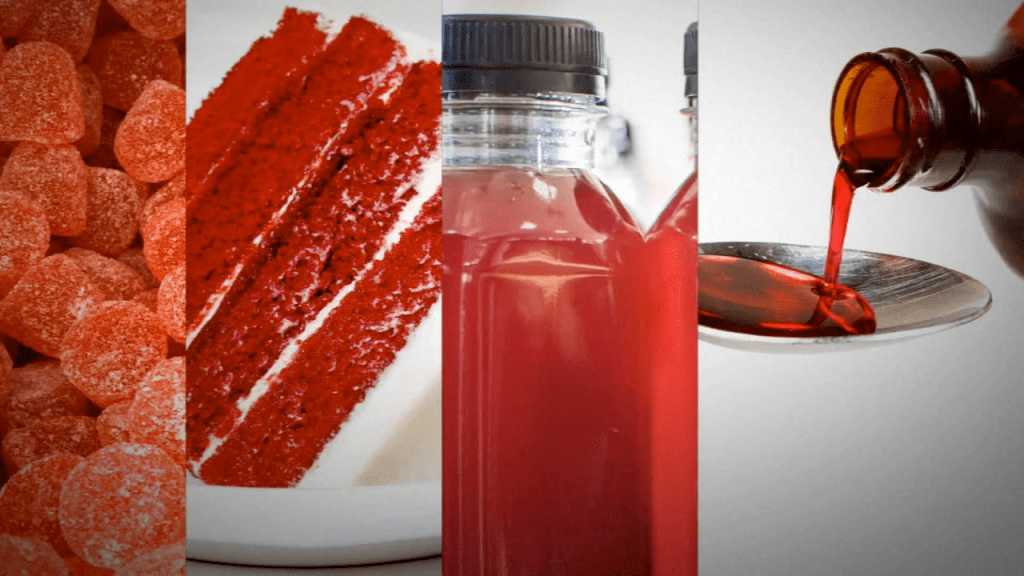
The Ministry of Health informs the population that it is aware of the recent announcement by the United States Food and Drug Administration (FDA), which has banned the use of artificial food coloring Red No. 3, also known as erythrosine, due to its relationship with thyroid cancer in animals.
To ensure the health of Costa Ricans, the Ministry of Health is taking the following actions:
- Call to the Central American Commission on Food Additives: An extraordinary meeting will be held to evaluate the use of Red No. 3.
- Product Analysis: Samples of products containing Red No. 3 will be taken for analysis at Inciensa, with the aim of verifying that they comply with the quantities currently permitted.
Regarding medicines containing Red No. 3 dye, which are regulated by the Central American Technical Regulations RTCA 11.03.59:18 and RTCA 11.01.02:04, the Ministry of Health will promptly communicate the actions to be taken.
In addition to these actions, the Ministry of Health will be monitoring all information shared regarding the use of this dye.
 infoAlimentario