Hondura – Controversy over ‘Front End Labeling’ bill

Controversy has generated the discussion in the first and second debate in the National Congress of the Front Labeling Law, an initiative that seeks to label food and beverage products with black seals on the front of the packaging based on a criterion of the Pan American Health Organization (PAHO).

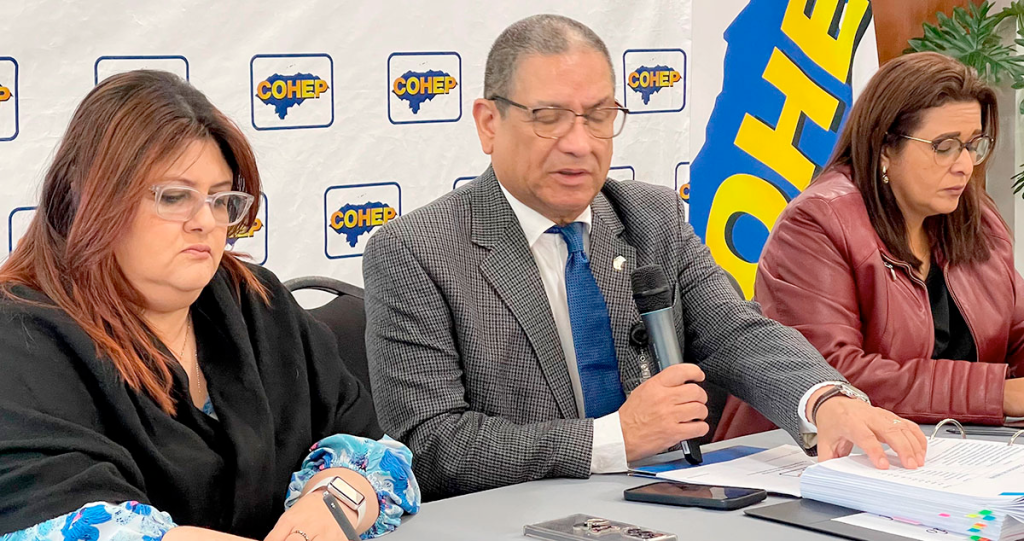
The first to oppose the referred regulation, which is promoted by the deputy of Libertad y Refundación (LIBRE in Spanish), Kritza Pérez, was the Consejo Hondureño de la Empresa Privada (Cohep in Spanish).

The private enterprise requested the National Congress last week to file the initiative of the Front Labeling Law, because it contradicts the Central American Technical Regulations approved by Honduras within the framework of the Central American Integration System (SICA in Spanish).
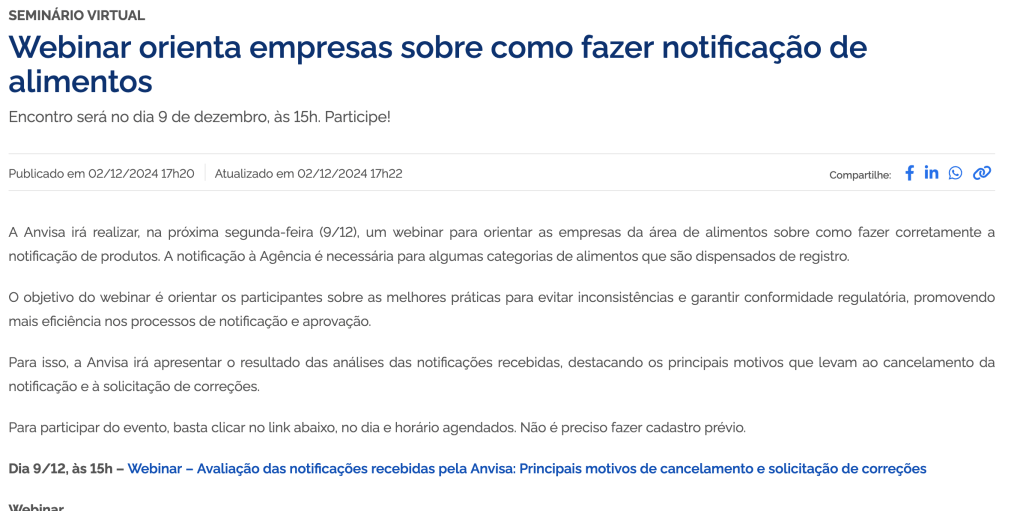
ANVISA announces Webinar to guide companies on notification of food products

The National Health Surveillance Agency (ANVISA in Portuguese) will hold, next Monday (9/12), a webinar to guide food companies on how to correctly notify products. Notification to the Agency is required for some food categories that are exempt from registration.

The objective of the webinar is to guide participants on best practices to avoid inconsistencies and ensure regulatory compliance, promoting greater efficiency in the notification and approval processes.

To this end, Anvisa will present the results of the analysis of the notifications received, highlighting the main reasons that led to the cancellation of the notification and the request for rectification.

Argentina – The Secretariat of Agriculture extended until December 31, 2027 the deadline for the use of the “Alimentos Argentinos” seal of quality

The Secretariat of Agriculture, through Resolution 112/2024, extended until December 31, 2027 the deadline for the assignees of the Quality Seal “Alimentos Argentinos, una elección natural”  (in Spanish) to adapt the packaging of their products to the maximum limit of 20 kilograms. The seal, created by Law No. 26,967 and recognized as a strategic tool to promote the quality and competitiveness of Argentine food, requires that certified products comply with certain specifications in their labeling and presentation.

Honduras – Honduran Private Enterprise Council requests COMIECO to issue food labeling regulations

The Council of Ministers of Economic Integration (COMIECO in Spanish), should be the body in charge of issuing the regional regulation on labeling, the Honduran Council of Private Enterprise (COHEP in Spanish) said today in a conversation with journalists.
The law under study seeks to label food and beverage products with black seals on the front of the package based on a criterion of the Pan American Health Organization.
“Honduras is part of Central America, therefore, we have to abide by regional regulations,” said COHEP’s executive director, Armando Urtecho, warning of damage to competitiveness, price increases and unemployment, among others, if in Honduras, these regulations are issued via the National Congress.
The private sector has recently asked the opinion commission of the National Congress (CN) to paralyze the discussion of the Front End Labeling Law in order to give the opportunity, as Costa Rica is doing, Guatemala and Nicaragua, for the Committee of the National Congress (CN) to issue the regulation through the National Congress. Guatemala and Nicaragua, that the Comieco, be the one to issue this regional regulation on labeling.

Brazil – Anvisa approves update of the Regulatory Agenda 2024-2025

The Collegiate Council of the National Health Surveillance Agency (ANVISA in Portuguese) approved, during the 23rd Ordinary Public Assembly of the Agency, the update of the Regulatory Agenda 2024-2025. Based on the consolidated updates, the new list of regulatory topics of the Agenda for the 2024-2025 period now consists of 171 topics, distributed in 16 macro-themes of the Agency’s activities.
Of the 117 topics, 34 are food-related issues.

As foreseen in ANVISA’s Regulatory Agenda Manual, the set of prioritized topics can be reviewed annually, with the possibility of changes, exclusions and inclusions of topics.The objective of the annual update is to keep the document aligned with the regulatory priorities of the period, to ensure predictability and timeliness of the Agency’s regulatory planning.